The UK and Norway have signed a defence pact that will see their navies operate a combined fleet of warships to hunt Russian submarines.
The deal, which the Government said was the “first of its kind”, is aimed at protecting critical undersea cables, which the UK and its Nato allies believe are under increasing threat from Moscow.
It comes after a 30% rise in Russian vessels sighted in UK waters in the past two years, according to the Ministry of Defence (MoD).
The so-called Lunna House agreement – named after the Shetland Isles base used by the Norwegian resistance during the Second World War – was signed by Defence Secretary John Healey and his Norwegian counterpart Tore Sandvik in Downing Street on Thursday morning.
A beaming Mr Healey said it marked an “important moment” for two nations “with deep bonds”.
He added that a “new era of threat” demands “co-operation” between Nato allies, saying that the pact is as important as defence agreements the UK has made with other nations.
Mr Sandvik said the pact marked a “burden shift”, saying more money will be spent on defence.
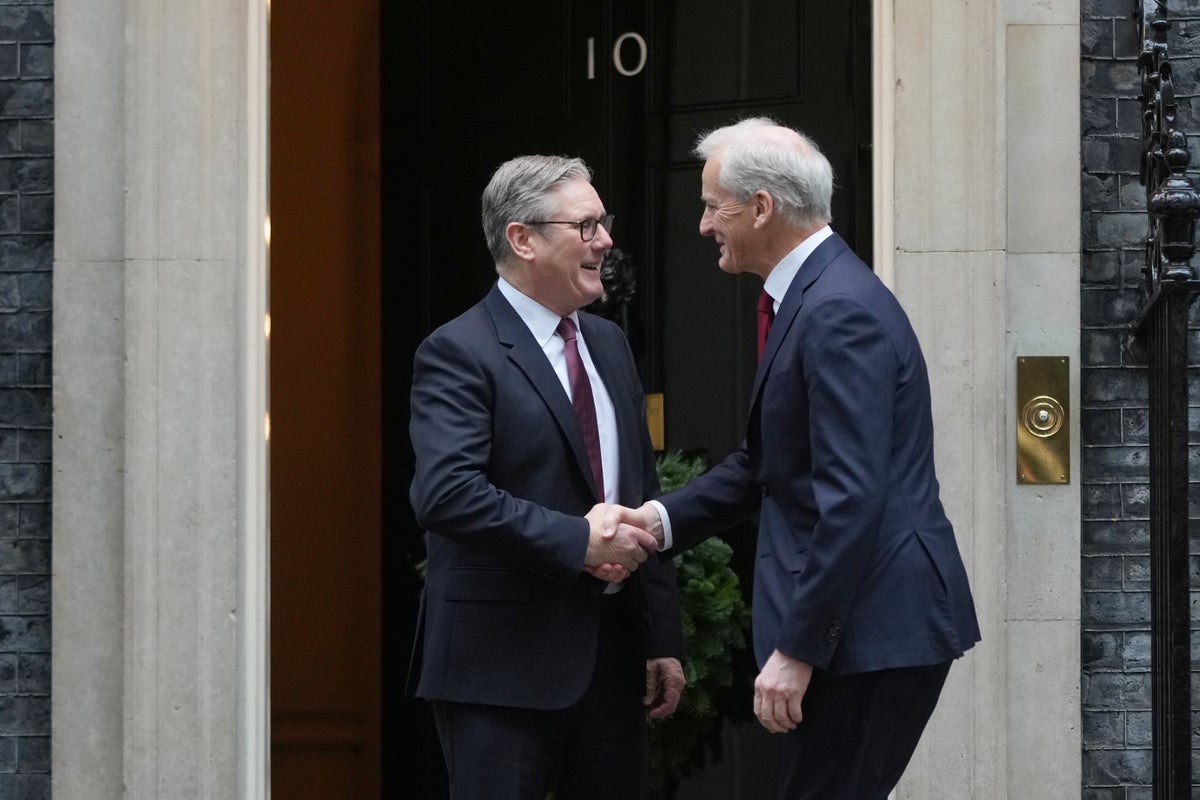
Shortly after, Prime Minister Sir Keir Starmer met his Norwegian counterpart Jonas Store, and Sir Keir said that Norway is an “absolutely vital member of the coalition of the willing”.
He said that the relationship between the “strategically-linked” countries is “as strong as ever”.
Mr Store said that the pact acknowledges where Europe stands and the need to take care of its security.
He added: “We are making significant steps (on) integration, because we share waters, we share a strategic environment and we share also a very like-minded reading of what (are) the security challenges ahead of us, and we want to be in front of that and not running after.”
Sir Keir is due to host Mr Store at RAF Lossiemouth in northern Scotland later on Thursday.
The two leaders will hear from P-8 maritime patrol crews who have been tracking Russian vessels including the spy ship Yantar, which recently pointed lasers at one of the aircraft.
The new agreement is underpinned by a £10 billion UK–Norway warship deal signed in September.
Type 26 frigates will be constructed at the BAE Systems yard in Glasgow and will allow a fleet of at least 13 anti-submarine ships from the UK and Norway – at least five of which will be Norwegian – to operate jointly in northern Europe.
The warships will monitor Russian naval movements in the waters between Greenland, Iceland and the UK, defending seabed cables and pipelines critical to British communications, electricity and gas networks.
The agreement will also see the UK join Norway’s programme to develop motherships for uncrewed mine hunting and undersea warfare systems.
Royal Marines will be trained in Norway to fight in sub-zero conditions, and the two countries will deepen their collaboration on using UK-built sting ray torpedoes, carry out joint wargaming and lead Nato’s adoption of autonomous systems in the High North.
The Royal Navy will also adopt advanced Norwegian naval strike missiles, which can take out enemy ships at ranges of more than 100 miles.
Sir Keir said: “At this time of profound global instability, as more Russian ships are being detected in our waters, we must work with international partners to protect our national security.
“This historic agreement with Norway strengthens our ability to protect our borders and the critical infrastructure our nations depend on.
“Through joint navy co-operation in the North Atlantic, we’re boosting security, supporting thousands of UK jobs, and showcasing Britain’s world-class shipbuilding on the global stage.”
The UK and its Nato allies have become increasingly concerned about the risk Moscow poses to underwater cables and pipelines, amid heightened tensions following the invasion of Ukraine.
Attacks on undersea infrastructure could cause “catastrophic disruption” to the financial and communications systems Britons rely on, the National Security Strategy Committee warned in a September report.
