Russian President Vladimir Putin has declared that Moscow intends to seize full control of Ukraine’s Donbas region through military force, unless Ukrainian troops withdraw – a demand Kyiv has unequivocally rejected.
The declaration, made in an interview published on Thursday in India Today, follows Russia’s full-scale invasion of Ukraine in February 2022, which escalated an eight-year conflict between Russian-backed separatists and Ukrainian forces across the Donbas, comprising the Donetsk and Luhansk regions.
Speaking ahead of a planned visit to New Delhi, Mr Putin stated: “Either we liberate these territories by force of arms, or Ukrainian troops leave these territories,” according to footage broadcast on Russian state television.
Ukraine has consistently maintained it will not cede territory that Moscow has failed to secure militarily. President Volodymyr Zelensky has previously asserted that Russia should not be rewarded for initiating the conflict.
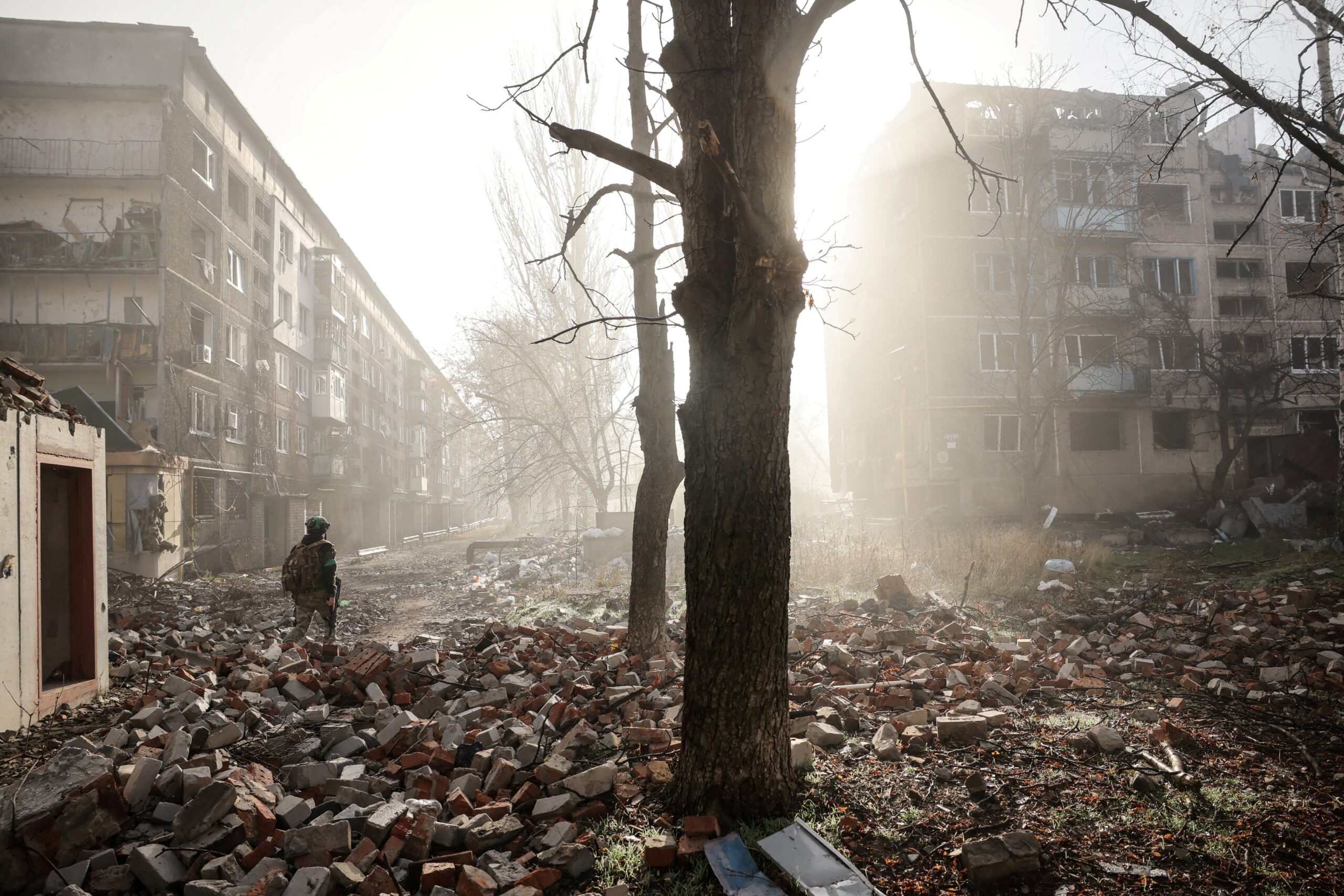
Russia currently controls 19.2% of Ukraine, including Crimea, which it annexed in 2014, all of Luhansk, more than 80% of Donetsk, about 75% of Kherson and Zaporizhzhia, and slivers of the Kharkiv, Sumy, Mykolaiv and Dnipropetrovsk regions.
About 5,000 square km (1,900 square miles) of Donetsk remains under Ukrainian control.
In discussions with the United States over the outline of a possible peace deal to end the war, Russia has repeatedly said that it wants control over the whole of Donbas – and that the United States should informally recognise Moscow’s control.
Russia in 2022 declared that the Ukrainian regions of Luhansk, Donetsk, Kherson and Zaporizhzhia were now part of Russia after referenda that the West and Kyiv dismissed as a sham. Most countries recognise the regions – and Crimea – as part of Ukraine.
Putin received U.S. envoys Steve Witkoff and Jared Kushner in the Kremlin on Tuesday, and said that Russia had accepted some U.S. proposals on Ukraine, and that talks should continue.
Russia’s RIA state news agency cited Putin as saying that his meeting with Witkoff and Kushner had been “very useful” and that it had been based on proposals he and President Donald Trump had discussed in Alaska in August.
