Facebook and Instagram began shutting down thousands of accounts belonging to Australian children under the age of 16 on Thursday, a week before the deadline for the country’s unprecedented social media ban.
Meta, which owns Instagram, Facebook and Threads, said it is also blocking the creation of new accounts for under-16 users in Australia from Thursday as part of efforts to comply with the law.
An estimated half a million accounts are expected to be removed.
“While we are working hard to remove all users whom we understand to be under the age of 16 by 10 December, compliance with the law will be an ongoing and multilayered process,” a Meta spokesperson said.
“If you’re under 16, you can still preserve and download your digital history across Instagram, Threads and Facebook. Before you turn 16, we will notify you that you will soon be allowed to regain access to these platforms, and your content will be restored exactly as you left it.”
Australia last year became the world’s first country to pass a law banning children and teenagers under 16 from using social media. The ban comes into effect on 10 December, with companies facing fines of up to A$49.5m (£25m) for non-compliance.
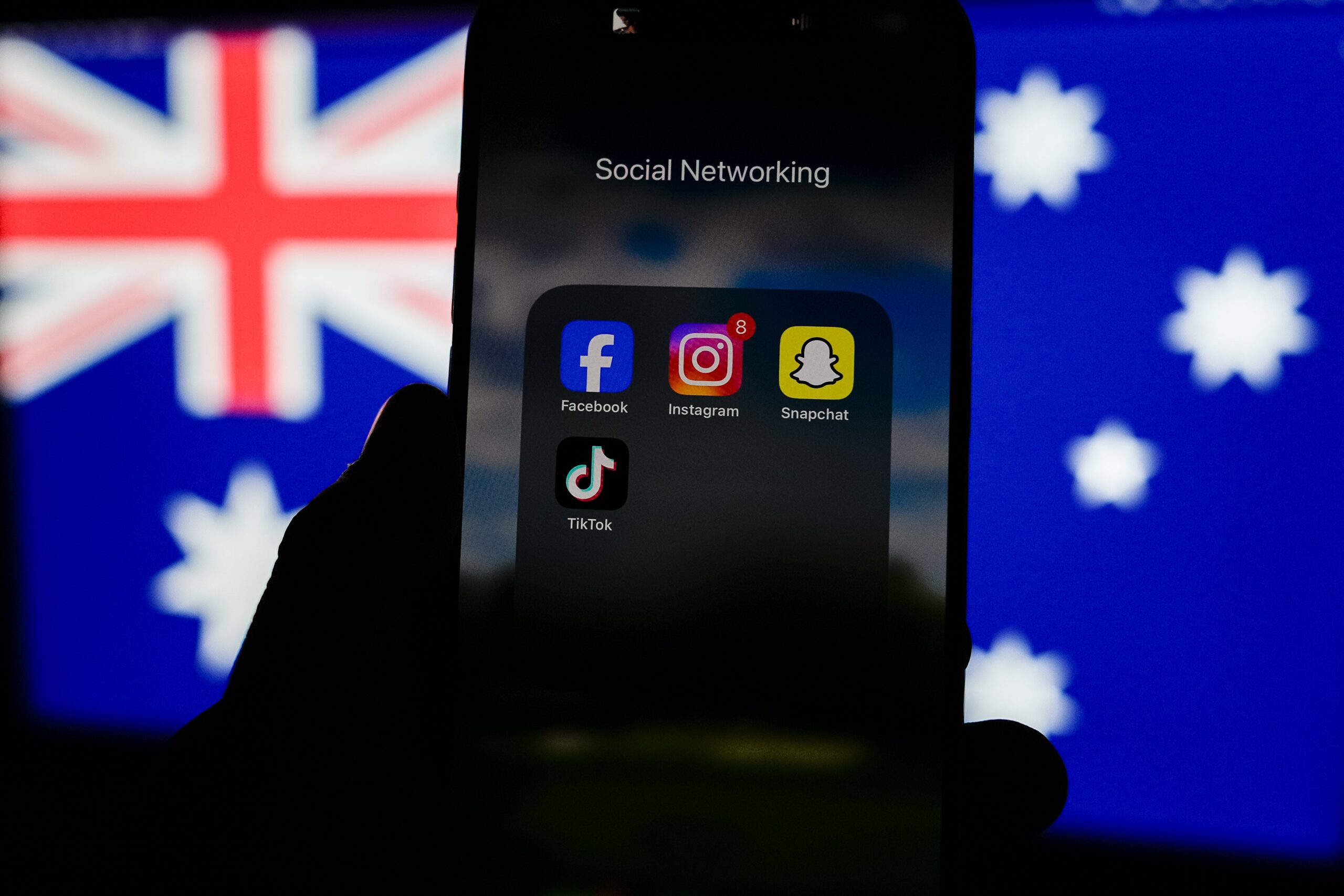
The move has triggered fierce debate inside and outside the country, with the Australian government defending the measure as necessary to protect young people from the harms of social media. Critics – including teenagers – have argued the ban is “unconstitutional” and infringes on their right to free communication.
Australia’s internet regulator said on Thursday that the ban would be the first domino to fall in a global effort to rein in Big Tech.
eSafety Commissioner Julie Inman Grant said she had initially been concerned about the “blunt-force” approach of blocking under-16s from social media, but came to support it after incremental regulatory changes proved ineffective.
“We’ve reached a tipping point,” Inman Grant said at the Sydney Dialogue, a cyber summit. “Our data is the currency that fuels these companies, and there are powerful, harmful, deceptive design features that even adults are powerless to fight against. What chance do our children have?”
She said governments around the world were closely watching as the Australian law takes effect, adding: “I’ve always referred to this as the first domino, which is why they [social media giants] pushed back.”
Some 96 per cent of Australian teenagers under 16 – more than one million of the country’s 27 million population – have social media accounts, according to eSafety.
A mother in Sydney welcomed Meta’s decision.
“It’s a great thing, and I’m glad the pressure is taken off parents because there are so many mental-health implications,” said Jennifer Jennison. “Give my kids a break after school – they can rest and hang out with the family.”
At the conference, Inman Grant said platform lobbying had even involved appealing to the US government, which has asked her to testify before its House Judiciary Committee about what it described as an attempt to exert extra-territorial power over American free speech.
She did not say whether she would agree to appear but noted: “By virtue of writing to me and asking me to appear before the committee, that’s also using extra-territorial reach.
Apart from Facebook, Instagram, Threads, social media websites affected by the ban are TikTok, Snapchat, X, Reddit, Kick, Twitch and YouTube.
Two teenagers, led by the Digital Freedom Project, have challenged the social media ban for the teenagers, saying the law imposing the ban was “grossly excessive” and infringed on the “constitutional right of freedom of political communication”.
