Back when dame Jacinda recalls. ‘It was almost as if she was admonishing herself – you do it all, so how come I can’t? I felt really worried by that. There were so many people who helped me. I never wanted to put out a false image of being a wonder woman.’
It’s easy to see why she looked like one. In 2017, aged 37, and seven weeks after reluctantly taking over as Labour leader, Ardern became the world’s youngest female head of government, riding a wave of ‘Jacinda-mania’, and known for preaching empathy. Just eight months later, she became the second elected leader in the world to give birth while in office.
Discovering you’re pregnant is a huge moment. For Ardern, there was also panic at the ridiculous timing. She had taken the test at her friend’s house, while waiting to hear whether she’d won the election (a process that can drag on for days in New Zealand). Her partner, broadcaster Clarke Gayford, was away filming. Ardern was ‘so, so shocked’. Not least because she’d struggled with fertility issues and been advised that the stress of her workaholic lifestyle might stop her having a baby at all.
‘I’d been told it wasn’t going to happen for me without intervention,’ she says. ‘I’d tried everything and had failed a round [of IVF] right before becoming leader. So then I decided to stop. I was trying not to linger on it, because it was too sad. Then, suddenly, there it was. I remember thinking, you just couldn’t write this. I’m trying to become Prime Minister and now I’m pregnant. What am I going to do?’
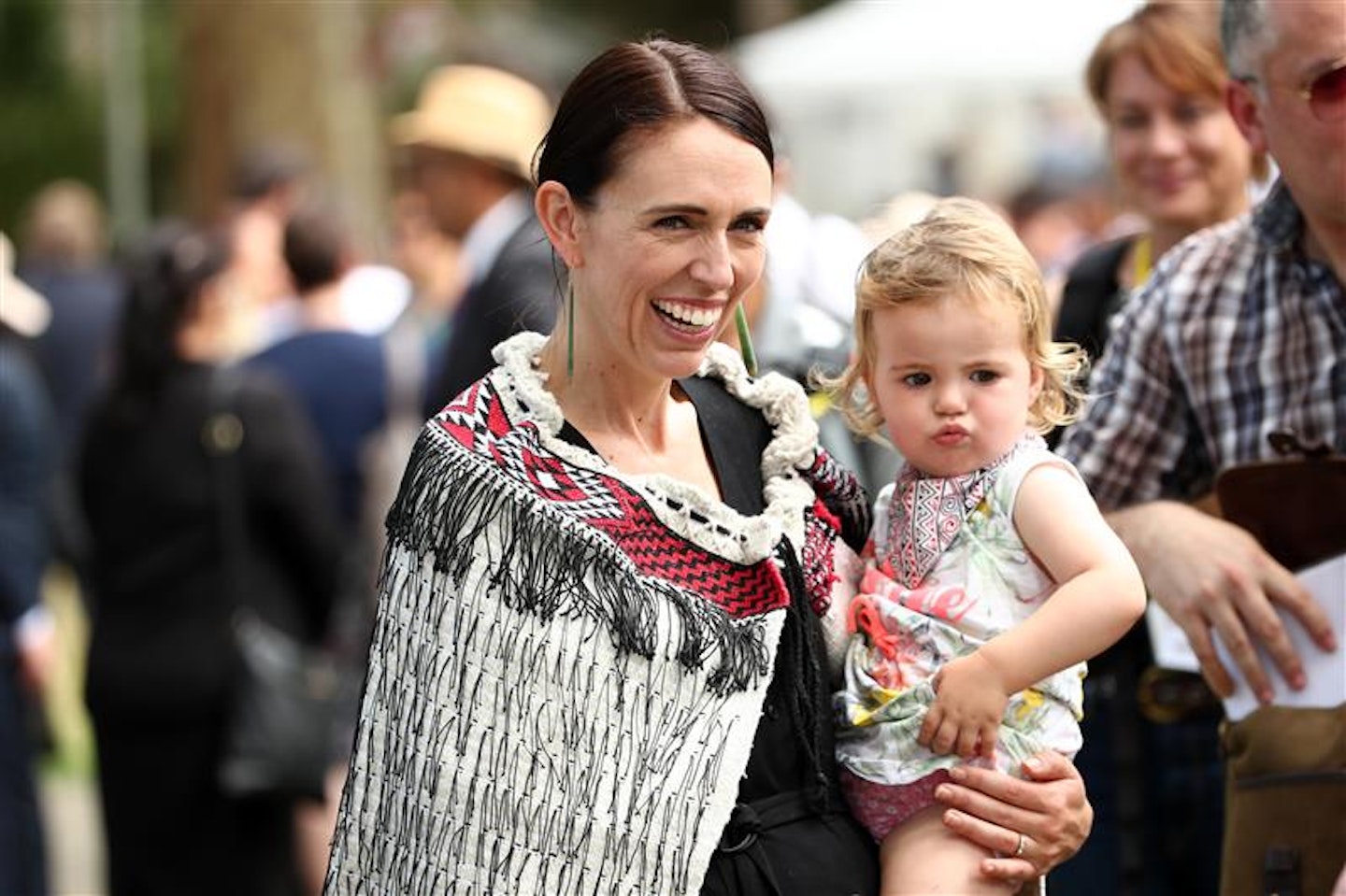
It’s hard to imagine, only we don’t have to. Gayford, now Ardern’s husband, was filming behind the scenes the whole time. That footage is the basis of a new documentary, Prime Minister, out next month, which follows the extraordinary experience of being a female leader and new mother amid global turmoil – from the pandemic to rising political violence and Ardern’s shock resignation in 2023, when she said she no longer had ‘enough in the tank’.
The documentary shows a constant tension between her public and family life, where Gayford is the primary carer. We see Ardern at her most vulnerable, reading piles of cabinet papers while rocking her daughter in her Moses basket after six weeks’ maternity leave, or attempting to breastfeed at work, which she says, ‘made me feel as though I’d failed the first test of motherhood’.
‘I wanted to disrupt this idea of doing it all successfully. I didn’t do it all successfully,’ she tells me. ‘There were things I really struggled with. You think something like breastfeeding is meant to just work and then it doesn’t. I wanted to put that out there because I created an expectation for myself that I think was a bit rough. If I can help anyone else to go easy on themselves, then it’s worth it.’
Ardern, a rare female leader among countless men, has always trod her own path. Who can forget her making history by taking newborn Neve to the UN? Or snapping at a TV interviewer who asked when she planned to have children, just seven hours into the job? ‘I did let a lot slide, though, because I didn’t want people to think my day-to-day experience as a leader was all about gender. I didn’t want to put other women off,’ she says. ‘Sometimes you’re like, “Oh, am I getting this because I’m young or a woman?” In the end, you just have to get on with it. I think women in politics generally have different measures on a bunch of different things, but I hate the portrayal of [being] a victim, somehow.’
At 45, Ardern speaks with the calm, empathetic tone that first endeared her to so many, even taking a moment to reassure me over my own mum guilt. It’s in stark contrast to much of the world’s current testosterone-fuelled leadership. Does she get frustrated with what she sees?
‘There’s a lot of spotlighting of a particular type of leadership at the moment, but that is not the only kind of leadership out there,’ she replies, carefully. ‘Unfortunately, it becomes a bit self-fulfilling, because that particular type of leadership is good at getting headlines when you’re operating at the more extreme and inflammatory end, and in a cycle of blame. That grabs attention. But if one of your political tools is causing people to polarise and fracture, then we’re all worse off as a result of that.’
Ardern knows about polarisation. Early in her premiership, she was praised for her swift tightening of gun laws. But her strict lockdown rules and border closures (New Zealand had a low Covid death rate) led to weeks of protests outside Parliament, with playgrounds set on fire and gallows erected, symbolically intended for Ardern. Protestors chanted outside her home and eight people were prosecuted for making death threats against her.
Little wonder the documentary paints a picture of a political leader under immense pressure, taking sleeping pills, getting headaches, with ringing in her ears. ‘It was intensely difficult. These were life and death decisions,’ she says. ‘When I saw the sleeping pills in the film, I thought, “I wouldn’t want people to think that was my constant state”. But there were certainly times like that. It doesn’t hurt to illustrate the human side of leadership. It can take its toll.’
So, to her unexpected resignation, after six years in power. Stepping away from a big job – one not always open to women – can feel loaded with responsibility and Ardern worried it would put off other women from trying to do what she did. ‘I could have kept going, but I wouldn’t have kept going well,’ she says of the decision. ‘I was losing a bit of my curiosity, becoming a bit defensive. And so that turned it into a duty of care – if you identify that, you should do something about it.’
Has she got back to her old self ? ‘The sense of responsibility left me straight away, and that surprised me. I don’t sit still well. So maybe I haven’t quite shaken that. I’m not very good at relaxing. But in terms of the long lag of being in a stressful job? I think I’ve restored some balance.’
Today, as well as being a trustee for the Earthshot Prize, part of the World Leaders Circle at Oxford University, working with Melinda French Gates’ Pivotal Ventures to distribute funds to women’s initiatives, and running a fellowship on empathetic leadership at Harvard, she recently published a children’s book, Mum’s Busy Work, based on her conversations with her now seven-year-old daughter.
Yet she still admits to suffering from impostor syndrome, a term she first heard aged 14 and immediately identified with. ‘I still wonder, am I the best person to do this? But I don’t let it stop me. The realisation for me was that if you don’t let it overwhelm you, lots of strengths come with it – preparation, humility, bringing in experts. It makes you more decisive. Maybea bit more self doubt in leadership is exactly what the world needs.’
Prime Minister is released 5 December.
