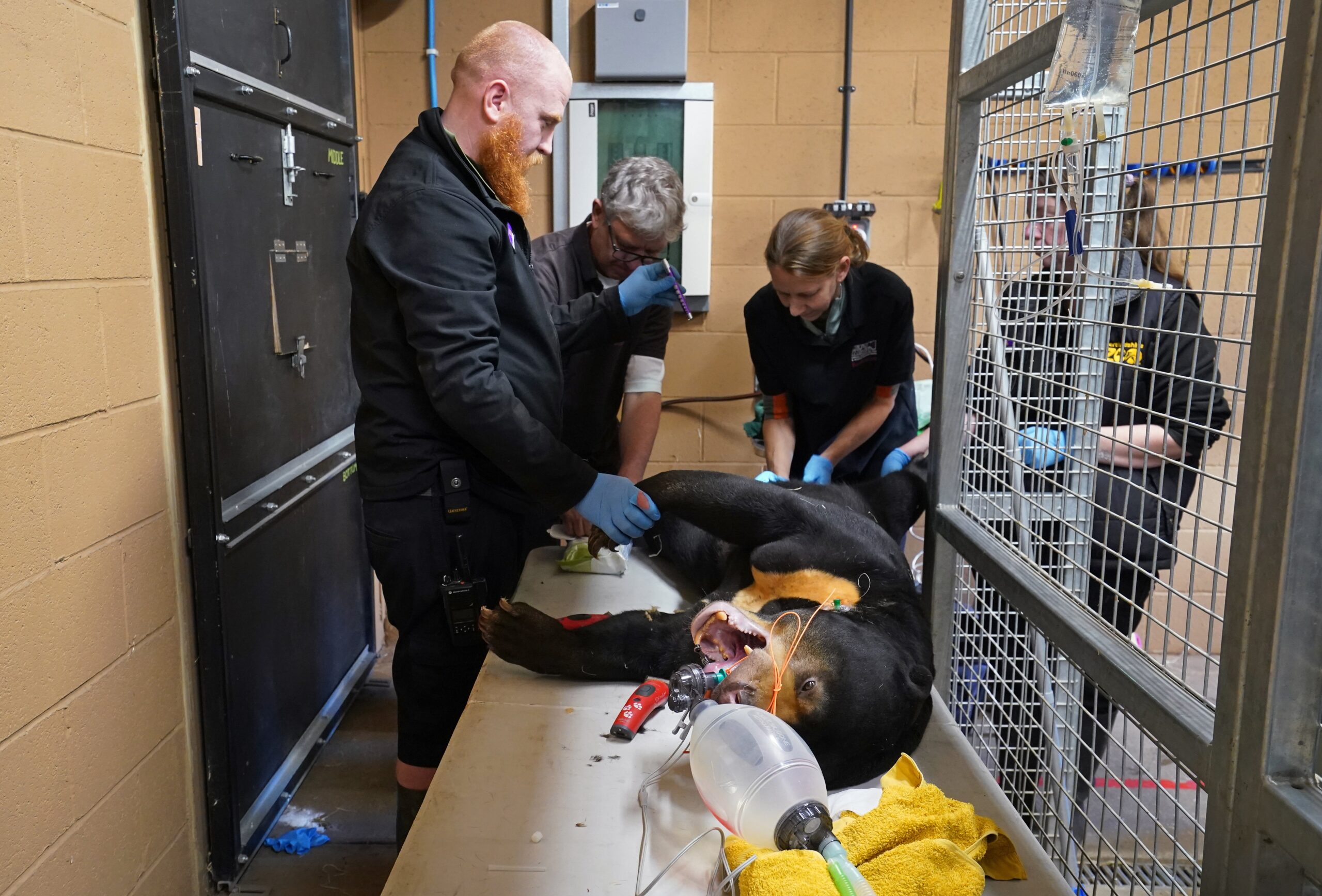
A sun bear at Hertfordshire Zoo has undergone a rare veterinary procedure, crucial for the future of her species.
Kyra, a key part of a European conservation breeding programme, had struggled to conceive with her mate since their April 2023 pairing.
Last month, veterinarians discovered womb cysts, believed to be the cause of her fertility issues.
Doctors travelled from Germany on Wednesday to remove them.
Tyler Whitnall, managing director at the zoo in Broxbourne, said: “This is a complex and unusual procedure, but one that is vital for Kyra and for the international breeding programme.
“If this operation is successful, it offers a real chance to boost the European population and contribute directly to the survival of this incredible species.”
Sun bears are classified as a vulnerable species on the International Union for Conservation of Nature red list, with fewer than 10,000 remaining in the wild.
Sun bears are listed as Vulnerable on the IUCN Red List due to the illegal bear bile farm trade found in Southeast Asia.
Bear bile farming is an illegal trade that has devastated sun bears, moon bears and brown bears across Asia and parts of Europe
They are the smallest of all bear species, native to dense forests in south-east Asia, and are recognisable for their bright, golden-patched chests.
These markings have been part of legends, saying they represent the rising sun.
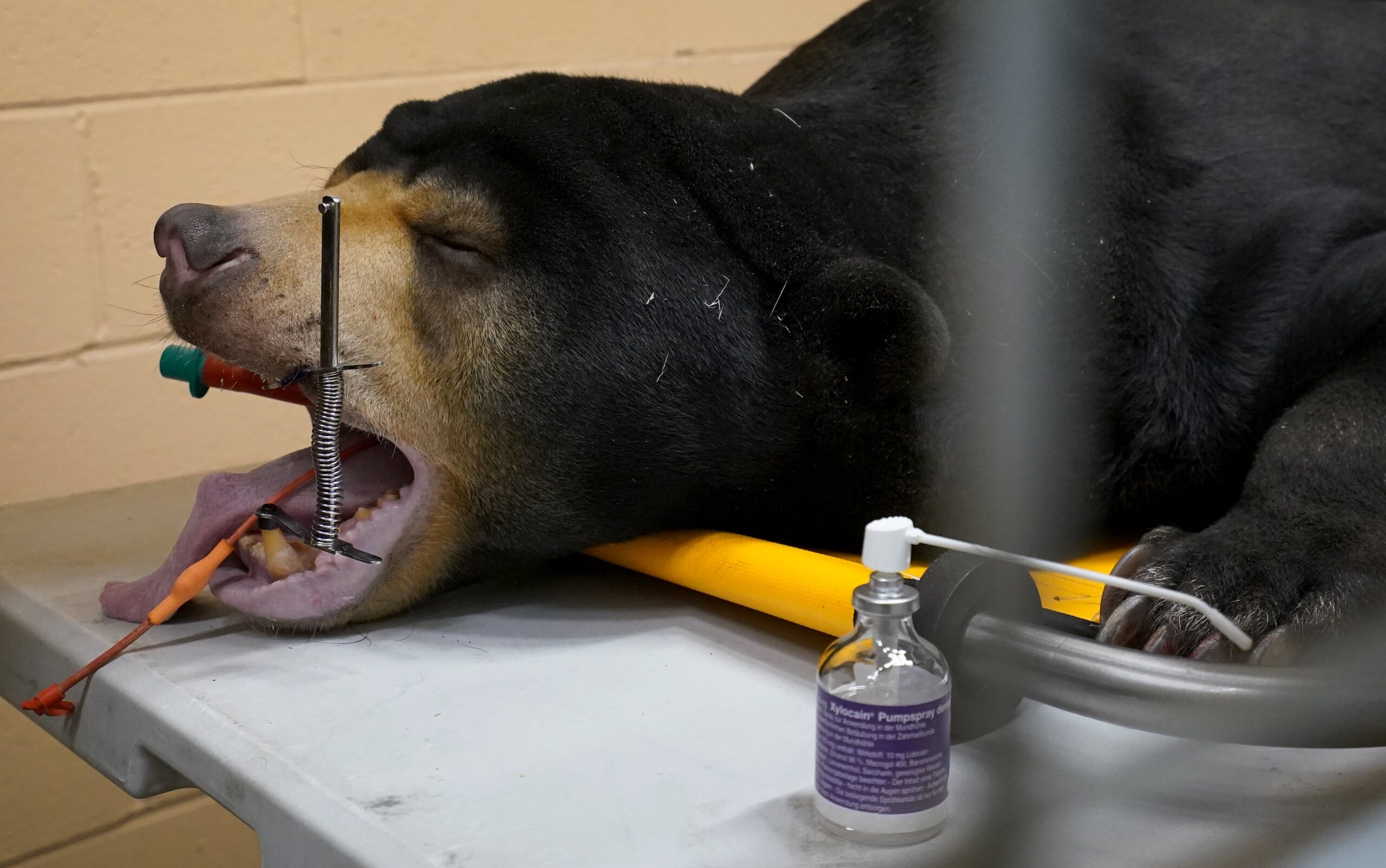
According to their description on Hertfordshire Zoo’s website, it states: “Whilst sun bears are the smallest species of bear, they still hold a stocky, muscular build with a thick but sleek black coat acting as a prevention to overheating in the humid tropical weather whilst providing protection from branches.”
