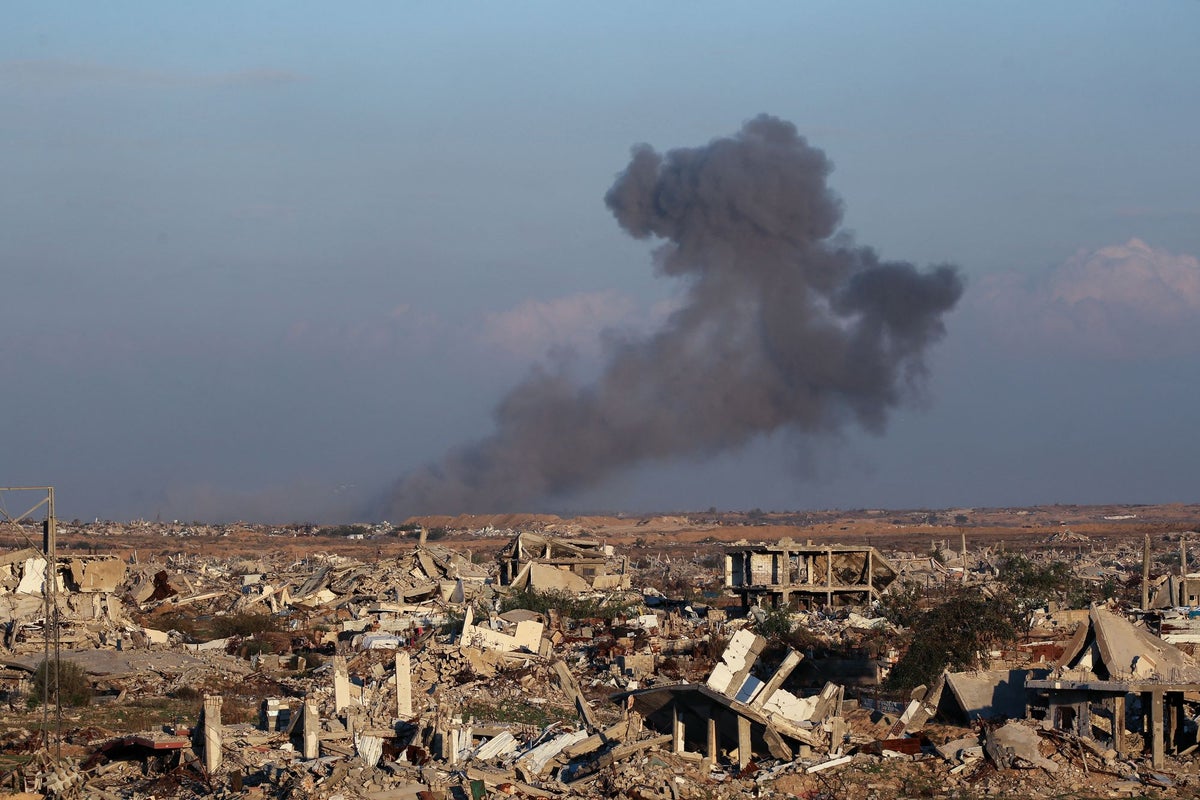
The head of an armed Palestinian faction that opposes Hamas in Gaza has been killed, Israeli media reported Thursday.
It’s a blow to Israeli efforts to support Gazan clans against the Islamist movement.
Yasser Abu Shabab, a Bedouin tribal leader based in Israeli-held Rafah in southern Gaza, has led the most prominent of several small anti-Hamas groups that emerged in Gaza during the war that began more than two years ago.
His death would be a boost to Hamas, which has branded him a collaborator and ordered its fighters to kill or capture him.
There was no immediate word about Abu Shabab’s status on the Facebook page of his group, the Popular Forces.
Prime Minister Benjamin Netanyahu acknowledged in June that Israel had armed anti-Hamas clans, though Israel has announced few other details of the policy since then.
RAFAH SECURITY SWEEP
Abu Shabab’s group has continued to operate from areas of Gaza controlled by Israeli forces since a U.S.-backed ceasefire between Hamas and Israel was agreed in October.
Rafah has been the scene of some of the worst violence during the ceasefire. Residents had reported gunbattles there on Wednesday, and Israel said four of its soldiers were wounded there. The Israeli military said on Thursday its forces had killed some 40 Hamas militants trapped in tunnels below Rafah.
On November 18, Abu Shabab’s group posted a video showing dozens of fighters receiving orders from his deputy to launch a security sweep to “clear Rafah of terror”, an apparent reference to Hamas fighters believed to be holed up there.
Abu Shabab’s death was reported by Israeli media including Kan, Israel’s public broadcaster, citing a security source.
Israel’s Army Radio, also citing a security source, said he had died in Soroka hospital in southern Israel of unspecified wounds, but the hospital soon denied he had been admitted there.
The reports did not say when he died or how he received the reported wounds.
RAFAH ADMINISTRATION
An Israeli government spokesperson declined to comment on the reports. Hamas had no comment, its Gaza spokesperson said.
Israel’s policy of backing anti-Hamas clans took shape as it pressed the Gaza offensive against the group, aiming to end its rule of the coastal strip in the wake of the October 7, 2023 attacks on communities in southern Israel.
In an article published in the Wall Street Journal in July, Abu Shabab – a member of the Tarabin Bedouin tribe – said his group had established its own administration in the Rafah area and urged U.S. and Arab support to recognise and support it.
Abu Shabab’s group has denied being backed by Israel.
Netanyahu said in June that Israel’s backing for Gazan clans was a good thing that had saved the lives of Israeli soldiers.
But the policy has also drawn criticism from some in Israel who have said such groups can provide no real alternative to Hamas, which has controlled Gaza since 2007.
CONTROVERSIAL POLICY
“The writing was on the wall. Whether he was killed by Hamas or in some clan infighting, it was obvious that it would end this way,” Michael Milshtein, a former Israeli military intelligence officer at the Moshe Dayan Center in Tel Aviv, told Reuters.
Several other anti-Hamas groups have emerged in areas of Gaza held by Israel. Palestinian political analyst Reham Owda said that Abu Shabab’s death would fuel doubts among them about their “ability to challenge Hamas”.
U.S. President Donald Trump’s Gaza plan foresees Hamas disarming and the enclave run by a transitional authority supported by a multi-national stabilisation force. But progress has appeared slow, with Hamas so far refusing to disarm and no sign of agreement on the formation of the international force.
Hamas has accused Abu Shabab of looting U.N. aid trucks during the war. Abu Shabab’s group has denied this, saying it has protected and escorted aid.
