Britain continues to be presented as the true architect of all Russia’s woes and the country most determined to keep the war going
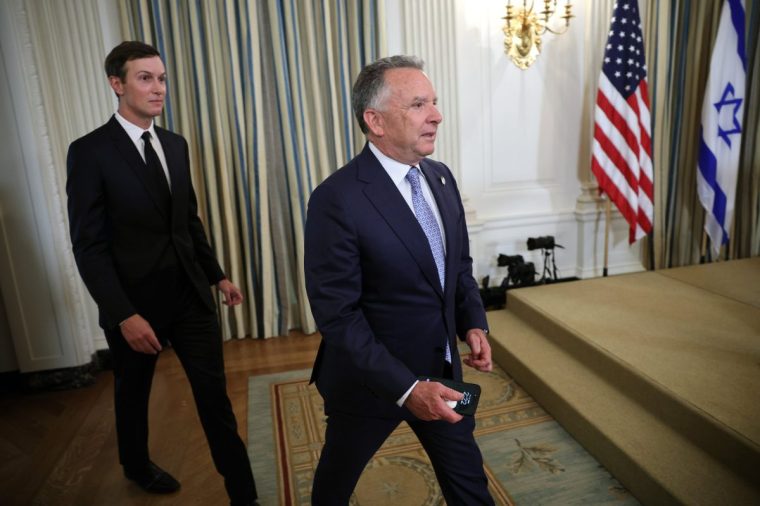
True to form, ahead of the visit to Moscow by Donald Trump’s negotiators Steve Witkoff and Jared Kushner, Vladimir Putin was keen to sound inflexible.
Speaking to reporters during a trip to Kyrgyzstan, he reiterated his demand that the Ukrainians surrender the remaining fifth of the contested Donetsk region, and that “if they don’t withdraw, we’ll achieve this by force of arms”.
Previously, on being asked about the degree to which the original 28-point peace plan had been cut down and revised following talks between the Ukrainians and Americans, he had asserted that every single one of the original points was crucial to Russian interests.
This is typical Putin, though. Instead of seeing negotiations as a process whereby each side makes incremental concessions, with the aim of reaching a resolution somewhere in the middle, he tends to cling to a Soviet approach. He makes unrealistic demands, presenting them all as his irreducible minimum, right until the last minute, when he may make a deal.
However, his propaganda machine is presenting a different set of messages to both his own people and the West.
Overall, the message is of cautious optimism, that peace on Russian terms may be in sight, but that this was very far from being a done deal. Volodymyr Zelensky is presented in contradictory terms, as a broken figure in hock to the West and also a determined opponent of any agreement.
Yet how can Zelensky, especially now that a corruption scandal has cost him his powerful chief of staff, defy the American President? Because of the Europeans, who have become the true villains of the Russian narrative. Putin’s spokesman, Dmitry Peskov, claimed that while Trump wants peace, “European countries are talking about waging war to the last Ukrainian.”
Figures such as the fiercely anti-Russian EU foreign policy chief, Kaja Kallas, attract considerable vitriol, but at the same time the European Union as a structure is regarded as pretty irrelevant. Russian commentators follow Putin’s line that it is the nation states and their leaders which really matter.
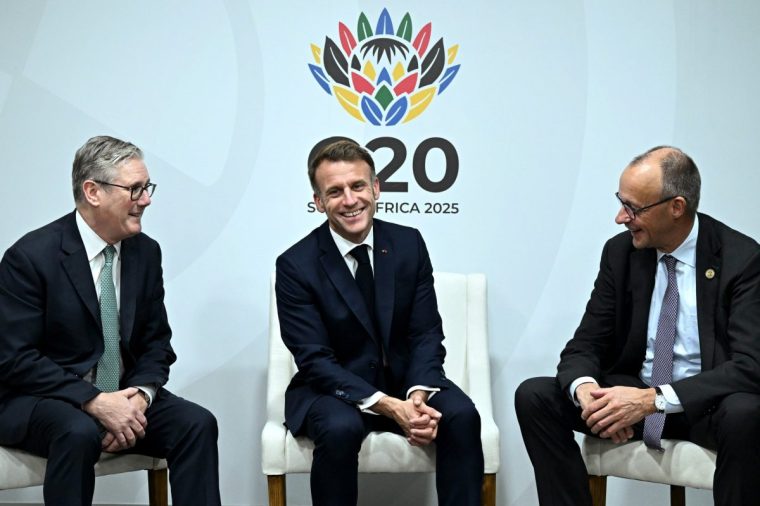
Thus, France’s President, Emmanuel Macron, (described in the Russian government newspaper Rossiyskaya Gazeta as Zelensky’s “beloved”) and the German Chancellor, Friedrich Merz, come in for inevitable flak.
However, it is Britain that continues to be presented as the true architect of all Russia’s woes and the country most determined to keep the war going. “London today, like on the eve of both world wars, is acting as the main global warmonger,” according to Moscow’s Foreign Intelligence Service.
The intent is clearly to signal to Russians that their government is doing what it can to end the conflict, and that if the talks fail then it will not be the Kremlin’s fault.
Putin is trying to woo the reliably business-minded Trump with grandiose (if often impractical) promises of post-war economic co-operation. It is no accident that one of his main negotiators is Kirill Dmitriev, the Harvard-educated CEO of the Russian Direct Investment Fund, and a man well-versed in spinning such dreams.
On the other hand, the conflict itself is increasingly presented as, in Foreign Minister Sergei Lavrov’s words, Europe’s “proxy war against Russia”, with the Ukrainians their hapless cannon fodder. “This war will not be finished even after the current crisis,” he added, in a clear warning that while Russia will try and rebuild relations with the USA, Europe likely faces a continued and potentially elevated campaign of hybrid war marked by disruption and subversion.
Hidden within the propaganda, though, are also messages for the West. While Putin is sounding inflexible, figures close to the Kremlin are also signalling where any room for manoeuvre may be.
Your next read
For example, Andrei Kostin, head of the state-owned VTB bank, criticised efforts to seize frozen Kremlin assets, saying that “waging war using other people’s resources and money is the height of skill for European states” but also signalled that if need be, Russia could do without. Instead, like a number of other talking heads, he focused on Putin’s demands that Kyiv surrenders the portion of the contested Donetsk region that has not yet been conquered and for a cast-iron guarantee that Ukraine would not join Nato.
The implication is that other issues, from the size of Kyiv’s military or Russia rejoining the G8 (not G7) club of industrialised nations, even the use of frozen assets to rebuild post-war Ukraine, may be open to negotiation, so long as these two are resolved to Putin’s satisfaction.
It may just be another negotiation gambit, but as a Russian foreign policy expert told me, “people who tend to have some idea of what Putin is thinking seem to feel there may be some basis for a deal, if Zelensky is willing to give him what he really wants: the rest of Donetsk”. Whether or not the Ukrainian President can or will, of course, is another matter.
