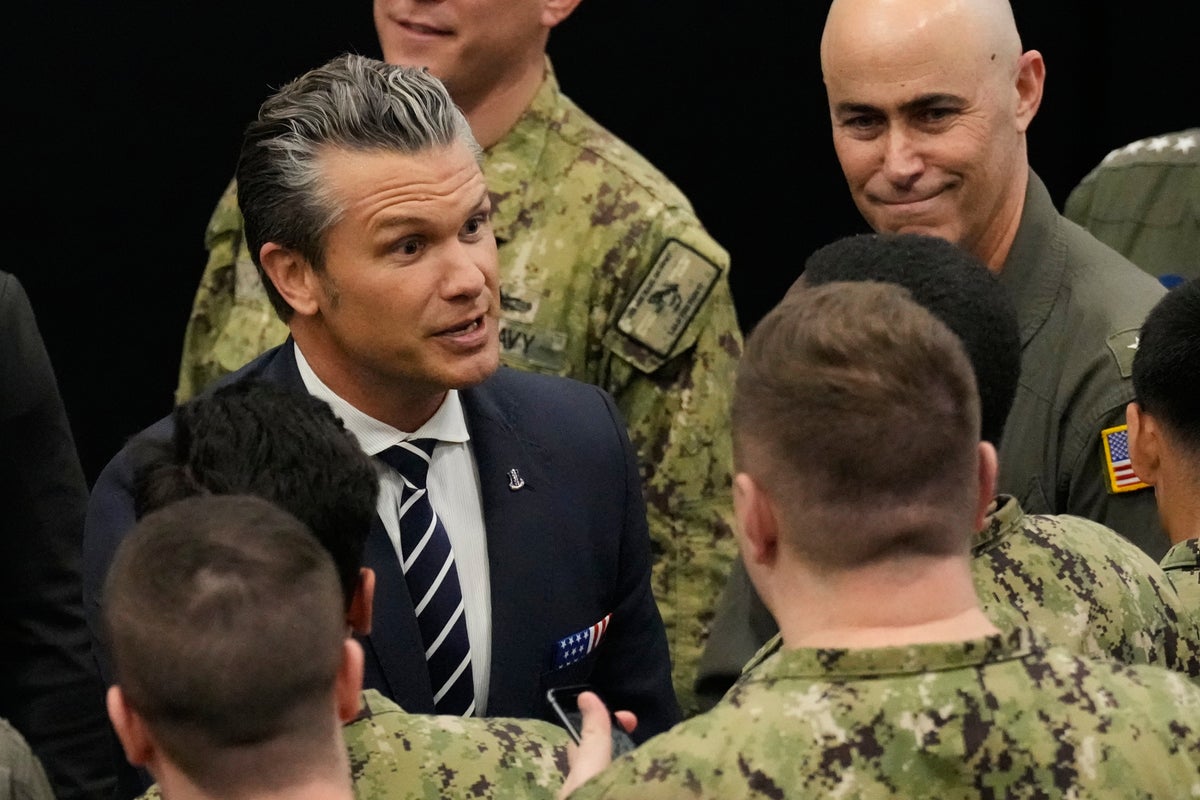
Defense Secretary Pete Hegseth risked endangering U.S. troops by sharing highly-sensitive information about military operations on a Signal group chat earlier this year, a report has found.
The classified report, conducted by the Inspector General, was sent to Congress Tuesday night, and shared by CNN. An unclassified version of the report is due to be released publicly Thursday.
Earlier this year Hegseth sent multiple messages about airstrikes on Houthi rebels in Yemen to a group chat on the private messaging app which included other senior members of the administration including vice president JD Vance and Secretary of State Marco Rubio.
It also included Jeffrey Goldberg, the editor-in-chief of The Atlantic, who was added accidentally by a National Security Advisor.
The messages, reported first by The Atlantic , contained classified and real-time information about the strikes and so specific that one read: “This is when the first bombs will drop.”
In its report the Inspector General noted that there was no documentation that proved Hegseth had declassified the information before sharing it on the chat, according to CNN. The Defense Secretary declined to be interviewed for the report and submitted his version of events in writing instead.
It was later revealed that the information Hegseth was accused of sharing on the chat came from a file marked “SECRET/NOFORN,” contrary to claims made by the administration in the aftermath of the incident that no classified information was divulged.
The strike plans had initially shared in a classified email to more than a dozen defense officials by General Michael Kurilla, Commander of the United States Central Command, who is in charge of U.S. military operations in the Middle East.
The incident in March are just part of a broader report following an investigation into Hegseth’s use of Signal.
Per CNN, the report states that Hegseth should not have used the messaging platform and that better training on protocols is needed for DOD officials.
