What might convince Vladimir Putin to agree a peace deal with Ukraine right now, while his army is still advancing? While his political control of Russia seems as strong as ever? And while Donald Trump has arguably been placing more pressure on Kyiv than on the Kremlin?
So far, the massive human cost of his full-scale invasion – with more than a million Russians killed or injured since February 2022 – hasn’t deterred Putin from fighting on. Nor has the slow pace of his war.
But in the last few months, financial experts have noticed growing signs of problems in the Russian economy. From steel firms to banks, companies are under pressure. Many consumers have cut back their spending not just on clothes, cars and electronics, but even food. A recession is widely expected.
These are dangerous times for Putin, according to Sir Rodric Braithwaite, a former British diplomat who has seen firsthand how Russia can unexpectedly turn on apparently powerful leaders. “I certainly keep open the possibility that Putin could suddenly disappear,” he says.
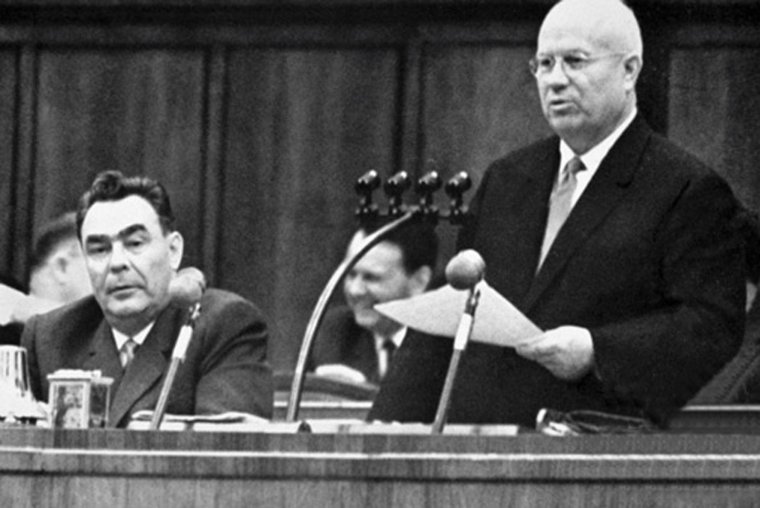
Braithwaite was working in Moscow in 1964 when the Soviet leader, Nikita Khrushchev, was abruptly ousted, in news that shocked the world. Decades later, he was the UK ambassador to the USSR when Mikhail Gorbachev was forced to resign in 1991 and the communist empire broke up, leading to Ukraine’s independence.
Now aged 93, he’s learnt not to make predictions about a world that constantly surprises people. He also accepts that few other analysts see any real threat to Putin’s rule. But we shouldn’t ignore the country’s history of revolutions and palace coups, he argues, and the Kremlin cannot afford to either.
“Unexpected things could happen,” he says. “There’s a tradition in Russia of regimes suddenly collapsing, of leaders suddenly disappearing, sometimes under popular pressure, particularly as a result of a failed war.
“That’s what happened in 1917. The war in Afghanistan from 1979 to 1989 also generated considerable amounts of unhappiness in the Soviet Union, which had a political impact – and the Russians have lost many more soldiers this time than they did in Afghanistan.”
Indeed, the USSR suffered 15,000 deaths during its decade-long Afghan occupation – compared to an estimated 250,000 Russian fatalities across less than four years in Ukraine. Braithwaite questions whether Putin can “sustain this relentless loss of men for very little territorial gain”.
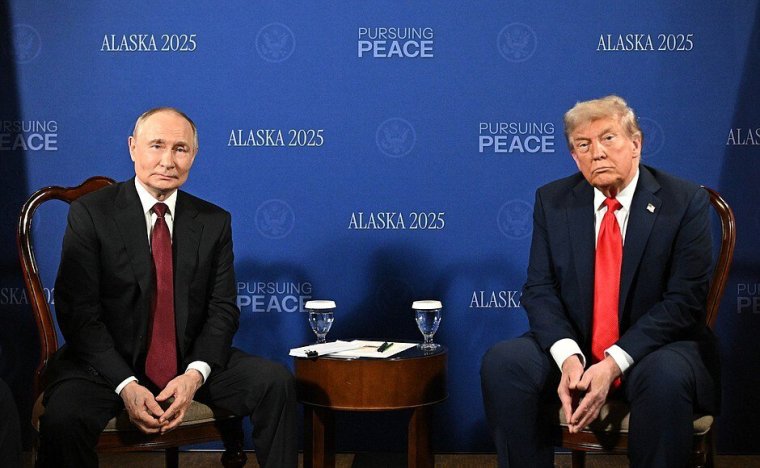
If living conditions start to seriously worsen for the Russian people, the war may quickly become more unpopular – a risk that Putin may want to avoid by doing a deal now, says the former ambassador.
Trump has personally underlined this danger, in a bid to persuade Putin to negotiate. Claiming there were “long lines waiting for gasoline” in Russia following Ukrainian attacks on its oil refineries, the US President said in October that the “economy is going to collapse” if the war doesn’t end.
The US and UK have since placed sanctions on Russia’s two largest oil companies, Rosneft and Lukoil, which Ukrainian experts claim will cost between $2.5bn (£1.9bn) and $5bn each month in lost revenues.
Yet, experts at the Center for Strategic and International Studies maintain that Russia’s economy could “sustain the war in Ukraine for, at least, two to three more years”. Even if finances continue to slide, it would be some time before the population really feels it’s suffering.
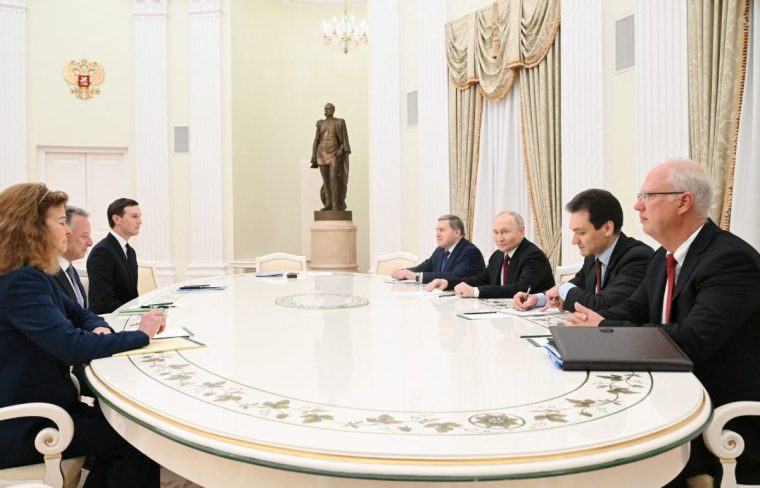
So with Trump’s special envoy, Steve Witkoff, meeting Putin in Moscow this week, would the Russian leader really be willing to shake hands?
“There’s no point in not being optimistic,” says Braithwaite. After all, diplomats have to keep faith even when success looks unlikely. “If you’re not optimistic, you just pack up and go home.”
Watching the ousting of two leaders in Moscow
Braitwaite saw many leaders come and go after joining the British diplomatic service in 1955, being posted everywhere from Washington to Warsaw.
Looking back on his time in the USSR in the 1960s, he wonders if he should have foreseen the downfall of Khrushchev during difficult times economically.
“Travelling around the country and talking to ordinary people, they would say: ‘That man, Khrushchev, is an idiot – he ought to go.’” Braithwaite knew that things were bad if Soviet citizens were willing to say this to a Western official. But it still took him aback when Khrushchev’s protégé, Leonid Brezhnev, led a plot to seize power.
The problem now, he says, is that today’s diplomats don’t have such freedoms to find out if ordinary Russians are whispering similar things about Putin.
The polling company Levada, which was declared a foreign agent by the Kremlin in 2016, reports that 84 per cent of Russians approve of their President.
Jana Bakunina, a Russian author based in London who travelled back to her home country in 2023 to find out why so many people support Putin, fears this figure is accurate. She told The i Paper last month how middle-class Russians are still enjoying comfortable lives and believe that invading Ukraine has helped protect their country.
Bakunina also emphasised the Russian capacity to endure hardship if things do become much tougher, given the cultural memories of living through the 1930s famine caused by Joseph Stalin’s farming collectivisation, the Nazi invasion that led to 27 million Soviet deaths in the Second World War and the hyperinflation of the 1990s after the collapse of communism.

But Braithwaite says it’s much harder to know what people in working-class communities think when so many of their young men are dying or returning from Ukraine badly wounded – nor what Kremlin insiders are thinking.
“I really don’t think anybody can know – even Putin,” says the former diplomat. “Dictators suddenly disappear because they didn’t see what was coming.”
When he was made UK ambassador to the USSR in 1988, he never imagined he would be the last person to hold that title. “I was outstandingly lucky. To be an ambassador during a revolution is very exciting.”
The collapse of the USSR was multifaceted. Gorbachev refused to launch violent crackdowns on independence movements in Soviet republics and oversaw a humiliating withdrawal from Afghanistan. Meanwhile the economy was unravelling, the Chernobyl nuclear disaster rocked confidence in the regime and Boris Yeltsin was hungry to secure power in Russia – even if it meant Moscow losing its rule over the rest of the USSR.
Gorbachev eventually accepted his fate and stood down. With republics like Ukraine seizing the opportunity to claim independence, the country voted itself out of existence.

Braithwaite became friends with Gorbachev and felt sorry for him, feeling he did the best he could for his people. Nevertheless, 1991 was “a time of hope,” he says. “Everybody was willing to talk to us. They’d invite us to their homes. We went away with Russians for trips at the weekend.”
He believed Russia would become a liberal democracy. That vision was ruined by the economic strife under Yeltsin. “My former friends, their incomes had been destroyed. There was a genuine threat of famine. In lots of places, it was very difficult to get food – in what had been a superpower.”
Braithwaite, who later served at No 10 as John Major’s foreign policy adviser and as chairman of the UK Joint Intelligence Committee, regrets that the West was too “triumphalistic” about Russia losing the Cold War.
But he believes Nato was right to expand in the years afterwards, to protect much of Eastern Europe, despite Putin using this to justify his war in Ukraine. Braithwaite says it’s “ridiculous” to blame the Ukraine war on anyone but the Russian leader.

Hopes of peace for Ukraine
The former ambassador no longer hears from his surviving friends who remain in Russia, because they fall into one of two categories: “The ones who’ve gone over to supporting Putin, which is awkward, and the ones who are too worried about what might happen to them if they were corresponding too busily with a foreign diplomat.”
He does not like the idea of Volodymyr Zelensky having to give up territory to Putin. However, he thinks a diplomatic fudge could lead to at least a ceasefire – whereby Russia is left in control of the territory it has conquered, but Ukraine and the West never officially recognise this rule, in the hope of reclaiming this land when one day, when Putin is gone.
“There’s wiggle room for language in an agreement there,” he says. “It’s important for both sides to be able to claim, at least for their own people, some kind of victory.
“The Russians would say: we got the territory we wanted.” But Ukraine must insist on “no outside limits on the size of their armed forces or on the weapons they equip themselves with – that’s fundamental,” he says.
Is the US President capable – and determined enough – to secure a fair peace?
“Trump is a pretty disorganised fellow. He lurches from one position to another and that makes people naturally very uneasy,” says Braithwaite. “But he does have a certain strategic sense and a sense of priorities, which can work.”
Although he believes Trump is a “bully” who has been “disgraceful” towards Zelensky, he says the UK and Europe should be bolder in their own support of Ukraine.
“There’s a lot of fine words and not very much in the way of concrete action. We’ve done not badly, the British, but we haven’t done enough,” he says. As well as calling for greater donations of cash and equipment, he laments that European allies haven’t “put boots on the ground”, which they “could and probably should have done.”
The EU has committed to €11.1bn (£9.7bn) in military support to Ukraine, while the UK has pledged £12.8bn in assistance.
Your next read
Given the dangers of provoking a wider war between Nato and Russia, many experts will be startled at Braithwaite’s suggestion that the UK and its European allies ought to have sent troops into Ukraine.
Yet the ex-ambassador claims the threat of the conflict becoming a third world war is overplayed – despite Zelensky airing these very fears and the UK admitting it needs to prepare for conflict. “How great is that risk? We’ve allowed ourselves to be bullied and bamboozled by Putin, by exaggerating the risk that he poses to us.
“Putin is not, in my view, going to enter a war with Nato because he doesn’t know where it would end up.”
