As Russian aggression grows, what could the UK learn from France, Finland and Estonia about preparing for war?
The UK is “falling behind” its allies in preparing for war and should be looking to countries with military conscription for inspiration, a former defence minister told The i Paper.
While military insiders insist that conscription is still very far off in the UK, they said the country is now “prioritising a whole-of-society approach to resilience, reconnecting the public with those who serve.”
Tobias Ellwood, who served as defence minister between 2017 and 2019, said the UK is “now behind” France and Germany, which both recently introduced voluntary military service schemes.
They are not alone. With the growing threat from Russia, a number of European countries have introduced conscription or other military service models in recent years. These include Lithuania, Sweden and Latvia, which brought back mandatory military service in 2015, 2018 and 2024 respectively.
“War is more than likely on its way,” Ellwood said. “Sadly, we’ve entered a new era of insecurity and preparing ourselves for a difficult future actually helps our deterrence. Unpalatable as it might be, this is a conversation that the British people need to have.”
General Sir Patrick Sanders, the then-head of the British Army, said last year that the UK should “train and equip” a “citizen army” in the face of Russian aggression, though he stressed that he did not mean conscription.
The UK is already introducing a voluntary gap-year scheme for school leavers to experience a paid year in the Armed Forces – but some former officials say more needs to be done, and the UK should look to its allies for inspiration.
France
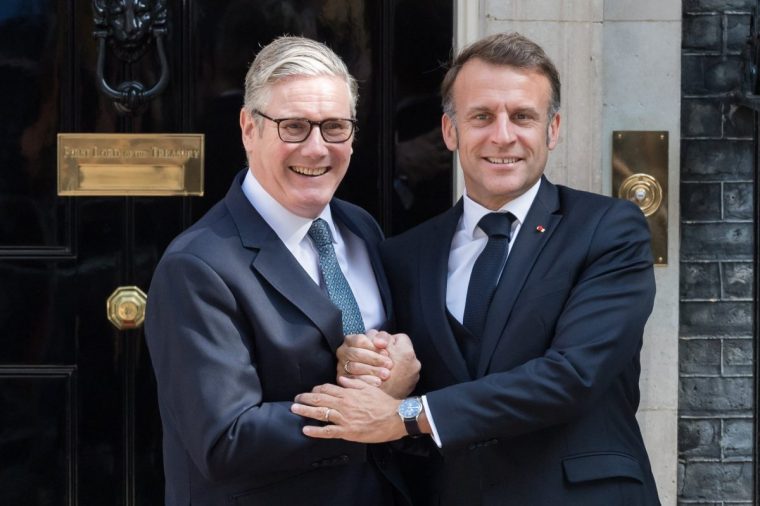
This week, France introduced a voluntary military service scheme in which mostly 18 and 19-year-olds will undertake 10 months of paid military training.
The move comes more than 25 years after conscription was phased out in the country, and was introduced in the face of growing Russian aggression, with President Emmanuel Macron saying that the “only way to avoid danger is to prepare for it.”

“We need to mobilise, mobilising the nation to defend itself, to be ready and remain respected,” he said.
The French scheme will start with 3,000 volunteers next year, but is due to rise to 50,000 by 2035.
Former home secretary Amber Rudd told The i Paper that she liked the sound of France’s plan and supported the creation of a British voluntary scheme. “The more we see other European countries doing that, the more likely the public here are going to wonder why it doesn’t take place here,” she said.
“It has to be an offer, not a compulsion. I wouldn’t call it ‘conscription’; the best way is if it looks like a great opportunity,” Rudd added.
Last year, Conservatives proposed a mandatory national service scheme in which 18-year-olds would be given the choice between a full-time placement in the Armed Forces or UK cyber defence for 12 months, or spending one weekend a month for a year volunteering in their community.
The scheme divided military top brass, with many welcoming the focus on force expansion but privately fearing it would be a huge burden for the military to carry out.
Admiral Lord West, the former head of the Navy, said he supported a France-style scheme in the UK, but that it would need to be backed by significant resource.
“I think anything where we get young people involved in military – to know about the military, to understand the risk the country’s under – is good,” he told The i Paper.
But he said the shape of the scheme would depend on the resource provided to ensure new recruits could be properly trained and fitted into the existing force structure.
“That is quite tricky, because notwithstanding all the good words being said about defence, and the fact that [spending] is going up, we are incredibly short of money. There’s not enough money to even train and provide the spares for the people we’ve got at the moment,” he said.
Finland
Ellwood, the former defence minister, said that the UK should be adopting Finland’s model of whole-society preparedness.
“In Finland they have quite an impressive model which I believe we should copy. And it’s not national service of old or Dad’s Army. It’s an all-of-society approach,” he said.
Finland, which shares an 830-mile border with Russia, has an approach that spans conventional air, sea and land domains, as well as space, cyber security, disinformation and even upgrading the coastguard to protect undersea cables.
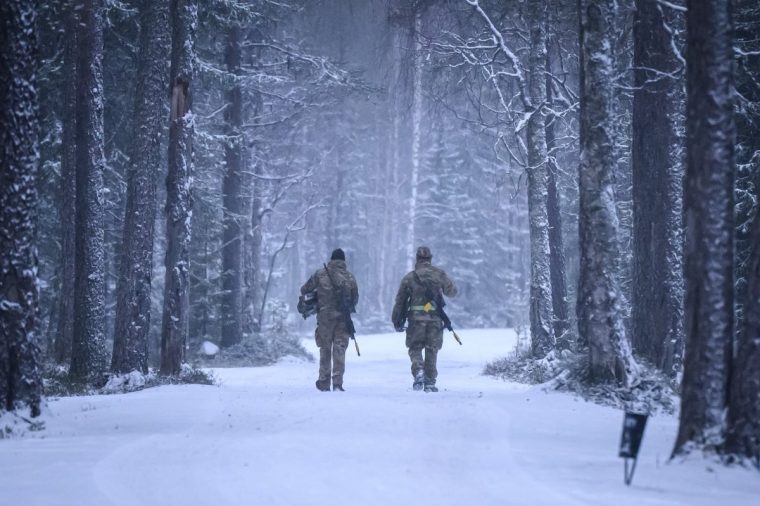
“It’s every aspect of society being able to operate at a moment’s notice, in case there’s everything from a drone attack to 72 hours without power to something more formidable,” Ellwood said.
“You can’t simply lean on tiny armed force, a standing army, to defend ourselves, particularly in the gray-zone space where conflict is ever more likely,” he said, referring to unconventional warfare like cyber attacks.
Finland relies on a conscription model in which 18-year-old men must complete military training lasting 165, 255 or 347 days depending on the type of programme, while women can choose whether to complete voluntary service.
After Finns have completed their service, they automatically join the country’s reserves, in which they remain until they turn 50, and must take part in regular training refreshers during that time.
Finland has a “tiny army, but at the moment’s notice, they could upgrade and mobilise over half a million people,” Ellwood said.
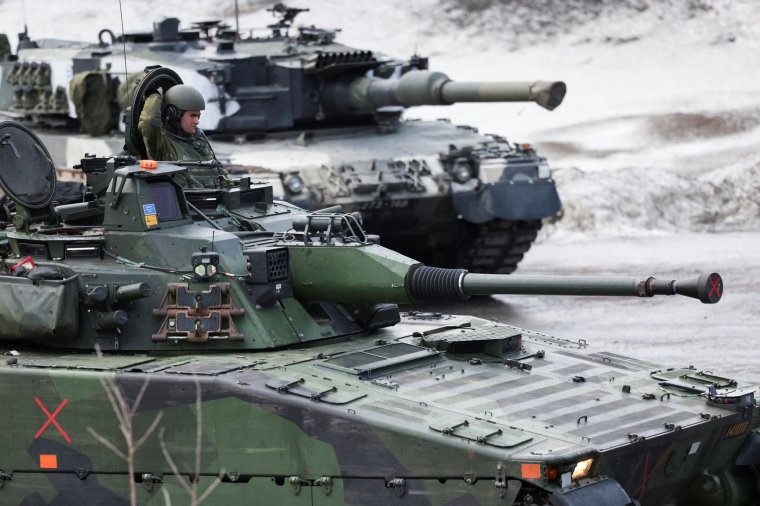
Finland also provides training to both civilian and military leaders in either national or regional defence courses, with various associations promoting survival, home economics and first aid skills.
The UK’s National Preparedness Commission said in 2021 that Finland’s comprehensive security network is a “good example for bringing actors across society together to contribute to and share in the preparedness of their nation”.
It said it hoped the UK could consider something similar.
Estonia
Estonia, which also borders Russia, hosts frequent war drills to prepare the military and civilians for a potential invasion.
The exercises – named Hedgehog to mimic Estonia’s small size but mighty defences – sees ordinary citizens called up to join the military as conscripts or reserves, along with others who volunteer as part of the Estonian Defence League.
The larger-scale Hedgehog exercise happens every three to four years, while a smaller version – Spring Storm – is an annual event.

As part of raising preparedness, Estonian farmers offer up their land to be used as training sites, and civilian roads are frequently blocked with military exercises, offering not only a wider and more realistic battlefield but also growing awareness among the public of the threat.
Meanwhile, branches of Estonia’s government get involved: the judiciary drills how prisoners of war would end up in jail, politicians visit the mock front lines to get feedback from soldiers and healthcare facilities and workers simulate medical support.
Allies, including the UK, have joined in to practice deploying with a foreign military on Nato’s eastern flank.
“One part of the puzzle is the military, but everything else has to come also and support it,” Estonian officer Madis Koosa told The i Paper on a visit to the exercise earlier this year.
Koosa said the UK should “definitely” consider implementing its own drills.
Your next read
“The big exercises when you’re visible out from the training areas, it may be difficult initially, but this is how society gets used to it, [and realises] that the military is not something strange or ugly or alien, but it is a part of society,” he said.
“All the reservists who join us are bus drivers, teachers and even politicians. This is what a small country needs: the full support of the population, and this is what we see. The aggressiveness of Russia really helps to boost it,” he added.
These are lessons the UK probably needs to learn – and fast.
