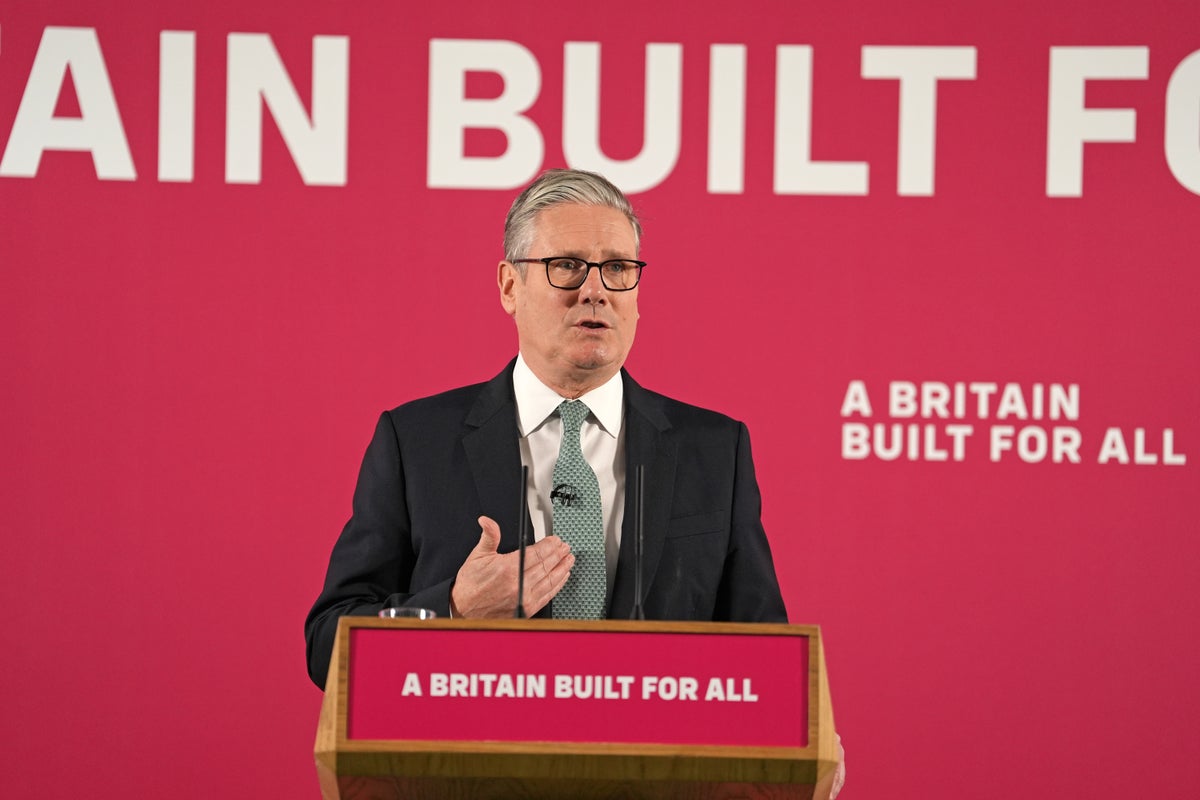
British Prime Minister Keir Starmer on Monday defended his Treasury chief against opposition claims that she misled the public and the markets about the state of the public finances before last week’s budget.
Starmer said “there was no misleading” in the run-up to Chancellor of the Exchequer Rachel Reeves’ tax-hiking budget, which the government hopes will raise money to reduce government borrowing, invest in infrastructure and public services, ease the cost of living and spur elusive economic growth.
Three weeks before the budget, Reeves made a speech to prepare the public and markets for a rise in income tax rates, which would have broken a key election promise. After an outcry among governing Labour Party lawmakers, and a better-than-expected update on the public finances, she reversed course, opting for smaller revenue-raising measures.
Opposition politicians allege that Reeves knew when she made the speech that the forecast from the independent Office for Budget Responsibility was better than expected.
The Conservatives and the Scottish National Party have asked the Financial Conduct Authority to investigate Reeves’ comments and leaks to the media before the budget, and Reform U.K. leader Nigel Farage has urged the government’s standards adviser to probe Reeves’ comments.
Reeves denies misleading the public or markets. She said Sunday that the OBR assessed before the budget that tax revenue would be 16 billion pounds ($21 billion) less than expected because of a downgraded productivity forecast. That is a smaller budget hole than had previously been reported, leading government critics to imply there was skullduggery by the government.
Reeves said that in her speech she said, correctly, that “the OBR downgrade has had a big impact on the public finances. And that was why I would need to ask people to contribute more.”
The government was elected in a landslide victory in July 2024 on a promise not to raise taxes on income for working people. Some of the budget’s 26 billion pounds ($34 billion) in tax hikes, largely to increase the buffer available to the government for any future shocks, broke the spirit if not the letter of that promise.
Starmer hit back in a speech Monday at a community center in London, saying his government had inherited “public finances and public services in total crisis” after 14 years of Conservative government. He defended the decision to raise taxes, raise the minimum wage and fund public services that will help lift children out of poverty.
“We confronted reality, we took control of our future and Britain is now back on track,” Starmer said. “Bit by bit, you will see a country that no longer feels the burden of decline.”
He said the government would push forward with two potentially risky tasks: cutting Britain’s ballooning welfare bill and moving closer to the European Union. The first of those risks angering Labour members, while the second will rile pro-Brexit Conservative and Reform politicians.
Starmer said the exit deal negotiated before Britain left the EU in 2020 had “significantly hurt our economy.
“We have to keep moving toward a closer relationship with the EU,” he said.
