The National Gallery has unveiled a new piece of art which commemorates a Welsh quarry that housed the country’s paintings during the Second World War.
The tablet, made from slate taken from North Wales, has inscriptions in both Welsh and English honouring Manod quarry in Eryri (Snowdonia).
It reads “Daw’r llechen hon o chwarel Manod yng Ngogledd Cymru lle cafodd paentiadau’r Oriel Genedlaethol eu diogelu yn ystod yr Ail Ryfel Byd” which translates to “This slate is from Manod quarry in North Wales where the National Gallery’s paintings were protected during World War II”.
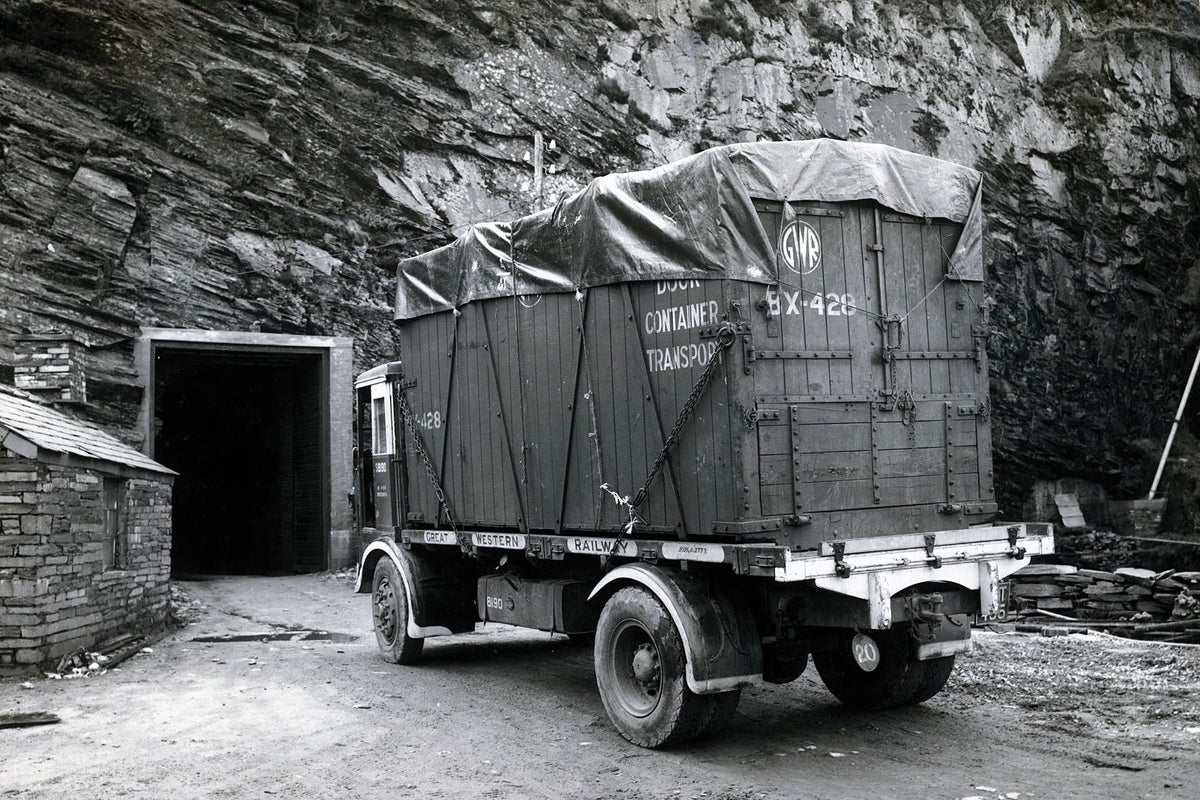
Following the outbreak of war, the National Gallery moved its art to the Manod mine, with the whole collection rehomed by the summer of 1941.
Small brick “bungalows” were built within the caverns to protect the paintings from variations in humidity and temperature while explosives were used to enlarge the entrance in order to accommodate the largest works.
The art remained there for four years and returned to London after the war ended in 1945.
Conceived by artist Jeremy Deller and designed and carved by John Neilson, the tablet was commissioned by Mostyn gallery, Llandudno, and supported by the National Contemporary Art Gallery for Wales, CELF.
Daniel F Herrmann, Ardalan curator of modern and contemporary projects at the National Gallery, said: “We are grateful to Jeremy Deller, John Neilson and the team at Mostyn for their partnership in commemorating a significant moment in the history of the nation’s collection.”
Sir Gabriele Finaldi, director of the National Gallery, added: “The Manod Slate Tablet serves as a reminder of the crucial moment when during wartime the nation’s paintings were secreted in caves in the slate hills of North Wales to preserve them for future generations.”
The Manod Slate Tablet will be on permanent display in the Portico Vestibule of the National Gallery as a lasting legacy of Jeremy Deller’s The Triumph of Art – a project that saw a year-long celebration of festivals, gatherings and art throughout Britain and Northern Ireland, culminating in a day-long public celebration in Trafalgar Square earlier in July.
Dr Kath Davies, director of collections and research at Amgueddfa Cymru, said: “It is wonderful to see how the CELF network is making a real difference to the contemporary art scene in Wales.
“Through CELF we are able to support contemporary artists to make new work and encourage our audiences to engage with Welsh stories and interests. This is a fantastic project that commemorates an important historic event but also preserves traditional Welsh craft and heritage.”
