Even limited land strikes on Venezuela could trigger unintended consequences such as a conflict and human suffering, one analyst said
Civil war could ravage Venezuela if Donald Trump launches a land assault on the country amid flaring tensions, experts have warned.
US air strikes have hit at least 21 boats in the Caribbean and Pacific in recent months, killing over 80, as part of an operation Trump claims is cracking down on the flow of narcotics into America.
Trump has ramped up tensions with Venezuela in recent days after accusing its president, Nicolás Maduro, of leading a drugs cartel and claiming US land action to stop suspected drug traffickers will start “very soon”.
On Saturday, Trump claimed on Truth Social the airspace above and surrounding Venezuela will be closed, in a measure Maduro’s government has dismissed as an illegal “colonialist threat”.
Amid escalating tensions, analysts have told The i Paper any ground assault – whether it be boots on the ground or strikes – on Venezuela could cause rivalling proxies and militias to spiral into a conflict which could threaten the peace and security of the region.

Alongside the air strikes, there has been a steady build-up of American forces in the Caribbean, including the US deploying the world’s largest warship, the USS Gerald R Ford.
Carlos Solar, senior research fellow in Latin American Security at the Royal United Services Institute, told The i Paper Trump’s escalation is the most significant US intervention on foreign soil since its involvement in the 2004 coup d’etat in Haiti.
Land strikes on Venezuela could cause civil war
While it is unclear whether Trump is plotting a full-scale invasion of Venezuela, such an escalation could quickly spiral into civil war, according to Annette Idler, associate professor in global security at University of Oxford’s Blavatnik School of Government.
She said: “A full-scale US invasion remains unlikely because it would have really high political costs, operational costs, humanitarian costs. It could trigger a proper conflict, an armed conflict, a civil war even, with so many different factions involved.”
Professor Idler warned that US land strikes in Venezuela could “trigger a spillover” into neighbouring Colombia, with guerrilla force, the National Liberation Army (ELN), operating across the border.
Pete Hegseth, the US defence secretary, claimed one American air strike hit a boat linked to the ELN, leading Colombian president Gustavo Petro to condemn what he claimed was a strike on a “humble” fishing family.

American strikes could provoke retaliation from the ELN, or from Venezuelan ‘colectivos’ – the paramilitary groups which operate in the country.
Solar said Venezuela could be engulfed by armed fighting if Maduro is overthrown.
He said: “There’s is always a risk that land strikes defeating the [Venezuelan] forces could leave a vacuum of power for militias under criminal control or proxies of Colombian guerrillas known to have jumped the border into Venezuelan territory.”
Professor Idler said the risk of US land strikes is not proportionate to their stated aim of halting drug rings: “Once you go into land territory there could be much more collateral damage, depending on where they strike.
“It’s more likely that more civilians are affected, that more infrastructure is affected, that it is not just military or not just related to drug trafficking.”
Even if the US resists a full-scale invasion of Venezuela, land strikes risk enflaming tensions on the ground between the complicated patchwork of militias and proxies in the country, Professor Idler said.
“There is really a big risk that even if they are just very limited strikes, that these then trigger very unintended consequences with more conflict and more human suffering,” she said.
US land operations in Venezuela would require the consent of a neighbouring South American country to act as a platform for troops, Solar noted.
There are US military bases in Puerto Rico, Honduras and Cuba, and Cooperative Security Locations – surveillance hubs at local airports – in El Salvador, Aruba and Curaçao.
The Dominican Republic has authorised US military deployment on its soil, and Hegseth said on Wednesday he will seek the consent of other countries to host military as they crack down on “drug terrorists”.
Would regime change be a win for Trump?
Although this escalation makes armed conflict the most likely it has been, Trump’s tensions with Maduro are not new.
In 2019, during Trump’s first administration, the president revoked the visas of 718 people associated with Maduro and imposed sanctions on more than 150 people and companies connected to the leader.
Regime change is a “possible motive” for Trump, Professor Idler says, with “hardliners” in the Republican party having long pushed to topple Maduro, who they say is a dictator who rigged elections.
Stephen Miller, a Republican figure close to Trump, is said to be behind this strategy, with former adviser Steve Bannon telling the Times this cause “connects his anti-immigration [stance] with the source of a lot of the problems”.
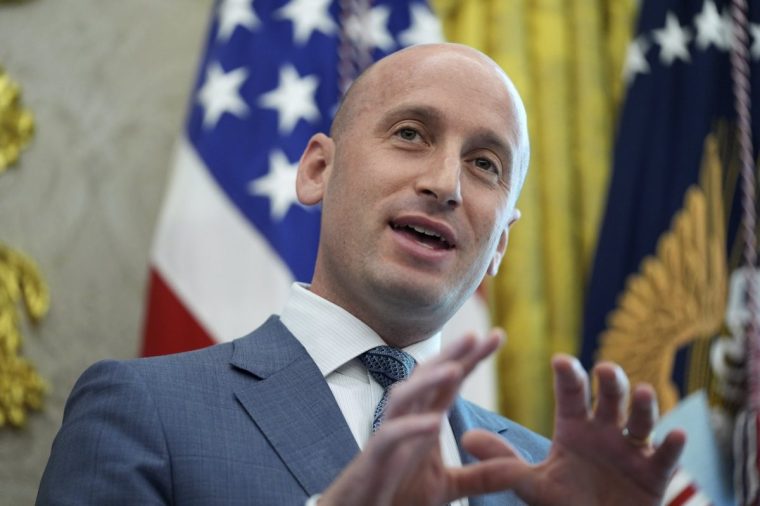
Idler said the operation “plays well with Trump’s base” because it links seemingly tough action on drug gangs with instability in Latin America.
Venezuela could seek support from allies Russia, China, Cuba and Iran in resisting regime change, Idler said, but it is unlikely these states will become involved in an armed conflict.
Solar believes deposition of Maduro is unlikely due to the president’s skill at curating a loyal inner circle, however the top ranks of the Venezuelan military could hand him over to the US.
But regime change would require “serious investment in post-conflict reconstruction and security assurances”, he said.
Your next read
Tom Long, who teaches politics and international studies at the University of Warwick, previously told The i Paper significant American investment in rebuilding Venezuela would be “anathema to many of [Trump’s] supporters”.
During Trump’s first term in office, US officials ran a war game to plot out the consequences of removing Maduro from power.
The resulting report, written by national security consultant Douglas Farah, warned deposing Maduro would result in “chaos for a sustained period of time with no possibility of ending it”.
