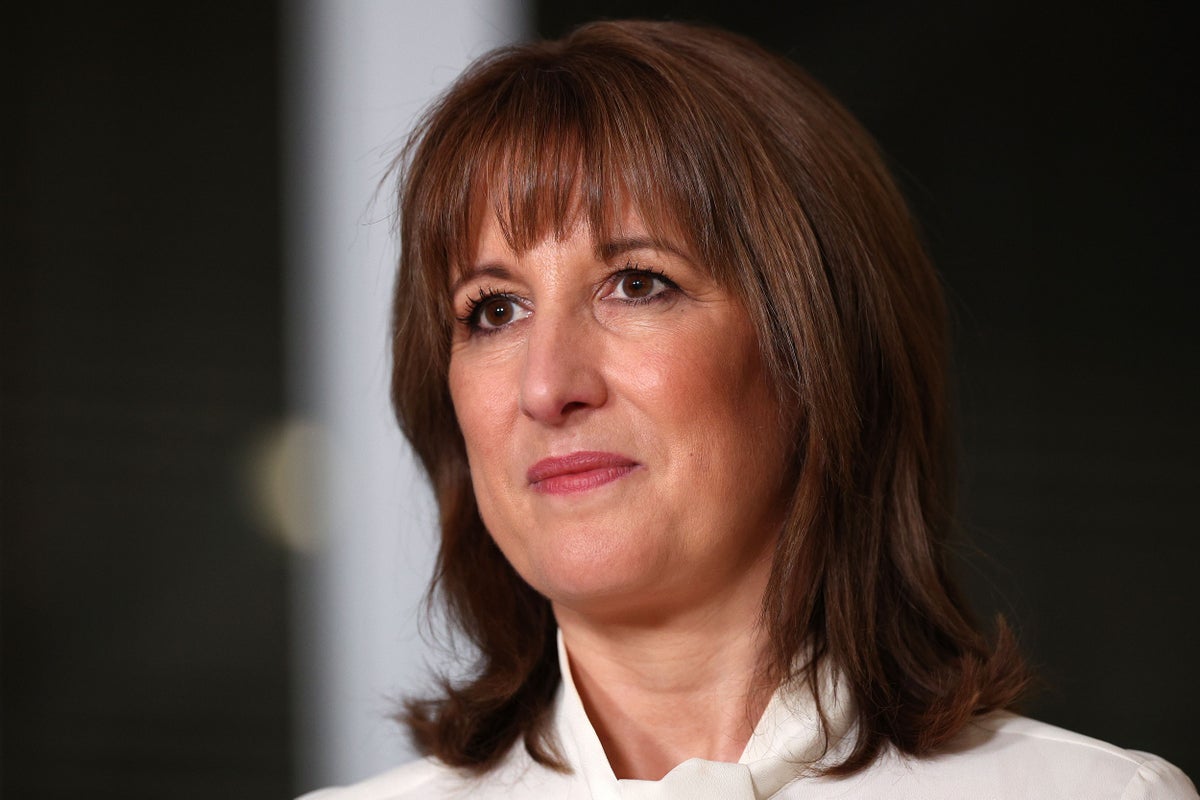
Sir Keir Starmer’s top aide has insisted that Chancellor Rachel Reeves did not mislead voters over the state of the public finances ahead of the Budget.
Chief Secretary to the Prime Minister Darren Jones insisted there was a “funding gap” to fill when asked when he knew that there was no “black hole” in the public finances.
It comes as Sir Keir is set to use a speech backing the Budget to signal a fresh push on welfare reform.
Ms Reeves has been forced to defend herself against claims she misled voters by talking up the scale of the fiscal challenge in the run-up to last week’s Budget, in which she announced £26 billion worth of tax rises.
She said an Office for Budget Responsibility (OBR) forecast showing a £4.2 billion surplus against her borrowing rules did not take into account the welfare reform U-turn or the abolition of the two-child benefit cap.
Cabinet minister Mr Jones told BBC Radio 4’s Today programme: “There are two things relevant here. The OBR did downgrade its assumptions about how much money was coming in over future years by looking at the past 10 years.
“That is true and correct. And as I say, there was a funding gap.”
Members of Sir Keir’s top team have reportedly accused him and Ms Reeves of misleading the Cabinet, with The Times quoting an unnamed minister as describing the handling of the Budget as “a disaster from start to finish”.
“At no point were the Cabinet told about the reality of the OBR forecasts,” they told the newspaper.
Mr Jones rejected this, telling LBC that Ms Reeves had the “full support” of Cabinet ministers on the Budget and that they are briefed on the “context” in the run-up and then briefed in Cabinet on the morning of the statement.
“The Budget received the full endorsement and support of the Cabinet in advance of the Chancellor going to Parliament,” he said.
He later added: “The Chancellor didn’t mislead anyone.”
In a speech on Monday, the Prime Minister will say an overhaul of the welfare system is needed after he was forced to abandon cuts planned earlier this year in the face of a major backbench rebellion.
“We have to confront the reality that our welfare state is trapping people, not just in poverty, but out of work,” the Labour leader will say, arguing reforms are not aimed at making him “look somehow politically ‘tough’”, but at reversing low productivity.
His summer U-turn saw changes to personal independence payment (Pip) eligibility stripped out of the Government’s welfare legislation, amid warnings from rebel MPs of the impact on disabled claimants.
The climbdown blew a hole of £4.8 billion in the Chancellor’s preparations for the Budget, removing expected savings.
Sir Keir is set to highlight the scrapping of the two-child limit – expected to take 450,000 children out of poverty – a decision which appears to have calmed discontented Labour backbenchers.
The Prime Minister will now focus renewed attention on tackling other problems in the welfare system, according to Downing Street.
In an apparent bid to discourage backbenchers from further revolts over a welfare shake-up, the Prime Minister will say: “We have to confront the reality that our welfare state is trapping people, not just in poverty, but out of work. Young people especially. And that is a poverty of ambition.
“And so while we will invest in apprenticeships and make sure every young person without a job has a guaranteed offer of training or work, we must also reform the welfare state itself – that is what renewal demands.”
He will say the changes are about “potential” and making sure people are not trapped in a “cycle of worklessness and dependency for decades”.
He will point to the review being led by former Labour health secretary Alan Milburn into “Neets” – 16-24-year-olds who are not in education, employment or training – which is expected to report next summer.
Sir Keir will also say “economic growth is beating the forecasts” but the Government must go “further and faster” to encourage it.
He will also make the case for slashing regulation, saying: “Rooting out excessive costs in every corner of the economy is an essential step to lower the cost of living for good, as well as promoting more dynamic markets for business.”
Business Secretary Peter Kyle will be tasked with applying the same deregulatory approach to major infrastructure schemes and to give monthly updates on accelerating Labour’s industrial strategy.
The Prime Minister wrote in the Guardian that his economic plans will take years to deliver in full, saying: “By delivering a big, bold long-term plan, not a set of quick fixes, we will renew Britain.”
He added that “we will deliver the change we promised and then be judged on it at the next election”.
Sir Keir will also use his speech to endorse the decisions taken by Ms Reeves in the Budget, including on energy bills, rail fares and prescriptions, and on creating a greater headroom and protecting investment and public services.
But pressure on Ms Reeves continues from opposition politicians over claims she deceived voters over the size of the fiscal repair job she faced.
The Conservatives on Sunday wrote to Sir Keir demanding the Chancellor come before MPs on Monday to “explain the extent to which she misled the public”.
The Tories and the Scottish National Party have asked the Financial Conduct Authority to investigate policy leaks ahead of the Budget and the Chancellor’s own comments.
Reform UK leader Nigel Farage has urged the Prime Minister’s independent standards adviser Sir Laurie Magnus to look into potential breaches of the ministerial code.
