European leaders also submitted a rival peace plan amid fears of concessions to Russia
The US and Ukraine have said they have created an “updated and refined peace framework” after an earlier plan drafted by the Trump administration was criticised as too sympathetic to Moscow.
In a joint statement released after talks in Geneva between US and Ukrainian delegations, the two sides said their discussion was “highly productive” and would continue in coming days.
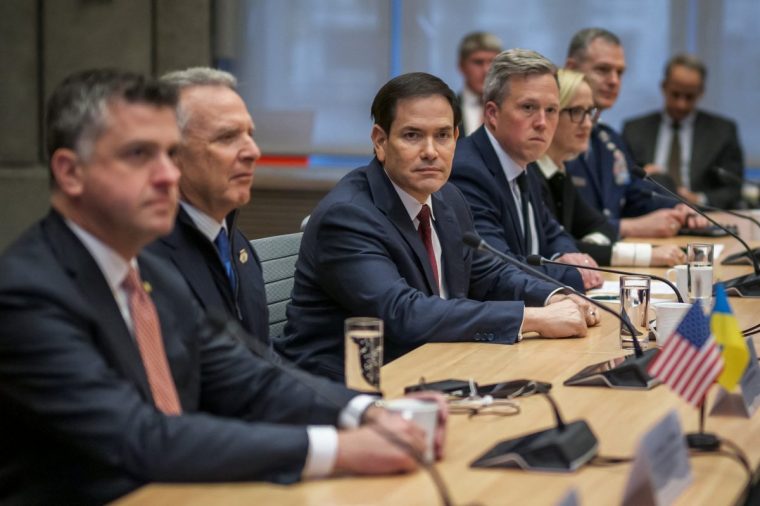
US Secretary of State Marco Rubio, who led the talks, said work remained to be done on questions including the role of Nato, but that his team had narrowed down unresolved issues in a 28-point peace plan for Ukraine championed by Donald Trump.
Rubio said Sunday’s talks with delegations had been “probably the most productive and meaningful meeting so far in this entire process”.
The teams were now working on suggestions and “making some changes” in the hope of “narrowing the differences” between the US and Ukraine,” he added.
In a separate statement, the White House said the new version included strengthened security guarantees, and that the Ukrainian delegation had said it “reflects their national interests”.
Ukrainian officials did not provide a separate statement of their own.
Trump lashes out
European officials joined the delegations after crafting a modified version of the US plan that pushes back on proposed limits to Kyiv’s armed forces and suggested territorial concessions.
The talks came after Trump lashed out at Ukraine, accusing its leadership of having “zero gratitude” over his involvement in peace talks held in Geneva to end the war with Russia.
In a post on his Truth Social network, the US President condemned Kyiv and attacked Europe for continuing to buy Russian oil.
His outburst came before details emerged of a counter-proposal to the US’s draft peace plan for Ukraine, tabled by Britain, France and Germany.
The document, which is understood to have been presented to US officials, is based on America’s 28-point plan and suggests changes and deletions to it.
Trump wrote: “I inherited a war that should never have happened, a war that is a loser for everyone, especially the millions of people that have so needlessly died.
“Ukraine ‘leadership’ has expressed zero gratitude for our efforts, and Europe continues to buy oil from Russia. The USA continue to sell massive amounts of weapons to Nato, for distribution to Ukraine (crooked Joe gave everything, free, free, free, including ‘big’ money!).”
Europe rejects Trump plan
Starmer – along with EU leaders, Canada and Japan – pushed back against the US deal, insisting that Ukraine’s borders “must not be changed by force”.
Ursula von der Leyen, President of the European Commission, responded to the deal on Sunday, saying peace in Ukraine must not sacrifice its borders, reduce its army or come without EU involvement.
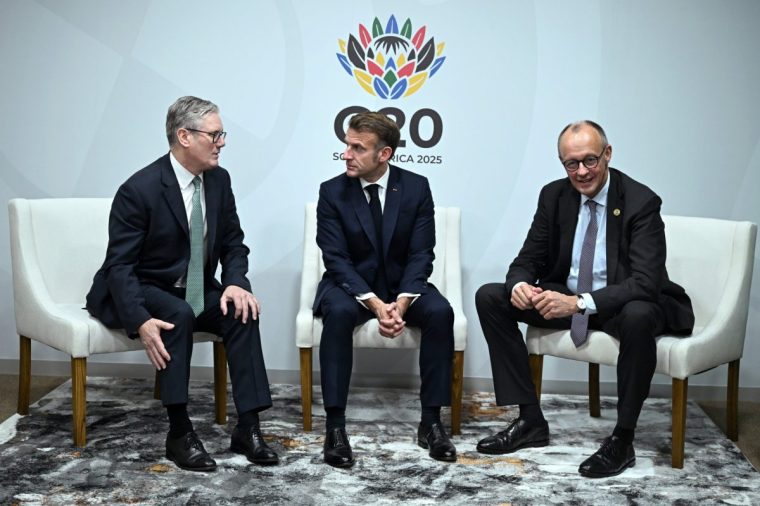
Among proposals mentioned in the rival European peace plan are that negotiations over Ukraine’s territory should take place after a ceasefire is agreed, and should start from the existing front line.
Others include agreeing to a 800,000 soldier cap on Ukraine’s peacetime army and readmitting Moscow into the G8.
Trump also told Ukrainian President Volodymyr Zelensky to accept the US’s plan by Thursday, but he later said the deal was not his “final offer”.
Responding to the ultimatum, Zelensky said he faced a “difficult choice” to lose either a key ally in the US or Ukraine’s “dignity”.
Following Trump’s post, No 10 said Starmer and Trump spoken had spoken on the phone and agreed to work together at a “critical moment” for Ukraine.
“They agreed that we all must work together at this critical moment to bring about a just and lasting peace,” No 10 said.
Meanwhile, in a post on X, Zelensky said that Ukraine was “grateful to the United States, to every American heart, and personally to President Trump for the assistance”.
Key demands of the US plan
The US-backed deal parrots key Russian demands. Its points include forcing Ukraine to slash its military to 600,000, renounce its ambitions to join Nato, and surrender some land it currently controls.
It was devised by Trump’s special envoy Steve Witkoff and Putin’s special envoy Kirill Dmitriev, the head of Russia’s sovereign wealth fund.
The proposed deal also says “it is expected” that Russia will not launch further invasions, but it does not reiterate the Nato Article 5 guarantee that the alliance and the US will defend every inch of Nato territory.
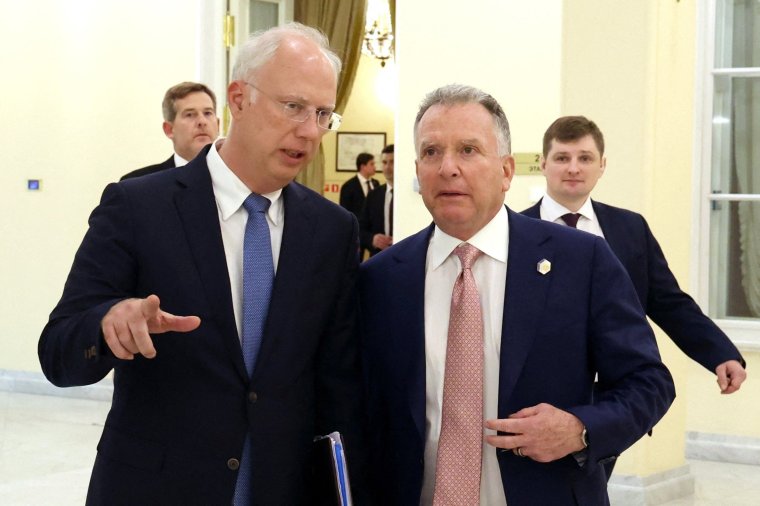
The plan includes no limits on Russia’s military, and its requirement that Nato does not station troops in Ukraine throws Starmer’s “coalition of the willing” into doubt, which had hoped to place soldiers inside the country to police any peace deal.
The deal also calls on Ukraine to reject “Nazi ideology and activities,” which references the justification used by Russia to invade the country.
Launching the biggest European invasion since the end of the Second World War, Putin said his goal was to “demilitarise and denazify” Ukraine.
In his Truth Social post on Sunday, Trump claimed the Russia-Ukraine war would not have started if he was in office and if Ukraine had “strong and proper” leadership.
Trump ‘cannot afford a break’ with Nato
While the terms of the US deal are stark, Trump is aware that EU consent for a peace plan is necessary to maintain diplomatic relations, an analyst has said.
John Lough, head of foreign policy at the New Eurasian Strategies Centre, told The i Paper: “The US can’t just retreat behind its own borders. I don’t see that Trump wants to break with Europe.”
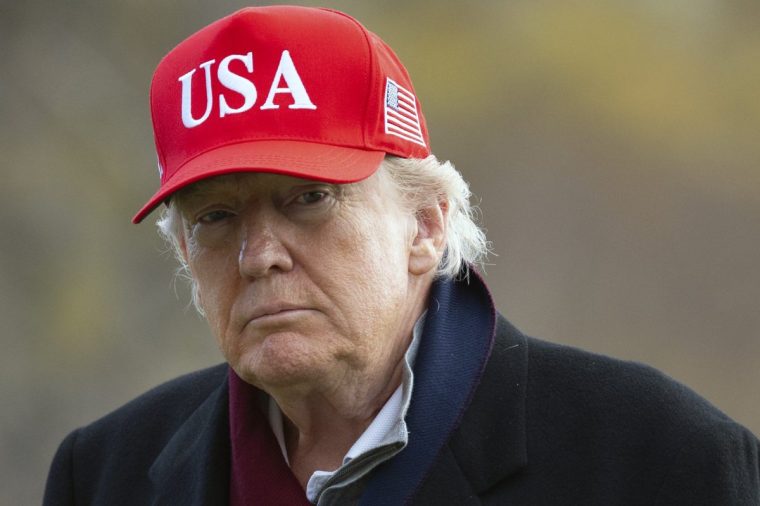
“The US has enormous invested capital in Europe, both political and financial. So it would be very strange if it were to have a serious falling out with Europe over Ukraine,” he said.
Though Trump has sought to distance himself from Nato and Europe in his second term as president, his international policies rely on European co-operation – which he will not risk by freezing the EU out of Ukrainian peace talks permanently, Lough believes.
He said: “He wants European support, as far as he can get it, for dealing with China. US bases in Europe still remain very important for the US projection of power into the Middle East, for example. He needs to protect that relationship with Europe.”
Lough said, however, that Europe is unlikely to resort to the two main bargaining chips it could use: increasing sanctions on Russia and handing frozen assets to Ukraine.
Europe could exploit cracks in the Maga movement
Leading European figures are said to be weighing up a visit to Washington, although The i Paper understands there are no plans for the Prime Minister to travel.
Europe could use such a summit to form a coalition with disgruntled figures within Trump’s Republican party who have been alienated by the President’s swing back towards Putin in recent days, analysts have said.
Marina Miron, post-doctoral researcher at King’s College’s War Studies department, told The i Paper Europe could attempt to capitalise on fractures within Trump’s Maga base.
She said Trump’s back-and-forth on Ukraine “is due to the political situation within his own party, because Maga has lost its momentum.”
“There is a lot of disappointment with Trump domestically and so he’s walking a very tight line, trying to calibrate the situation and ensure that he doesn’t get into any problems like with the release of [the] Epstein files.”
Ukrainian newspaper Kyiv Independent has claimed pro-Ukraine officials in the White House are being sidelined, and that Secretary of State Marco Rubio had been blindsided by the peace plan.
On Sunday, Marco Rubio said emergency talks with Ukraine – convened to discuss the Washington-backed plan – were the “most productive and meaningful so far”.
Your next read
Miron said: “When it comes to leverage, only soft power can work, but we don’t know the extent to which it can work, so leaning on those moderates might bring something.”
Lough told The i Paper Europe could lean on splits in the party: “No doubt the Europeans will be keen to talk to some of those Republicans who are more critical of the policy towards Russia.”
