There was a lot of crying on the set of Prisoner 951. Which isn’t surprising, because this drama about the six-year false imprisonment in Iran of Nazanin Zaghari-Ratcliffe is exceptionally upsetting. In fact, director Philippa Lowthorpe sobs as she tells me about filming it.
“Sorry, sorry,” she says. “It’s a very emotional project. It just catches you unawares, and you think, these are these people’s lives.” Lowthorpe doesn’t usually cry in interviews, she says, but I’ve just asked what she will take away from the experience of directing this particular show. “I think it’s just all the people I’ve met, all these amazing Iranians, all these precious lives.” She tears up again. “I hope audiences will feel connected to these ordinary people, their resilience and courage, and learn what really happened behind the scenes.”
In 2016, Iranian-British dual citizen Nazanin Zaghari-Ratcliffe was detained by the Iranian Revolutionary Guard. She had been on holiday visiting her parents with her 22-month-old daughter Gabriella, when she was stopped at the airport, accused of spying (charges she has always denied) and chucked in prison.
I thought I already knew a lot about this story, in particular the fortitude of Zaghari-Ratcliffe herself, who has spoken out articulately and bravely ever since her return and campaigned on behalf of other wrongfully detained prisoners. She and her husband Richard have written a book, A Yard of Sky, published next year (“She is a terrific writer,” says Lowthorpe), on which the show is partly based, and both were heavily involved in production.
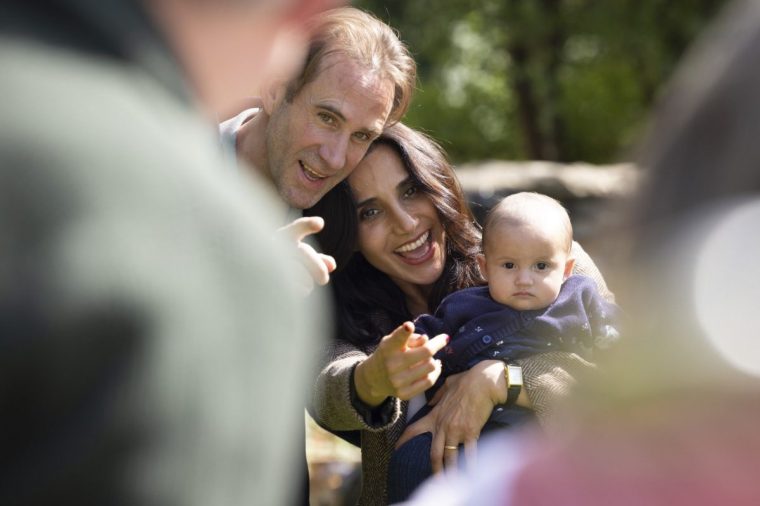
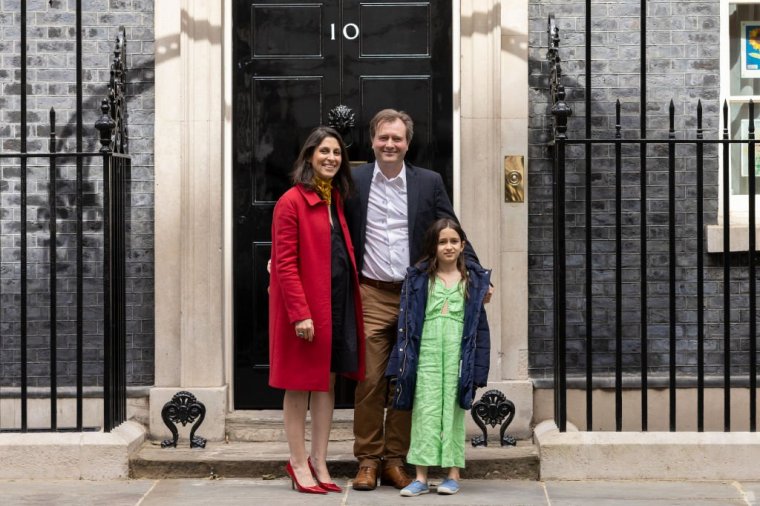
When you think of Nazanin Zaghari-Ratcliffe, most people will probably recall an intelligent 40-something woman smiling as she is reunited with her family. But what is striking from the first of these four episodes is just how terrified she was when she was first approached at Tehran Airport.
She is played by Narges Rashidi (Gangs of London), in an immense performance that offers a window into the then 37-year-old’s journey from frightened ordinary woman to quietly courageous, globally recognised figurehead. Rashidi tells me that although she didn’t get the chance to meet Zaghari-Ratcliffe herself, she watched and read everything she could get her hands on, from interviews to actual footage of the original arrest (incredibly, you can still watch this on YouTube; it was released by Iranian authorities).
“Her voice was so soft and her whole demeanour so different from the woman we see now on the news, you know? She was clearly petrified.” We go on to see Zaghari-Ratcliffe separated from her one-year-old, moved between various Iranian prisons with a blindfold on her face at all times so that she never knows where she is, and kept in solitary confinement for nine months. Trials and sentencing are a farce and access to proper information, and communication with her family and lawyers, is kept to such a minimum that Zaghari-Ratcliffe rarely knows what is really going on.
Over the course of the four hours, though, we see that initial terror and shock calcify into a gentle but insistent refusal to confess or acquiesce. In particular, she refuses to sign documents stating her guilt, or agree with guards who repeatedly insist that she hates her country. (Zaghari-Ratcliffe grew up in Iran and only moved to Britain in 2007 to study at a London university. She met Richard Ratcliffe shortly after moving there and married him a couple of years later.)
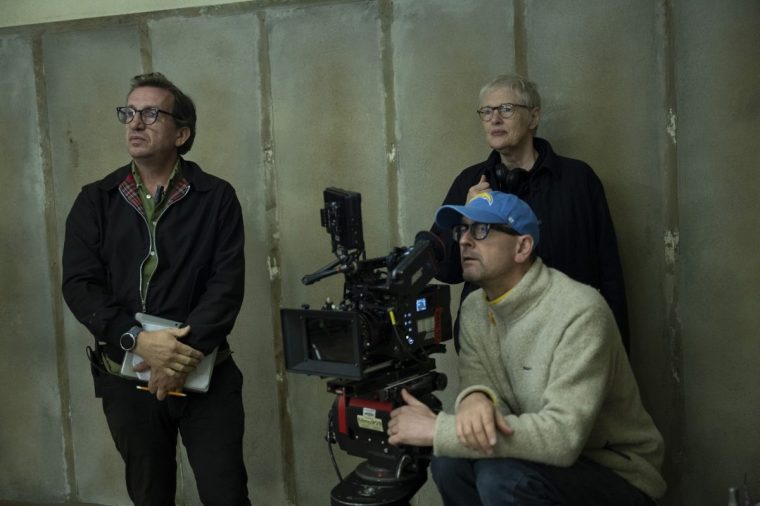
This ability, to “peek behind the curtain”, is of course the advantage of a drama over documentary, says Lowthorpe, who has made several BBC documentaries but also real-life dramas including the multiple Bafta-winning Three Girls about the Rochdale grooming scandal, which prompted victims to go to the police after watching it in 2017 and ultimately resulted in further convictions. Although she extensively interviewed real-life counterparts based in the UK before filming Prisoner 951, Lowthorpe’s goal was really to “get under the skin of the characters in a deeply emotional way” that you can’t do with factual film-making. “Stephen [Butchard, the writer] and I really wanted to do that. And his writing is sort of underwritten, in a good way, which has this accumulative power to move, be really profound without hitting us over the head with stuff.”
This is true: Prisoner 951 is a remarkably restrained drama, and all the more powerful for it, never indulging in melodramatic speeches about freedom and injustice, building instead an incremental picture of the realities of incarceration and dashed hopes. Richard is played by Joseph Fiennes (a bit of a shock for anyone used to seeing him as the misogynistic tyrant Fred Waterford in that fictional oppressive theocracy Gilead in The Handmaid’s Tale) with dignified determination and a bubbling rage that only finally erupts in frustration at the seemingly lackadaisical attitude of the Foreign Office after years of no progress.
From the start, civil servants advised him to keep quiet about the whole thing, particularly after Iranian officials told him that his wife was really being kept hostage as a result of unpaid debts to Iran on the part of the British government. The British government has always denied any connection; however, in 2022 Liz Truss authorised the payment of £400m to Iran. A few days later Zaghari-Ratcliffe was released.
Fiennes and Rashidi are largely kept apart on screen, just as the spouses were in real life, so it’s remarkable that the show fizzes with chemistry and affection (a working title was at one point “Love Story”). “It was a challenge,” says Philippa, “so Stephen and I made sure that their experiences were mirroring each other, and we have these family album memory sequences that help us understand that they are an ordinary couple just like anyone else, you know, getting married, having a child. There’s a lightness and happiness to those sequences that’s really important.” Fiennes and Rashidi were also given early copies of the pair’s book to read but were instructed only to read the bits by their character, so that they would be effectively blind to their partner’s experience, as was the case in real life.
They were given the opportunity to spend some time playing with the three actors who play Gabriella over the course of her young life, to grow a sense of a family unit. “We were talking and singing and playing silly games. I think that helped build a relationship. For me, [Gabriella’s] story is the hardest to digest in a way. I cannot get over it. This isn’t something that just happened to Nazanin. It happened to her, but also to him, to their daughter, to their families.”
The real Richard and Gabriella came to the set, and Lowthorpe recalls one particular moment where Richard observed Fiennes playing him during his 21-day hunger strike outside the Foreign Office in 2021, to boost the public’s interest and force the government to do more following Boris Johnson’s terrible gaffe. (Johnson proclaimed publicly that Zaghari-Ratcliffe had just been “teaching people journalism”, when in fact she was a project manager for the charity Thomson Reuters Foundation. His words were used by Iranian authorities as confirmation that she had trained journalists in favour of toppling the Iranian regime). In the scene, Fiennes is red-faced and thin, shivering in pain. “It had quite an effect on Richard to see Joe as him,” says Lowthrope. “He said to his sister, ‘I didn’t look that bad.’ And his sister said, ‘No, you looked a damn sight worse.’”
Rashidi, who was herself born in Iran and moved away to Germany aged seven during the Iran-Iraq war (“I remember my mum dancing so we wouldn’t be scared of the bombs”), remembers some of the times the cast and crew cried on set, from the deeply moving scenes featuring the women’s ward, where political prisoners sing and support one another (“There were 50 women in a group hug, bawling”) to the moment an actor playing one of the unfeeling judges had to take a moment. “He gives Nazanin her five-year sentence, and the actor held it together for the scene, but then the moment we cut he completely broke down. It was tough for everyone.”
One of things that hadn’t sunk in for me before this was that Zaghari-Ratcliffe’s so-called happy ending is extremely bittersweet, because she can never return to her homeland or her parents. Prisoner 951, filmed in Athens in the place of Tehran, is emphatic about the beauty of Iranian culture, and the devastation of losing access to it. Lowthorpe made sure she consulted on local customs throughout: “I was told several times that the actors must have a cup of tea because an Iranian would never not have tea”.
“Iranian people are very warm, very hospitable,” agrees Rashidi. “I wish I could go back. And every time there’s a chance for me to shed light on the struggles of the Iranian diaspora I feel obligated to do so. Everyone who’s from there, who’s had to leave, we all share this trauma.”
‘Prisoner 951’ continues on BBC One tonight at 9pm. All four episodes are available on BBC iPlayer
