MPs to challenge BBC boss over boardroom splits and claims of a ‘right-wing takeover’ after Panorama crisis
MPs will grill senior BBC figures today over a “civil war” at the corporation following a string of resignations sparked by accusations of liberal bias.
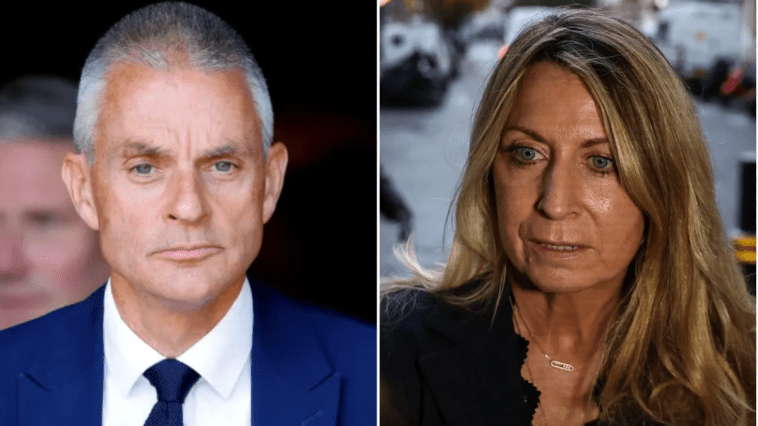
BBC Chairman Samir Shah is facing a “day of reckoning” insiders said, as the culture select committee explores claims that a “right-wing takeover” at the top of the BBC prompted Director-General Tim Davie and News chief Deborah Turness to quit.
Shah and Sir Robbie Gibb, the controversial board member appointed by the previous Tory government, who has made rooting out “liberal bias” at the BBC his mission, face intense questioning from the cross-party panel.
Also appearing is Michael Prescott, a former adviser to the BBC’s editorial standards committee. His leaked memo revealed the incendiary claim that an episode of Panorama included an edit that spliced together two parts of Donald Trump’s Capitol speech on January 6, 2001, giving the impression that he incited the violence that followed.
Shah is expected to get a rocky ride after MPs on the committee voiced their reservations about whether the former TV executive was qualified for the job when he was appointed as chair last year.
BBC staffers say Shah failed to get a grip on the Panorama crisis and allowed Gibb and other board members to push the line that the BBC is in the grip of a liberal groupthink.
Shah’s position was further weakened on Friday when BBC board member Shumeet Banerji quit, stating that he had not been consulted over the issues that led to the resignations of Davie and Turness.
The i Paper understands that a second board member was also poised to quit over the weekend, in what would have been a co-ordinated attempt to undermine the Chairman ahead of Monday’s vital hearing with MP’s.
However the board remained intact, with the BBC indicating that the editorial standards committee will be overhauled and its membership broadened in a way which would dilute Gibb’s influence, according to some insiders.
This paper also understands that there are plans for the deputy Director-General role to be reinstated to relieve some of the pressure of being “editor-in-chief” from the next BBC leader.
Kevin Bakhurst, a former senior BBC News executive who now runs Irish broadcaster RTÉ, is seen as a leading candidate for the deputy role.
But some industry observers believe creating more executive roles at the BBC won’t avert similar crises. “The problem already is no-one actually takes responsibility for their jobs, they just refer upwards,” said a news journalist.
“They are chucking out ideas to get through the next 24 hours. The board looks split and it’s descending into civil war,” argued one BBC staffer.
“Shah needs to give a firm performance and stamp on the idea that there is some kind of right-wing coup inside the BBC which has forced out the Director-General.”
‘Samir and the BBC board members will have rehearsed and gamed all the possible questions’
Samir Shah will be asked why the editorial standards committee, which he sits on, failed to take action when the Panorama edit was first discovered and raised by Prescott earlier this year.
He also faces questions over why the BBC board refused to accept an apology for the “unintentionally misleading” Panorama edit, agreed by Turness, when the error was made public.
Instead, the board insisted on composing a full response to Prescott’s memo, which argued there was “systemic bias” in the BBC’s coverage of issues including coverage of the Israel-Gaza conflict and trans rights.
The vacuum that created led to the White House condemning the BBC’s journalism, raising the stakes considerably, with resignations from Davie and Turness following swiftly.
Gibb faces questions over his past role as a launch advisor to the right-wing GB News channel and his involvement in a consortium which bought the Jewish Chronicle to save it from liquidation. The JC has strongly supported the Israeli government’s actions in Gaza.
Gibb will be asked how he can claim to be “impartial” on the BBC’s coverage of the Israel-Gaza conflict and other areas, given his past roles and stated beliefs.
Friends of Gibb say he is a supporter of the licence fee and did not want to see Davie resign but has deep concerns that the BBC too often fails to live up to its commitment to “due impartiality.”
Whistleblower Prescott will be quizzed over how his 19-page “devastating memo” was leaked to the Telegraph, as well as his history with Gibb.
Prescott, a former Sunday Times journalist who now works in PR, is reported to be friends with Gibb, who was a member of the panel who appointed him to the standards committee.
Your next read
The DCMS committee is chaired by former Conservative minister Dame Caroline Dinenage. The members include former Tory Education minister Damian Hinds and Labour MP Dr Rupa Huq, a former BBC staffer who takes a close interest in the corporation, and is the sister of TV presenter Konnie Huq.
Also facing the committee will be Caroline Daniel, another former editorial advisor to the BBC Editorial Guidelines and Standards Committee and Caroline Thomson, a BBC non-executive director and a current member of the editorial committee.
A BBC insider said: “Samir and the BBC board members will have rehearsed and gamed all the possible questions. They have to put on a united front. What might come to their rescue is this committee membership isn’t noted for its rottweiler questioning.”
