The pink-and-green Hollywood extravaganza is more than fantasy – it helps young girls navigate vicious playground dynamics and overcome their differences
“Wicked… is kind of a girly-girl film, isn’t it, mum?” winced my daughter, when I suggested we watch it last year. Pearl is a child who has spent every one of her 13 years defiantly resisting any form of performative femininity, or “girly-girling” as she verbs it. At school she is campaigning for engineering to be added to the GCSE subject list; at home she rewires plugs and assembles flatpacks; on weekends she’s the goalkeeper of the village football team, relishing every opportunity to hurl herself into the mud. All through primary school, her best friends were boys. She liked their directness: “If Charlie gets cross with me, he just shoves me and I shove him back and then we’re friends again,” she explained.
So Pearl got a shock when she started high school and found her cohort suddenly self-segregating into gender groups. Girl culture, she quickly learned, was waaaaay more complicated than the odd shove over a game of Top Trumps. How would my muddy girl – my Elphaba – fit in with the glittering pink Glindas who seemed to rule the roost?
Her tales of break-time betrayals, unexpected alliances and factional warfare felt like Game of Thrones recaps. “Relational aggression” was the way she heard the worst elements of this behaviour described by TikTok psychologists: the gossip, backstabbing and exclusions from WhatsApp groups were all part of the hormone-heightened scramble for social status in a cohort where nobody felt safe and one girl’s mic-drop slay would be another’s tear-sodden pillow.
It’s scary for parents. Once your children have graduated from the playdates you organise, they’re at the mercy of their peers. I remember interviewing Australian comedian/musician/actor Tim Minchin just as I was starting to worry, and he told me his daughter had struggled so badly with the “Machiavellian” culture of teen school girls “experimenting with power dynamics” that she’d become anhedonic. The man who wrote the songs for Matilda – all about a schoolgirl finding the courage to celebrate her individuality – had been as blindsided as the rest of us.
But Matilda is part of a culture that is increasingly pushing to help girls navigate the challenges of high school’s brutal Popularity Games. Pearl is part of a generation who grew up with Frozen as their first big Disney cartoon: a film whose pioneering resolution saw the prince sidelined while the girls saved each other. In pop, Taylor Swift’s “You Need to Calm Down” called out those “over there on the internet, comparing all the girls who are killing it”, and reminded fans that “we all got crowns”.
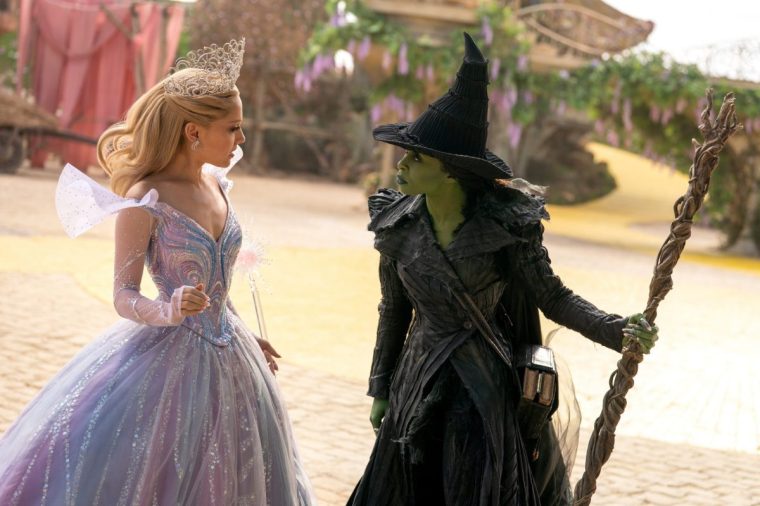
On TV they’ve had Wednesday – in which the moody, introverted heroine forms a powerful friendship with her rainbow-perky roommate Enid. And now they’ve got Wicked – a story in which the relationship between two female leads is not only the most important emotionally, but, in its fantasy land, changes how the world works.
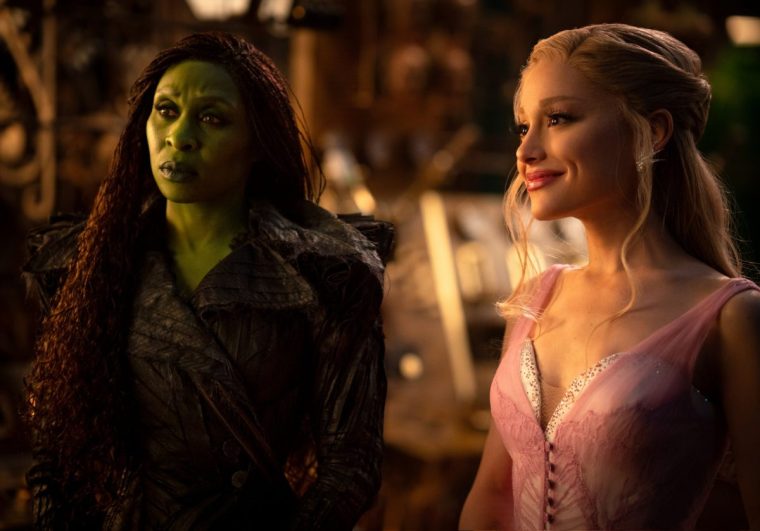
To her own surprise, Pearl fell under Wicked’s spell. Much more culturally savvy than Gen Xers like me were at her age, she already knew all about The Patriarchy from reading Kate Weston’s funny YA novel Diary of a Confused Feminist. So she quickly nailed the Wizard of Oz as The Man, setting women up against each other. On a personal level, she was beguiled by the frenemies at the heart of the story.
She related to green-skinned outsider Elphaba (Cynthia Erivo) – the complicated tension between the pride the character takes in being different and her yearning to belong. But she was also impressed by the kindness and bravery of Ariana Grande’s Glinda. Although a bit obvious and overlong, Wicked Part 1 acknowledged that girls are attracted and repelled in equal measure by each other’s differences. The girl in a tutu feels both contempt and admiration for the girl in the muddy football kit – and vice versa. Once individuals learn to reconcile the warring emotions inside themselves, they can unite to form blockbusting friendships.
Against all odds, Pearl is – as I write this – upstairs with her friend Scarlet. Scarlet the ballet dancer: her nemesis all through primary school. I’ll be taking them to watch Wicked: For Good together – and I’ll have to listen to them bawling the first film’s empowerment anthem “Defying Gravity” in the back of the car, cranking up the volume, girly-girl and goalie-girl together.
