It’s the morning after a concert in Dundee and a long late-night drive back to her family in West Kilbride, but Nicola Benedetti seems energised by more than caffeine and adrenaline. The Scottish-Italian violinist is in the midst of her first national solo tour of the UK in a decade – and she is thrilled to be back. “It’s so amazing to be playing properly again,” she says.
It’s tempting to ask why it has been so long since her last such endeavour – but then you remember what has happened in the past 10 years. Just for starters, there’s been Brexit, which has disrupted UK musicians’ touring in Europe with added red tape, and Covid, which necessitated live concerts being cancelled en masse. And for Benedetti personally, the decade has been, as she candidly puts it, “monumental”.
“Covid wiped out several years of touring,” she recalls. “I had big programmes planned, dates lined up – then we had to cancel everything. Coming out the other side, I was juggling the festival, family and becoming a mother. The volume of work involved in just getting everything back into physical spaces after so long was enormous.”
Benedetti has been in the front rank of British international violin stars ever since she won the BBC Young Musician competition in 2004 as a teenager, fresh out of the Yehudi Menuhin School. Now 38, she is not only in the front rank of soloists, but has also become a powerful advocate for an art form that can seem ever more beleaguered by misapprehensions, besides funding cuts, in the UK’s national conversation.
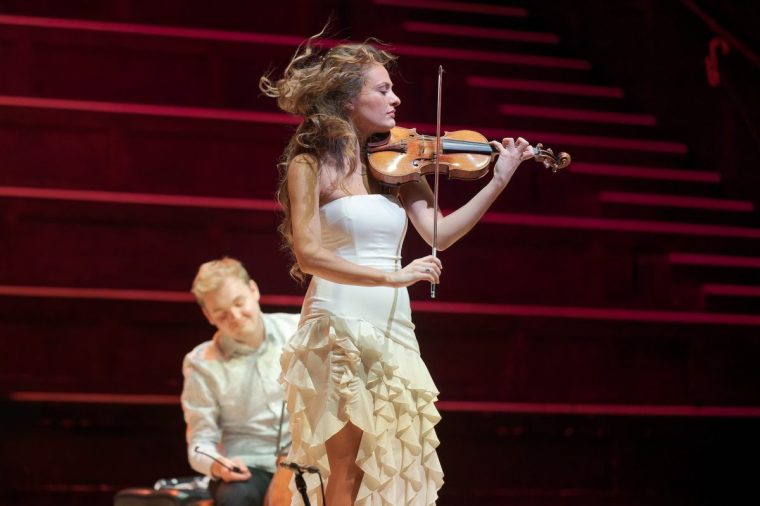
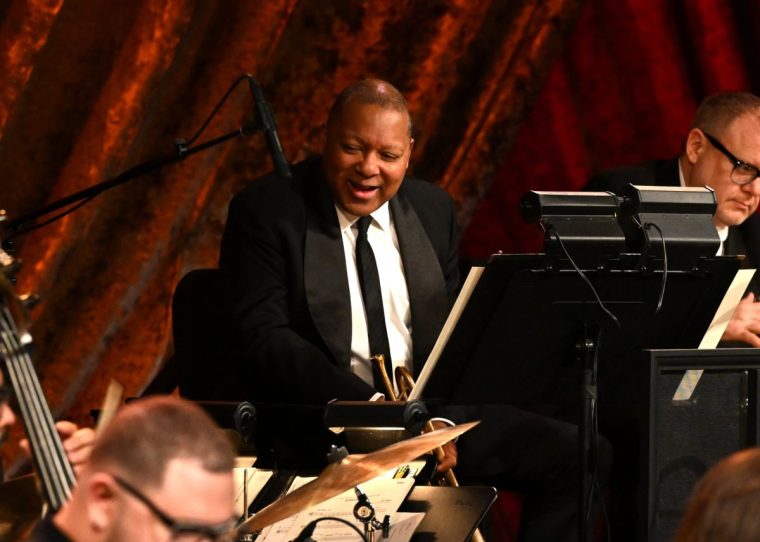
Indeed, she’s starting to look like British music’s own superwoman. To her performing career, add the artistic directorship of the Edinburgh International Festival, to which she was appointed in 2022; her Benedetti Foundation’s ongoing initiatives in music education; and her marriage to the jazz trumpet legend and composer Wynton Marsalis. They now have a small daughter, Elise, who travels with Benedetti for most of her performances.
Motherhood has brought new perspectives. “I thought I’d be so organised about going back to work,” Benedetti says, “but actually, once Elise was born, I just went with what felt right for her and for us. She’s almost always with me, and she responds to music so naturally. She never stops singing.”
Benedetti demurs from talking about her marriage, but the gigantic violin concerto that Marsalis wrote for her in 2015 seems to be a testament in itself. Marsalis’s programme note declares: “It takes inspiration from her life as a traveling performer and educator who enlightens and delights communities all over the world with the magic of virtuosity.” Amid her current concert dates, she has just been to New York to play it again.
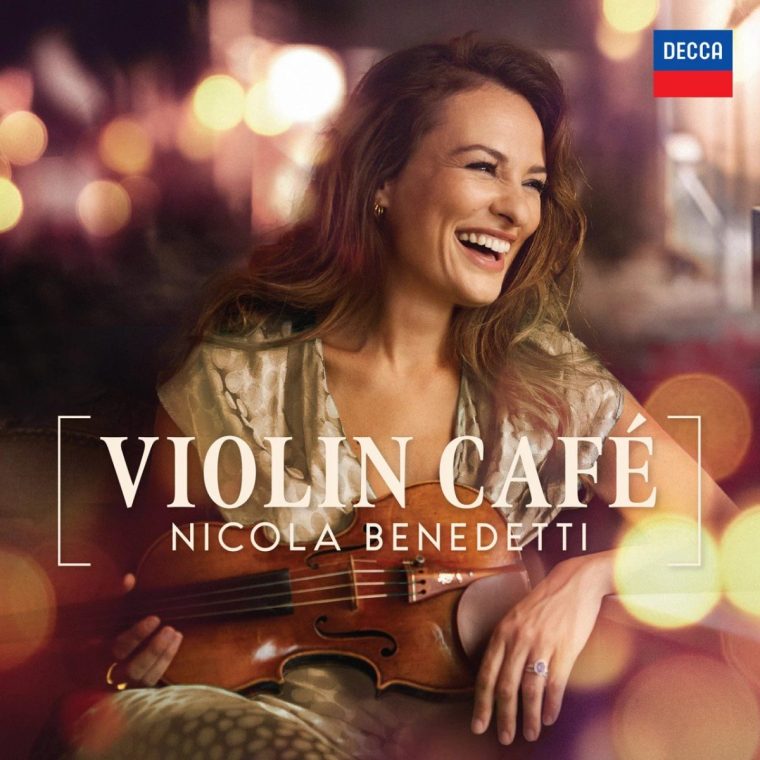
The Violin Café tour takes her to 14 venues from Aberdeen to Poole, including a date at the Royal Albert Hall in London (27 November). The programme ranges from virtuoso violin works by Wieniawski and Sarasate to Scottish traditional songs and tender miniatures such as Debussy’s Beau Soir and Peter Maxwell Davies’s Farewell to Stromness.
The most unusual element, though, is that all the music has been arranged for the intimate combination of violin, guitar, accordion and cello (variously by Steve Goss, Juliette Pochin, Paul Campbell and Brìghde Chaimbeul). Benedetti is joined on stage at the Royal Albert Hall by accordionist Samuele Telari, guitarist Plínio Fernandes and cellist Maxim Calver. In Sarasate’s Navarra the violinist Fiona Baird collaborates and for the Scottish traditional set Fin Moore plays the smallpipes.
“I genuinely just heard that combination, as if I saw it in a dream,” Benedetti says. “The piano and violin, for all their history, seemed too formal for what I’m trying to achieve. The guitar and accordion are beloved all over the world and feel much more symbolically and culturally versatile.”
The tour began in mid-October and she has been loving it for the palpable chemistry among her fellow musicians and the delicious sense of improvisational freedom on stage – “one gleeful excitement after another,” she says.
Her passion for music as a force for personal and social transformation has deepened over the years. “It can feel odd to be playing these enchanting, ‘escapist’ works when the world seems to be on fire,” she acknowledges, referencing the ongoing global crises. “But then you look at history — Dame Myra Hess and her National Gallery concerts during the Second World War, for example — and you realise that making art in times of trouble isn’t escapism; it’s resilience. It’s a symbol of persistence against the darkness. Sometimes people desperately need beautiful things.”
Violin Café’s music, she says, is designed partly with this in mind. But, it also acts as a springboard to something bigger: a renewed discourse about what music can do, and for whom.
At the heart of that musical mission is the Benedetti Foundation, whose work with young musicians across the UK has evolved since the pandemic from online masterclasses to large-scale, in-person workshops. “Watching our teachers and tutors in action, seeing their dedication in their day-to-day, minute-to-minute work, has moved me to tears,” she says. “It’s one of the biggest privileges of my life to work alongside those people.
“I’m often asked, ‘Why classical music? Why defend it when we want to celebrate all styles?’ I always say that pop music is inescapable. It literally is designed for all people. It has a commercial aspect that is prevalent; its sound is in every café and in every public area. It doesn’t need government investment to further that cause.
“But if you want young people to have a good, cultured, eclectic ear that teaches them something about listening and about the cultures of the world, then you have to invest in the other styles.”
Benedetti has enjoyed spectacular success in her first years as artistic director of the Edinburgh International Festival. Following the 2025 festival, the organisation stated that it had filled theatres and concert halls to the highest percentage in over a decade, with 66 sold-out performances, half the tickets priced at £30 or under and several thousand given to young people, NHS staff, charity workers and low-income benefit recipients. And there’s no compromise on the challenging content.
“I want this to be the most affordable festival of artistic excellence in the world,” Benedetti says. “That means sometimes putting informality into formal spaces, giving a huge range of people a truly transformative first experience. We’re really starting to see a shift in who it serves.”
Asked about the tangible impact of music on society, Benedetti lights up. “It’s about changing hearts. Art gives us a space to observe, to ask why, to have conversations that are impossible in the narrow confines of political debate. Music has occasionally been used for ill, yes, but harnessed properly, it’s a unique language for diplomacy, understanding and cultural exchange.”
Across these vital aims, Benedetti retains a pragmatic optimism: “You can’t get everything right,” she says, “and not every programming choice will be perfect, but the most important thing is to keep growing, keep reaching new people and stay rooted in what really matters.” If British music’s superwoman has big dreams, she also has her feet firmly on the ground.
Nicola Benedetti’s UK tour continues until 4 December. ‘Violin Café’ is released on Decca Classics today. Tickets for the Edinburgh International Festival are available from 27 November
