In 1973, Carlos Alomar met David Bowie for the first time. The Puerto Rican-born protégé of James Brown was asked to play guitar in a recording session for Lulu, which Bowie was producing. Alomar didn’t know who Bowie – in his red-haired, ultra-svelte Aladdin Sane guise – was. “Quite honestly, I exclaimed, ‘Now you look like shit, you need to get a whole good meal.’ I’m talking about real orange hair with pasty white skin and 98 pounds, come on. He took me up on it and he came to my house.” So he cooked Bowie a meal? “My wife did. I said, ‘What do you cook a Brit?’ She said, ‘Meat and potatoes!’”
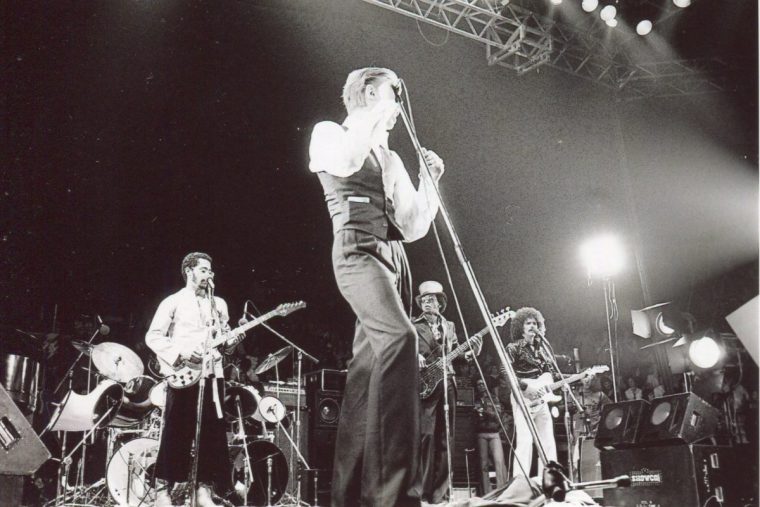
This was, believe it or not, the start of lifelong friendship and pioneering creative relationship. Between 1975 and 1980, Alomar, bassist George Murray and drummer Dennis Davis were Bowie’s backing band and trusted musical lieutenants. Subsequently christened The D.A.M. Trilogy, they don’t have the renown of Bowie’s famous backing band, the glam Spiders from Mars, but they were pivotal in moulding sounds on Bowie’s classic run of experimental albums from 1976’s Station to Station, through the legendary Berlin period to Scary Monsters (and Super Creeps).
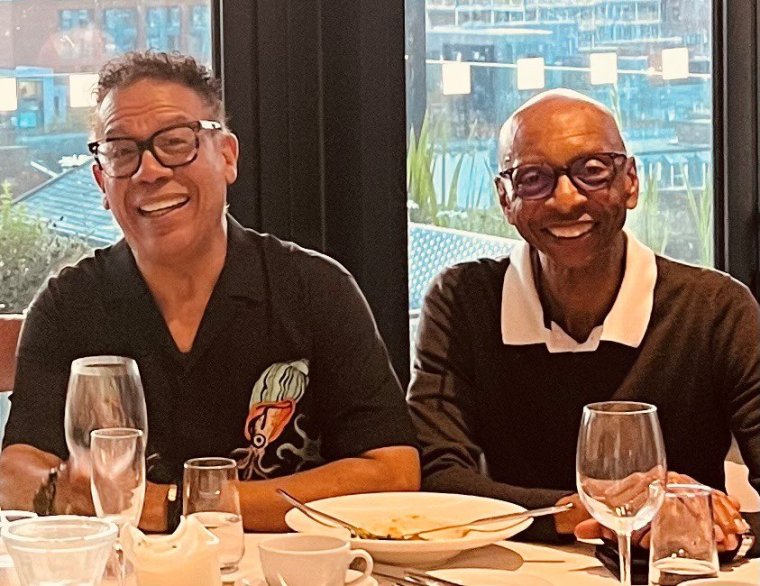
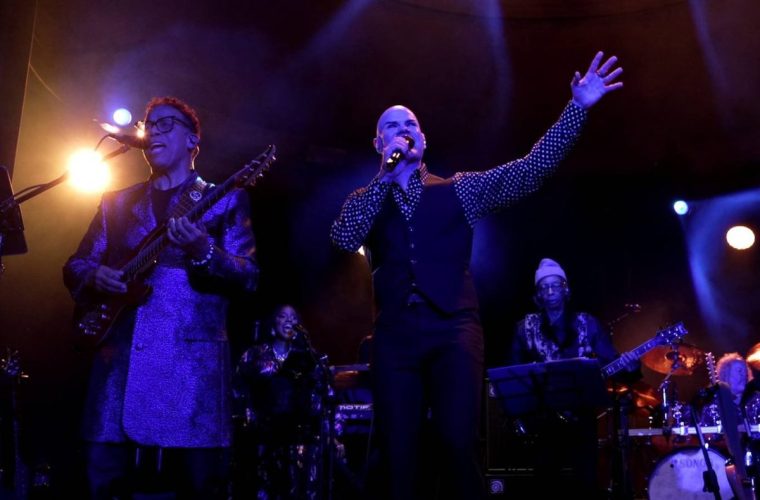
The trio’s surviving members Alomar and Murray – Davis died of cancer in April 2016, just three months after Bowie himself – have reunited to tour their Bowie-era material for the first time since a Saturday Night Live performance in December 1979. I talk to both the day before their European tour begins in Berlin, ahead of the UK leg, which starts in Sheffield this weekend. Alomar has just taken the whole band to the capital’s Hansa studios, where Bowie created his Low and Lodger albums and the megahit “Heroes” when the city was divided during the Cold War.
“When we used to look out the window, we saw the [Berlin] Wall, we saw the gunner’s turret, we saw the barbed wire. It’s important for the members of the new band to know where exactly we are, what we represent in time.”
The D.A.M. Trilogy were born in 1975. Alomar had already co-written Bowie’s first US number one hit “Fame” when he recruited his friend Davis for Bowie’s live band in 1974; when Bowie needed a bassist in LA during the Station to Station sessions, Davis then called his friend, Murray.
“He trusted us,” Murray says. “It was, ‘Here’s the structure, here’s the idea, here’s what I’m trying to do – what can you guys do with that?’ And the strength of the trio was playing together and not getting in each other’s way.” Alomar says they could do anything Bowie asked. “We gave him Kraftwerk, Jazz, R’n’B, rock and roll, reggae, anything you wanted, we can deliver it. And so that’s why, when everybody else changed, we still remained the core.”
Legend has it Station to Station was the peak (or depths) of Bowie’s cocaine addiction; he claimed to remember nothing of the sessions. On-off Bowie guitarist Earl Slick once said that during that time Bowie reached “levels of insanity”. “I never perceived that as being the working atmosphere,” Murray says. “David was always there to work. Nobody got carried off in a straitjacket.”
“You do what you need to do in order to feed the furnace,” Alomar says. “In California it was cocaine. And so with the cocaine addiction came the ability to rise to the challenge of writing under such a heavy schedule and staying up for days having all kinds of thoughts and ideas. The question was, did it affect his work? Yes. But on a positive side.”
Still, Alomar says Bowie went to Berlin to get away from LA. “It was a transitional period in his life when, I think, emotionally, he needed to do something drastic. LA really messed him up.”
Berlin was a period of great musical experimentation – with song structure, sound and technology. But ask most people about those albums and they will talk up the contributions of producer Tony Visconti and Brian Eno, credited with sound textures that made up the instrumental ambience found on the album’s second sides, and who introduced Bowie to a working process known as Oblique Strategies: tarot cards that encourage lateral creative thinking.
As band leader, does Alomar feel overlooked? “You mean as a person of colour, how do I feel?” he says, smiling. As a Puerto Rican and two black Americans, The D.A.M. Trilogy have certainly not been as widely celebrated as their white counterparts.
“You’re not really posing the question correctly,” he says. “How is it that people prefer to give credit to the people that record the sound, but not to the people that make the sound? Of course, they named the musicians, just like they’ll name a janitor. But we didn’t have a name. And without the brand, that’s what happened. Even Bowie once said, ‘Oh, I got these three black guys.’ He thought I was black with a name like Carlos,” he says, smiling.
It seems Alomar thinks that Bowie should have given them a bit more credit? “No, no, no, we mustn’t do that. That man went on MTV and told him, why aren’t you playing more black things?” he says, referring to Bowie’s 1983 interview with MTV’s Mark Goodman, when the singer criticised the network for ignoring black music.
He then points to Bowie’s relationship with the supermodel Iman. “Why did he marry a black woman? No, he is not a racist.” I wasn’t suggesting that for one second. “Bowie told me it’s about what narrative you can supply the publicity machine. Here’s Carlos from the Bronx? It’s not as powerful as when Tony Visconti says, ‘I’m going to use this machine that’s going to bend the fabric of time’.”
But does he wish he’d have named the band The D.A.M. Trilogy at the time? It might have helped public perception. “No, no, I don’t live my life in hindsight. It wasn’t time for us to suddenly be branded. That would have been horrible, wouldn’t it? We’re not The Spiders from Mars. We’re the unnamed piece of the puzzle that finished that puzzle, the chameleon aspect of David Bowie.”
When Bowie left Berlin to make 1980’s Scary Monsters in New York, Alomar says the trio had had enough of Eno’s experimental techniques. “We said, ‘David, please. No more of that.” Scary Monsters was a brilliantly dark rock record, helped by the guitar magic of Robert Fripp (“if there was a fourth member of the D.A.M Trilogy, it was Robert Fripp”, Alomar says).
But, little did they know that as soon as they finished recording the trio would never work together again. “It was just, ‘We’ll see you again soon,’” Murray says. “Nobody walked out and slammed the door.” But while Alomar would work with Bowie on and off until the early 2000s, Murray and Davis were never asked back. Nor where they officially let go. “I’m sure David had his reasons for doing that, whatever they were. He didn’t really owe me an explanation. I might have felt better if I had one, but what can I say?”
Murray, by this point having his own addiction issues, moved to LA in search of gigs, but struggled to find them. “I was encountering regular jobs to make a living until eventually I was hardly doing music at all.” He was working as a florist to high-end clients in Beverly Hills when, in a strange twist of fate, in 1983 he went to LA’s Westwood Marquis Hotel where Bowie and his band were staying on the Serious Moonlight tour. In the lift, he bumped into his replacement, Carmine Rojas. “All kinds of thoughts run through my head – what I could say to him. But it is uncalled for. I just wished him luck.”
In 1987, Murray got a job at the Alhambra School District in LA, which ran a number of the city’s schools. “And I stayed until 2022.” Most people didn’t know he’d played bass on some of the greatest songs ever. “I didn’t broadcast it.” During the pandemic, he picked up the bass for the first time in over 30 years. “It felt good. My wife was pleased.”
Alomar stayed friends with Bowie, and saw him a year or so before he died, at a party held by Visconti. “We talked about old times. I mean, yeah, he looked frail. But little did we know it was somewhat of a sad goodbye. I was so heartbroken.” Then Davis died months later. “I was helping him with his hospice, just doing as much as I could for him and his family. It was a pretty devastating time.”
Alomar and Murray reconnected at the David Bowie World Fan Convention in Liverpool last year. They joined the house band to play together onstage for the first time in over 40 years. “We get to the rehearsal studio, we start rehearsing,” Alomar says. “Boy, it starts to swing.” Encouraged by everyone there, they decided to tour – with New York singer Michael Cunio on vocals – with some proceeds going to Davis’s son’s college fund. “I thought I had left this behind,” Murray says. “But those songs still hold a place in my heart.”
Expect the guitar-heavy bangers. “We’re not doing the Brian Eno trilogy. No slow songs. So you better get ready.” So does Alomar see this tour as reclaiming some of that lost credit? “Hell yeah!”
The D.A.M. Trilogy tour the UK from 23 November, seetickets.com/tour/the-d-a-m-trilogy
