Don’t be misled by the title: this headlong dive into the archives of celebrated auteur Wes Anderson is more like a tour of Willy Wonka’s chocolate factory than a film buff’s paradise. Whether or not you know your Mendl’s pastries from your synthetic goose crackles, your rhinestone bluefin from your sugar crabs, prepare to be utterly enchanted by this magical new show, the first to be dedicated to the creator of The Royal Tenenbaums, The Grand Budapest Hotel and this year’s release, The Phoenician Scheme.
Developed over two years, in partnership with La Cinémathèque française in Paris, where it premiered in the spring, the Design Museum’s exhibition has been realised in close collaboration with Anderson himself, who granted the curators unprecedented access to his archives – which it turns out, are a trove of beautiful and unexpected objects.
Reaching back almost to the very beginning of his 30-year career, the archive includes behind-the-scenes Polaroids, storyboards and notebooks documenting his 1996 debut Bottle Rocket. Also here is a series of rather touching photographs by Laura Wilson, whose son, Owen Wilson, a school friend of Anderson’s, made his acting debut in the film, and, like Tilda Swinton and Jason Schwartzman, has been a regular collaborator ever since. Really though, this is just memorabilia – crucially, Anderson was too quick to offload costumes and props from Bottle Rocket that it turned out were needed again to reshoot scenes.
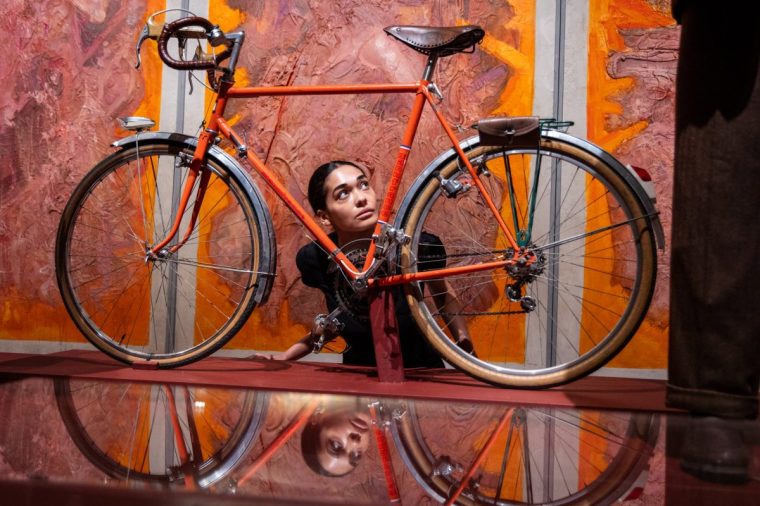
He wouldn’t make the same mistake again, and with his second feature, Rushmore, he began a comprehensive archive. Costumes, props and storyboards are to be expected: more surprising is a selection of original prints by the French belle epoque photographer Jacques Henri Lartigue, featured in the film’s opening scene. Seen again here, Lartigue’s pictures of his brother testing out such eccentric and lethal looking contraptions as a tyre boat, have a deeply Andersonian ring to them.
Anderson’s habit of anchoring even his most outlandish cinematic worlds in something resembling reality induces a faint twinge of familiarity for viewers – like a sort of deja vu. And while you might think that too close a look at the inner workings risks ruining the magic, it turns out that seeing the lengths that he goes to only enhances it.
Wes Anderson’s “New York Movie” The Royal Tenenbaums is set in a version of that city that, in the aftermath of 9/11, had an era-defining unreality about it, achieved as much through Gwyneth Paltrow’s fur coat – on display here – as for its intensely stylised, yet somehow still affecting sense of melancholy. But while the Tenenbaum family’s address at 111 Archer Avenue is entirely fictional, their brownstone house was not – it was a real house, decorated on the inside, and existing not on a film set, but in New York’s Hamilton Heights.
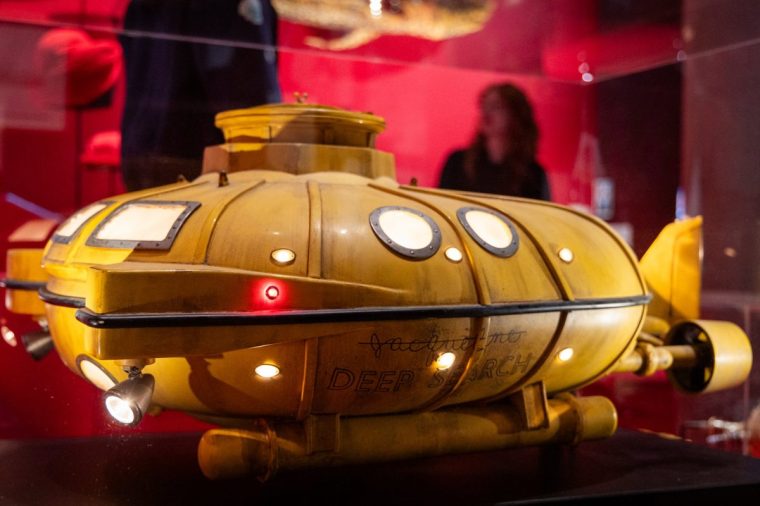
Such dedication to detail requires immense planning and collaborative skills, which evidently Anderson had from the outset, as his notebooks, filled with clear, tiny writing show.
Family relationships are a thread running through Anderson’s story, from the involvement of Owen Wilson’s mother and brothers, to his own brother, Eric Chase Anderson, who has regularly contributed illustrations and concept art, as spare and precise as his brother’s notes. Map of a Young Movie Director (1999), an amusing illustration made by Eric to mark his brother’s 30th birthday, reveals a man of precise habits, including a preference for argyle socks and red New Balance sneakers, lunches – “served after lunch” – of a sandwich and cookies, milk and a banana, and a “tiny script” and “tiny storyboards” stowed in the pocket of his director’s chair.
The extent of Anderson’s obsessive attention to detail becomes clear in a section dedicated to The Darjeeling Limited of 2007, in which three brothers reconnect on a train journey across India. A beautiful miniature model of the train, accurate down to the pictures on the wall, and the embellishments on the brothers’ suitcases, is just one treasure – the film’s sets and props were all handmade in India, with exquisite paintings by miniaturist Shammi Bannu Sharma and lettering by signwriter Praveen Chouhan.
There are similarly mindboggling details in Moonrise Kingdom (2012), the story of two 12-year-olds who fall in love and run away together. The girl, Suzy, packs six stolen library books, and included here is the cover artwork for the invented volumes, created by six different artists.
Anderson’s perfectionism, his respect for individual craftsmanship and expertise and his necessary ability to work with multiple collaborators is a major theme of the show. But, though Anderson first began using puppets and stop motion with his 2004 film The Life Aquatic with Steve Zissou, things became a whole lot more complicated in 2009, when he made his first stop-motion film, based on Roald Dahl’s much-loved Fantastic Mr Fox, which, say the curators, was Anderson’s “first and favourite book as a child”.
At this point, visitors should prepare to disappear down a rabbit hole – you would have to have a heart of granite to not be completely mesmerised by the fanatical levels of world-making involved, from the miniature copy of a Dahl first edition, to the brown corduroy suit by Scabal, made for Mr Fox, to the furniture in Mr Fox’s house, all replicas of objects from Dahl’s Buckinghamshire home.
All of the puppets are here, along with displays that explain how they were made and animated, from Plastilene maquette to the finished article, built around an articulated metal armature. Even the animals’ mohair “fur” could be activated, it turns out: “I worked out how to get little expressions in there by using the fur to actually sculpt the face,” explains animation guru Jason Stalman.
For Anderson’s stop motion original, Isle of Dogs (2018), in which a killer flu spreads through the dog population of Japanese city Megasaki, the puppetmaking is more complex still, with characters produced at various scales in order to shoot at distance and close up. One puppet is nothing but an enormous dog’s jaw, made for an extreme close-up of Spot’s military issue explosive tooth.
You’d imagine that the production costs would be prohibitive, but this is not so – in fact, because Anderson is so meticulous and precise a director, time and resources are carefully conserved. There are some lovely snippets of Anderson acting out characters in Fantastic Mr Fox, as a guide for the animators working with the puppets.
Your next read
Though it’s this meticulousness that gives his films their unmistakable character, it’s not necessarily achieved in quite the way we might assume. The strange sensation of having entered a separate but not dissimilar parallel world, both nostalgic and futuristic, is enhanced by his signature craftsmanship – he likes to shoot in two dimensions, flattening the space, and his symmetrical shots, and sweet shop colours are choreographed to the last millimetre.
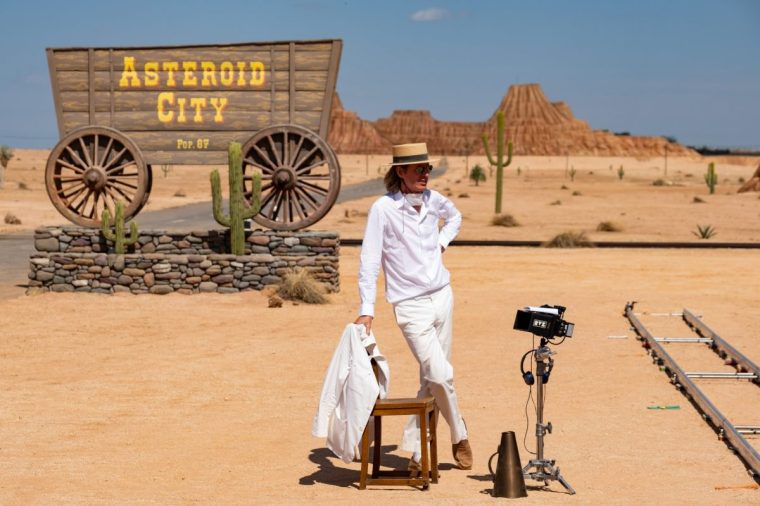
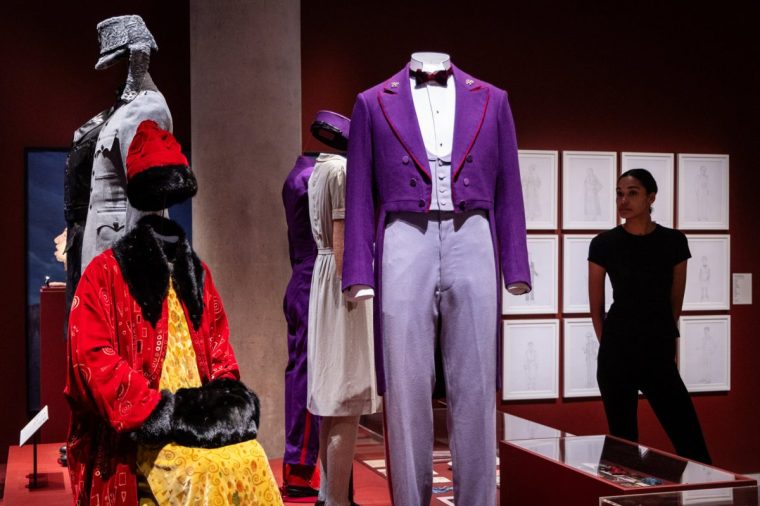
But, as the archives relating to The Grand Budapest Hotel (2014), and The French Dispatch (2021) show, a huge amount of the film exists in material form, from the model of the hotel’s façade, like a gigantic wedding cake, to the “Concrete Masterpiece” painted by Benicio del Toro’s unstable artist in The French Dispatch, to the vending machines dispensing Martinis and stockings from Asteroid City (2023).
In a digital world, Anderson’s commitment to the ecosystem of artistry needed to make his films is truly uplifting. It may be that you leave the show feeling that you love Wes Anderson more than you love his films – that might be me – but you won’t be disappointed either way.
Wes Anderson: The Archives is at the Design Museum, London, from 21 November until 26 July
