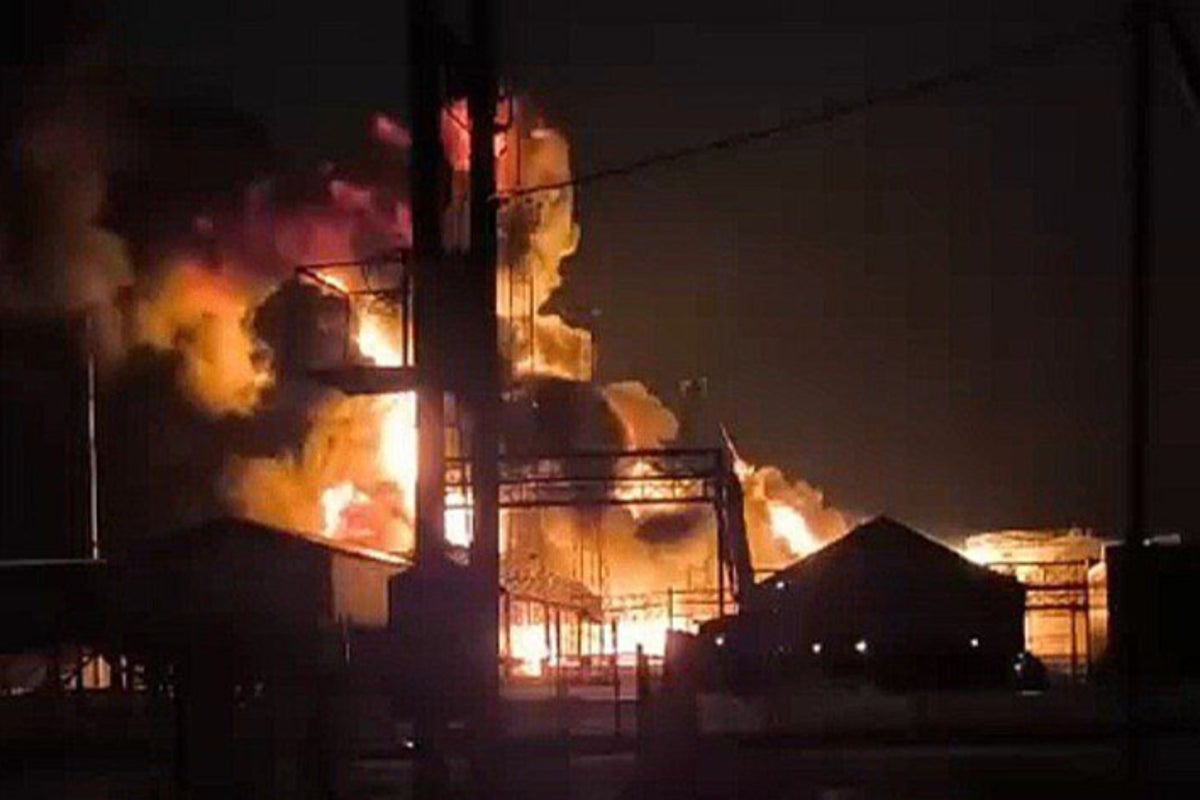
The Kremlin has passed a raft of laws addressing vulnerabilities at home as Ukraine continues to prove a lethal and disruptive threat within Russia’s borders.
At least 20 regions have started calling up military reservists to help guard key infrastructure under a new law. Energy firms are glad for the extra support, but are tempering their expectations without proper air defences against incoming drones.
Moscow has also experimented with temporarily cutting off internet access for SIM cards on foreign networks, with Ukrainian drones increasingly capable of popping up behind enemy lines.
And this week, Vladimir Putin introduced new penalties for acts of sabotage, lowering the age at which a person can be charged from 16 to 14, and imposing harsher sentencing rules to act as a deterrent.
The sweeping laws recognise Ukraine’s growing ability to hit deep into Russian territory, as well as the expectation that the war could roll on for some time, despite public whispers of peace talks.
The need for “special training sessions” for BARS reservists to defend vital infrastructure comes after months of Ukraine steadily refining its ability to hit energy sites across the country.
While these attacks alone will not force Putin to the negotiating table, they will contribute to a spike in domestic energy prices, weakening public support for continuing the war.
The new law allows Moscow to call up some two million people without declaring a new mobilisation. But experts doubt Russia still has the manpower available.
“If there had been enough,” reservists during the 2022 mobilisation, the authorities “wouldn’t have had to go out onto the streets and chase people”, military analyst Alexei Alshansky told The Moscow Times.
Government sources told exiled outlet Verstka that the initiative had been rushed through at the Kremlin’s direction, and that the Duma may consider extending various benefits and perks if needed.
A manager at one of Russia’s largest oil and gas companies told the independent outlet that “even ten extra men with Berdan rifles would be a boost” – but a handful of reservists are no substitute for air defences.
If reservists are supposed to offer a last line of defence, SIM card ‘cooling’ measures are Russia’s preventative step to stem Ukrainian drone assaults.
Russia should be able to prevent drones with LTE modems from connecting to local networks by shutting off internet access for devices that have connected to foreign networks or been offline for a few days.
Most of the drones used by Ukraine and Russia do not use mobile connectivity, as they can be switched off in combat, making them unreliable. Ukraine did, nonetheless, hit Russia hard with FPV drones using Russian mobile telecommunications networks during Operation Spider Web in June.
The new penalties for sabotage lower the age at which minors can be charged by two years, and abolish statutes of limitations for related crimes.
Barring suspended sentences for sabotage and restricting parole until at least three-quarters of a sentence is served will also pose a strict deterrent for those tempted to work on Ukraine’s behalf in Russia.
Lawmakers cited foreign intelligence services recruiting young Russians in their decision to pass the amendments last week.
