Prosecutors have revealed several legal hurdles they faced to bring former Metropolitan Police officer David Carrick to justice for a second time.
In 2022 and 2023, the 50-year-old admitted to being a serial rapist and abuser of 12 women.
When he was charged with molesting a girl aged 12 in the late 1980s and raping an ex-partner, he refused to accept his guilt, meaning both victims had to face him in court and give evidence.
At his Old Bailey trial, Carrick declined to give evidence and no evidence was called on his behalf.
However, most of the legal wrangling had already been heard in the absence of the jury.
On Wednesday, Carrick was found guilty of all the charges against him after an Old Bailey jury deliberated for five hours.
Shilpa Shah, a senior crown prosecutor on the rape and sexual offences unit at the Crown Prosecution Service, was the reviewing lawyer from the start of both cases against him.
She said: “It was very important to me to bring the second prosecution because these two new victims only had the ability to come forward after David Carrick had been convicted in 2023.
“They hadn’t felt safe enough to come forward before that. And I felt that it was necessary to allow them to have their allegations on the record, for them to be able to express their feelings and how he had ruined their lives, so that he was aware of exactly what he’d done to them.
“We also had to make sure that the court were aware of the fact that he had been abusing a 12-year-old child. His abusive behaviour had been going on for almost 40 years.
“So that was an important matter that we had to put before the court. And also for the other victim in this case, we wanted to ensure that the court were aware that he was still a serving senior police officer, an armed police officer at the time, while he was repeatedly abusing this woman.
“So it was certainly in the public interest to proceed on these new allegations.”
The fact that Carrick denied his offending meant the prosecution team had to support the victims in giving evidence and be trial-ready.
Ms Shah said: “The defence argued in court for both of those allegations to be separated and dealt with as two separate trials.
“Of course, we wanted to keep them together, to show the strength of the evidence, and keep the trial as one trial.
“When we successfully argued for that to remain as one trial, that was one of the challenges.”
However, Ms Shah said that it was far from certain before the trial that jurors would be told of Carrick’s previous convictions, despite his public notoriety.
She said: “It was definitely very important to get his bad character evidence in. That’s the evidence of his previous convictions.
“It showed the similarities in the accounts of all the previous complainants, compared to the two new victims as well. It showed his general pattern of behaviour and the extent of his offending as well.
“And I think the jury had to hear that to be able to place context to these current allegations.”
Ms Shah said the child abuse charges showed the level of his offending and that it began when he was a teenager and escalated from there.
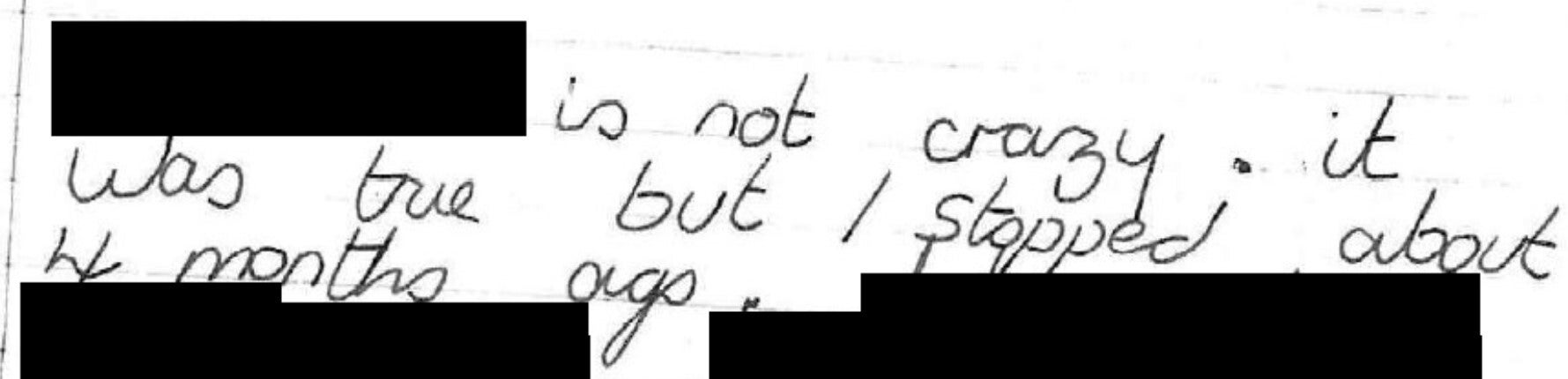
The strength of the evidence came from the “compelling accounts” of the two victims and a confession Carrick wrote in 1990 which was unearthed from his medical records.
Ms Shah said: “There was a realistic prospect of conviction right from the start, and as you can see from today’s result, this was a strong case, and I hope that the victims now have a sense of justice.”
The lawyer encouraged any more victims of Carrick’s abuse to come forward to police and said the CPS would do everything possible to secure justice.
It was “entirely possible” that Carrick had been offending in the gap between his first sexual offences as a teenager and the second tranche from when he was a police officer, she said.
On the guilty verdicts, she told the PA news agency: “I would just love to thank these victims for coming forward.
“They’ve been incredibly courageous in doing so, in having to face David Carrick in court and give their accounts of these horrific offending behaviours that he’s committed.
“I hope that today’s convictions would give them a sense of justice and hope that they’re able to carry on with their lives now.”
She added: “I certainly hope that this case has helped to build trust again in the police service because, as you can see, we have repeatedly prosecuted a very senior member of the police.
“I hope the public can see that no matter what someone’s station is, we are willing and able to prosecute them when there is sufficient evidence to do so.”
