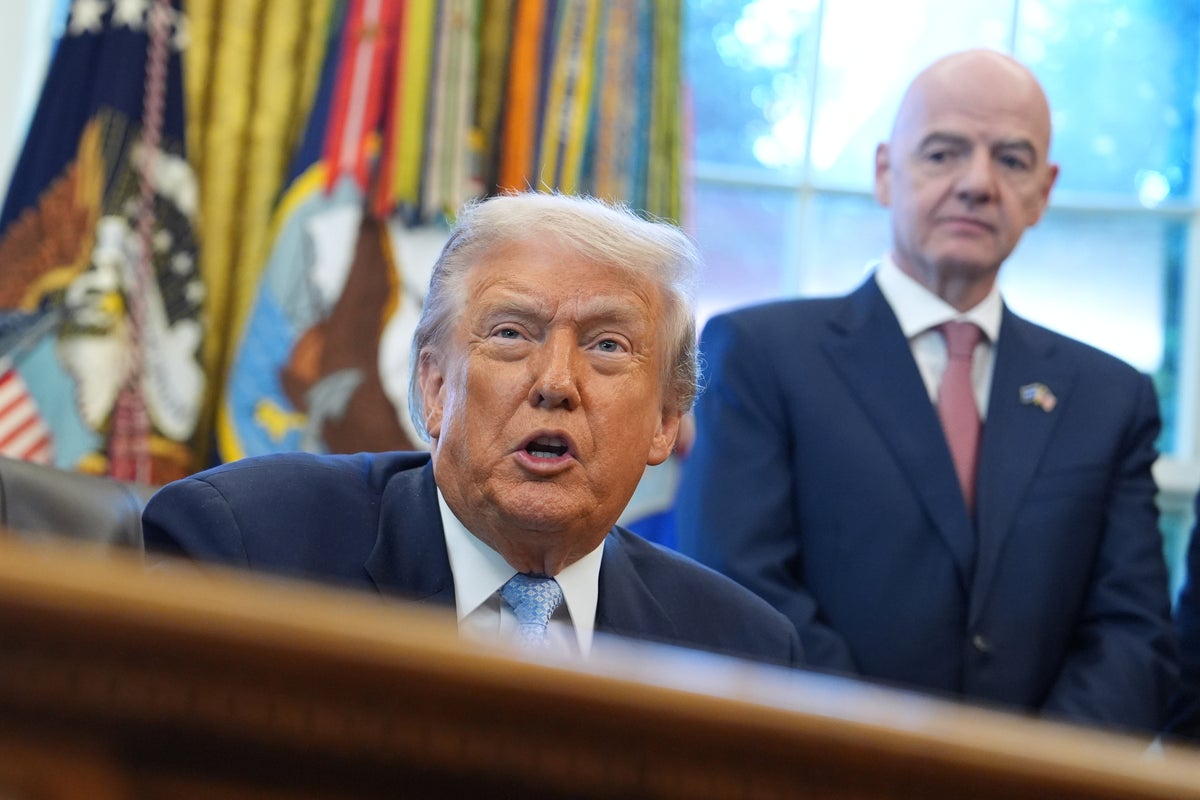
President Donald Trump wants to send $2,000 checks to Americans, arguing they could be funded by the sweeping tariffs that have become a cornerstone of his administration’s agenda – but oddsmakers don’t see it as likely to happen.
“A dividend of at least $2,000 a person (not including high income people!) will be paid to everyone,” he announced on Truth Social in early November.
But, turning this ambitious vision into an attainable reality is complicated.
Betting markets place the odds of this happening at a minuscule percentage. Analysts warn it would be enormously expensive. And even some within Trump’s own administration have poured cold water on the proposal.
Speculators on multiple platforms have an extremely pessimistic view of Trump’s promised rebates.
As of November 18, the odds market website, Kalshi, indicates there is only a 2 percent chance that $2,000 checks will hit American mailboxes before January. This is down from a 13 percent high on November 10, the day after Trump announced the rebates.
It’s even worse on Polymarket, the crypto-currency-based prediction market. The platform currently lists the odds of tariff stimulus checks being sent out by January at just 1 percent — marking a steep decline from 50 percent in mid-November.
Prominent economists, too, have expressed doubts about the merits of Trump’s latest economic gambit.
On Monday, the Yale Budget Lab released an analysis concluding that a one-time $2,000 rebate for Americans earning under $100,000 per year would cost the nation $450 billion.
“That is about twice as large as the total revenue that will be raised by the administration’s tariff hikes in 2026,” according to the Lab, which is run by university economists.
The cash injection would only modestly boost GDP growth and employment next year — by 0.6 and 0.15 percentage points — and this effect would fade over time. The Lab also noted that the rebates would have a slight impact on inflation, which would rise by less than 0.1 percentage points in the coming years.
A high-ranking member of Trump’s own administration also appeared less than enthusiastic about the proposal.
In a November 9 interview with ABC News, Treasury Secretary Scott Bessent admitted he had not discussed the rebate plan with Trump. He added that the tariff dividend may not necessarily be doled out as a check.
“It could…come in lots of forms, in lots of ways,” Bessent said. “It could be just the tax decreases that we are seeing on the president’s agenda. You know, no tax on tips, no tax on overtime, no tax on Social Security.”
The secretary’s cautious response may be warranted, Fortune reported, noting that sending out dividend checks would hamper Trump’s ability to use the tariff revenue to reduce the national debt — one of his stated goals.
While the levies are bringing in a substantial sum, about $30 billion per month, this revenue is a drop in the bucket compared to the $1.2 trillion being spent annually in national debt interest payments.
“Even if President Trump’s tariff collection continues to rake in $30 billion a month and $360 billion a year, this still amounts to a little over a third of the interest payments on the debt—it doesn’t touch the debt itself,” according to Fortune.
