Trump administration officials and key allies have urged Congress to pass legislation fulfilling the White House’s promise to pay out $2,000 in tariff revenue to ordinary Americans — after the president claimed it would finally happen in 2026.
In an interview with Fox News on Sunday, Alabama senator Katie Britt called on the Senate to “take a look” at signing Trump’s vow into law.
Trump’s treasury secretary Scott Bessent likewise said on Sunday that the administration would “need legislation” to pay out the money — a marked contrast to Trump’s willingness to deport immigrants, cancel funding, and punish his enemies by executive fiat.
Meanwhile, Trump himself insisted on Monday that he would “probably” send out rebate checks “somewhere prior to… the middle next year”, or perhaps “a little bit later than that”.
It comes as Trump’s tariffs struggle against both legal and political headwinds, with a Supreme Court challenge underway and sweeping gains for Democrats in this month’s state and local elections.
On Friday, Trump rolled back some of his tariffs on goods such as beef, tomatoes, coffee, and bananas, insisting that rising prices were all Joe Biden’s fault while falsely claiming that the cost of “everything” is “way down”.
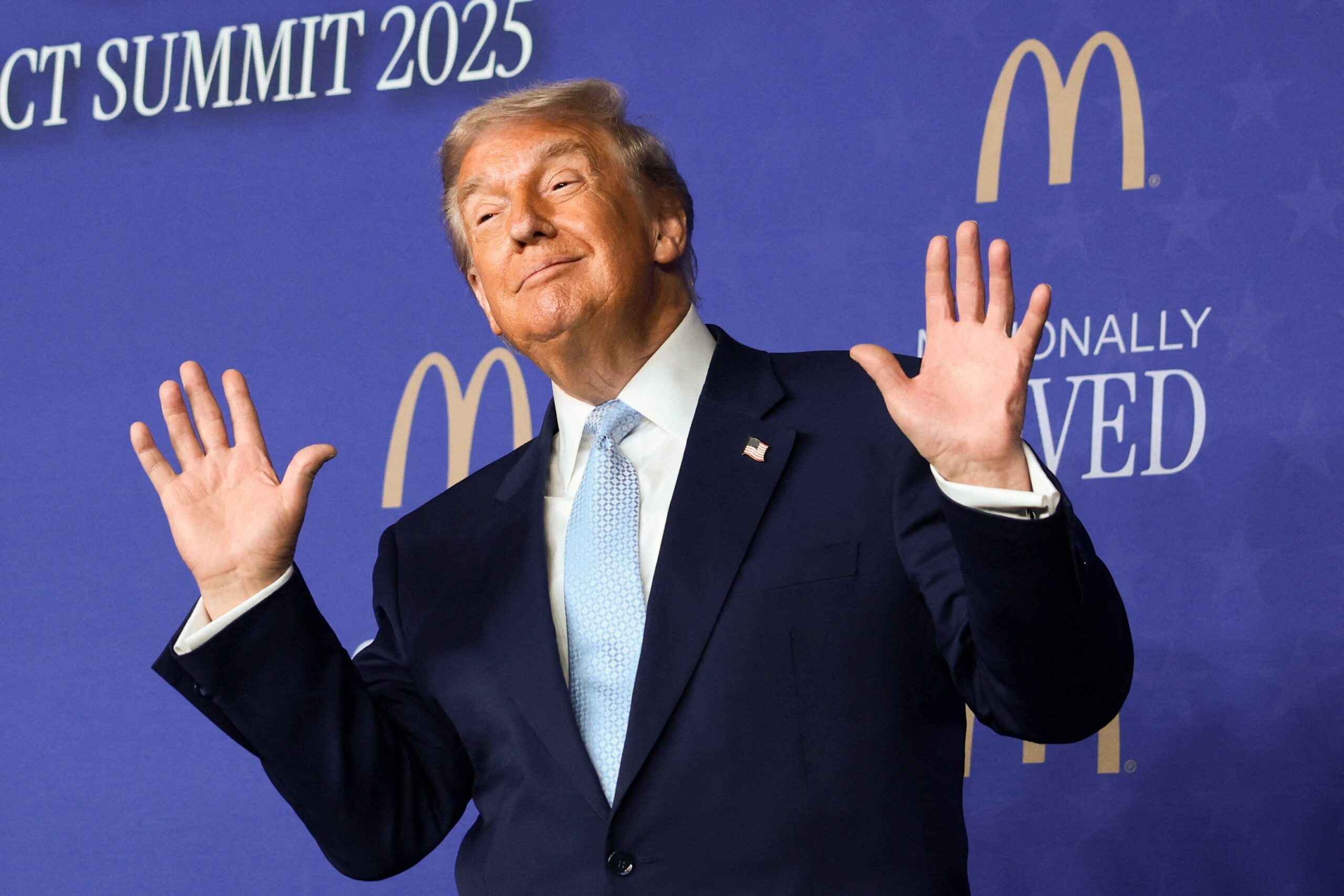
“We are doing better than we’ve ever done as a country. Prices are coming down, and all of that stuff,” Trump said during a speech at the McDonald’s Impact Summit on Monday evening.
“We took over a mess… and now we have normal inflation. We have it down to a low level, but we’re going, but we’re going to get it a little bit lower. We want perfection…
“[With Democrats], you would have had a catastrophe. You probably would have had a bankrupt country. You are so damn lucky that I won that election.”
Trump has long promised to share the purported benefits of his tariffs with everyday Americans to the tune of at least $2,000. But the details of this plan remain unclear, and Bessent has even suggested it won’t happen.

“[It] could come in lots of forms, lots of ways,” Bessent told ABC News recently. “It could be just the tax decreases that we are seeing on the president’s agenda. You know, no tax on tips, no tax on overtime, no tax on Social Security. Deductibility of auto loans.”
The tariffs have so far netted the Treasury around $229bn as of November 17, with most of the increase coming from countries other than China. But critics say they are costing the economy overall as companies are forced to either eat the costs themselves or pass them on to consumers.
Experts are skeptical that Trump’s checks plan can be pulled off without adding to the national debt or potentially driving inflation, both of which would be a liability after the Republican Party that got hammered on economic and affordability issues during this month’s elections.
There’s also the risk that the Supreme Court could find the president’s emergency tariffs illegal, potentially triggering a refund to businesses that paid them.
