Henrik Dahl claims Britain is ‘finally waking up’ to the political costs of uncontrolled migration – but there are signs of a public backlash in Denmark
BRUSSELS – Britain’s latest asylum proposals, widely seen as borrowing from Denmark’s ultra-restrictive model, have been welcomed by one of Copenhagen’s most outspoken right-wing voices, who says Sir Keir Starmer‘s government is “finally waking up” to the political costs of uncontrolled migration.
But his endorsement comes as Danish voters appear to be turning against the very political climate that produced those policies.
Henrik Dahl, an MEP for Denmark’s right-wing Liberal Alliance and a prominent advocate of Copenhagen’s hardline asylum approach, told The i Paper that Britain “should follow the Danish example” if it wants to head off the rise of hard-right forces such as Reform UK.
“Everywhere in Europe, including the UK, the hard right is a direct response to insufficient attention to migration,” he said. “If you don’t want hard-right parties in your country, you have to have very tough immigration policies. I don’t believe there is any majority for lax immigration policies anywhere.”
Denmark’s asylum system – including offshore processing plans, temporary rather than permanent residency and rapid removals of foreign nationals convicted of crimes – has become a reference point for other countries seeking to reduce asylum arrivals.
Dahl argues these policies have kept Denmark’s far right weak. “We don’t have hard-right parties in Denmark. That is a huge political advantage,” he said.
Yet local elections point to a more complex reality.
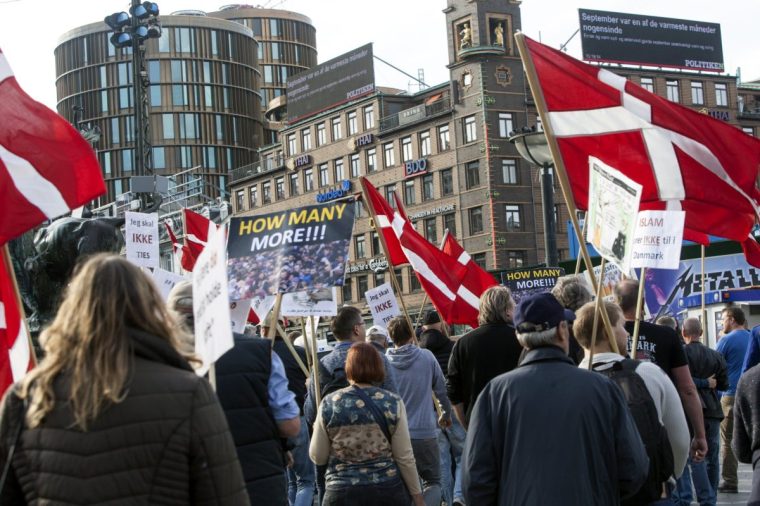
Denmark is holding municipal and regional elections on Tuesday, with polls suggesting the centre-left Social Democrats could lose control of Copenhagen for the first time in the city’s history, amid unease over prime minister Mette Frederiksen’s tough line on immigration.
Many Danes, especially urban voters, have grown weary of a political climate dominated by punitive rhetoric on migration. The backlash has opened the possibility of an unprecedented shift in power in the capital.
Dahl, however, insists that migration control remains vital for rich European countries, and hails the UK’s latest proposals as “a step in the right direction”.
He also said Europe should focus on supporting refugees close to home rather than accepting arrivals who have crossed multiple safe states. He cites research suggesting it is “ten or 15 times more costly” to support refugees in countries like the UK or Denmark.
“No taxpayer understands why services are deteriorating while more costs are added,” he said.
But a leading Danish refugee advocate warned that Britain’s proposals risk deepening Europe’s asylum dysfunction, while offering little real protection to people fleeing conflicts.

Eva Singer, the Danish Refugee Council’s Head of Asylum, says the UK appears to be “copying the Danish system of temporariness”, only in an even more extreme form.
“If countries race to tighten their asylum rules, you end up with a Europe where everyone adopts deterrence measures but no one addresses the real challenges,” she told The i Paper. “The lesson from Denmark may not be what British politicians think it is.”
Under the British proposal, refugees granted asylum could wait up to 20 years before becoming eligible to apply for permanent residency – far longer than the Danish threshold of eight years.
“From the point of view of refugees who need protection, this is extremely problematic,” Singer said. “People are left without any certainty for years. That is damaging, not only for individuals but for integration.”
Singer added that while Denmark pioneered the idea of temporary protection, its system sits within a wider, highly organised state structure: asylum seekers are accommodated in reception centres, allocated housing, and given language classes once recognised.
“The UK is a much bigger country, outside the EU, and in a very different situation,” she said. “It cannot simply transplant the Danish model.”
The UK is reportedly considering reforms to the European Convention on Human Rights (ECHR) and modern slavery laws in a bid to stop what ministers regard as unjustified attempts to delay or stop deportations.
But Singer rejected suggestions that the ECHR is an obstacle to deportations. “People are deported every day. It is simply not true that the ECHR prevents this,” she said. “If governments disagree with certain rulings, the discussion needs to happen at the right level – not by threatening to undermine the entire system.”
Singer warned that if countries like the UK race to tighten their asylum rules to discourage arrivals, Europe will end up with a patchwork of deterrence that fails to address the root causes of migration.
Your next read
She also noted the stark difference between British small-boat arrivals and Denmark’s land-border system, where people typically present themselves at police stations rather than arriving irregularly via boats.
“It’s very obvious when you see a boat land that there was no legal route,” she said. “In Denmark, people enter the system immediately. You know where they are.”
Singer suggested Britain may be drawing “the wrong lessons” from Denmark – adopting the deterrent measures without the supportive structures that make the Danish model function.
“We should all be looking for real solutions,” she said. “Simply making life harder for refugees is not one.”
