Back in 2022, Celeste had a clear vision for her second album, Woman of Faces. “I wanted to make this edgy, alternative, orchestral album written with ballads that have emotion and distinctive lyrics.” But her label Polydor wasn’t having it. “Everyone looked at me like, ‘Please no, no-one’s gonna listen to that.’ And it’s been interesting to hear the Rosalía album come out,” says the 31-year-old, with a knowing smile, of the Spanish pop star who has just released an operatic masterpiece, Lux, to huge critical acclaim. “Because I think that’s absolutely amazing. And I feel like what she’s achieved is what I really wanted to achieve. But I don’t really feel like I have the belief in me from people around me to really support my vision.” She bows her head slightly. “The album sounds to me a teeny bit more traditional than I would have wanted it to.”
Celeste’s 2021 debut album Not Your Muse, a sumptuous record of jazz-tinged ballads, marked her out as an exceptional talent: her breathtaking vibrato voice, stirring and soulful, drew comparisons to Billie Holiday and Amy Winehouse. Entirely self-taught, she hasn’t enjoyed the gilded path of many of her peers: born Celeste Waite in LA, she was raised in Brighton by her Dagenham-born mum at her grandmother’s house after her mum and Jamaican dad split when she was one. She studied at college and worked pub jobs while waiting for a break.
The death of her father from lung cancer when she was 16 provided impetus to succeed – after appearing on a number of dance tracks, she released the alluring 2019 ballad “Strange”, which led to instant industry hype and accolades: the Brit Rising Star award, BBC Sound of 2020 winner, a Mercury Prize nod, even an Oscar nomination for Best Original Song for “Hear My Voice” from The Trial of the Chicago 7.
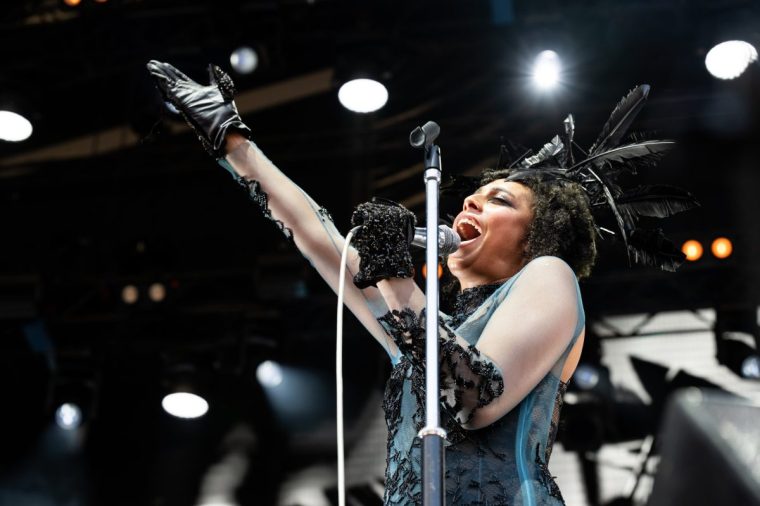
Celeste’s music became the soundtrack to everyday life: her song “A Little Love” was chosen for the John Lewis Christmas advert in 2020; the upbeat piano stomper “Stop This Flame” became the theme tune to Sky Sports’ Premier League coverage, and used for adverts for Peloton and Royal Mail. She was a hit with the public, too, even as the pandemic made what should have been a smooth, steep rise somewhat stop-start. Not Your Muse saw Celeste become the first female artist to debut at number one in the album chart since Jess Glynne in 2015.
But it has been a rough road, personally and professionally, to get to the long-awaited Woman of Faces. “I had to go through a lot for it to even exist.” The end of a toxic relationship with an addict had to be overcome. “I think if you get treated badly by people or by an individual, it takes you a moment to regain your sense of self.” But today, a pleasant and hugely engaging presence on video call from her kitchen in London, Celeste’s main gripes are with the process of making the album itself.
It is a sore issue. And clearly on her mind: attempts to talk about her past successes (and I did try) inevitably circle back to her dissatisfaction with the industry. Last month, Celeste took to social media to call out both Polydor and the industry at large in forceful terms. In a lengthy post addressing “some really f’d stuff happening behind the scenes”, she accused Polydor of showing “very little support towards the album that I have made”, and, having refused to put specific tracks on the album as requested, that “I feel I am being shown a set of consequences for essentially not doing as I was told.” She went on to accuse a male-dominated music industry of being self-serving and disregarding of women. Published on the eve of album release and given she remains with the label, it was startling in its candour.
“It was a frustration that boiled over, definitely,” she says. She felt it important to drop “the façade. I think people just need truth.” She says today she was aggrieved there was no overarching plan to make the album a success like there was when she signed to the label in 2019. “I’m not experiencing seeing that work go on behind the scenes this time, on this album.” Because she didn’t play ball and do as she was told? “Yeah, I thought it was because of that.” She rejected the songs on the basis they would be “used for commercial uses, that quite generic sound palette”, and they “were songs written in sessions that were not even sessions that I necessarily wanted to take part in”. She was told to do another “Stop This Flame”, essentially. “And I really didn’t want to make songs like that any more.”
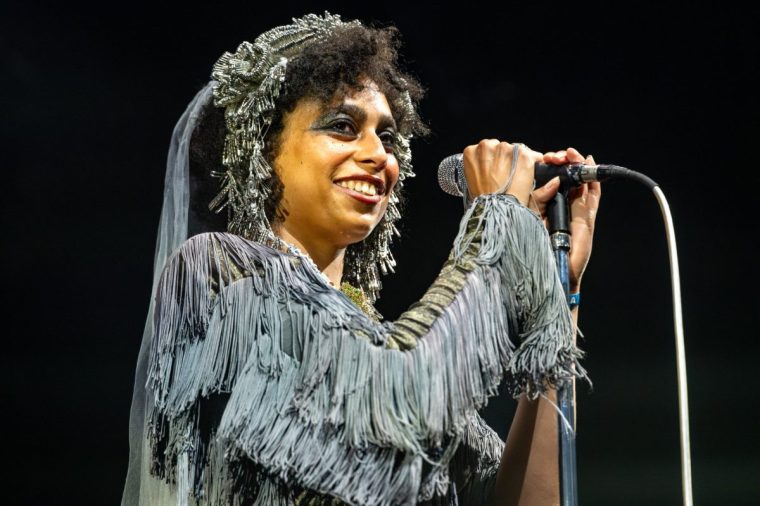
She remains frustrated that her artistic choices were diluted. Not so much her lyrics: what she calls the “social realism” of her words about a woman in various stages of struggle and recovery – songs of love, loss, grief, addiction and the inhumanity of technology – are evocative, and without cliche. “So I think in that way [the album] is me and it is who I am.” On the other hand, with production, “I really felt like I had to fight for my voice and my choices to be met and to be heard.”
She wanted to work with Robert Ames, conductor with the London Contemporary Orchestra, on string arrangements. “But I wasn’t allowed.” She rues that a “certain sensitivity and femininity” has been lost “in a collaboration with a male producer” (Jeff Bhasker, who has worked with Harry Styles and Lana Del Rey.) But even if it’s not exactly as she wanted, “I feel that I have to stand by what I’ve done and believe in what I’ve done, because everything happens for a reason”.
All this shouldn’t put you off Woman of Faces. It is wonderful: a suite of orchestral ballads that are cinematic and beautiful, veering between poise and cathartic release, centring Celeste’s powerhouse vocals. From the title down, it is a testament to Celeste’s resolve. Woman of Faces refers to “a moment where I felt like I recognised my own strength. I’d had over a year and a half of different things being thrown at me. And it was a moment that I thought I was weak, but I actually realised I was really strong.”
Celeste was 29 when she wrote most of the songs; she says as a woman, she was actively rejecting “that kind of psychological meltdown that society places upon you when you’re 30”. She looked at her older friends and took strength, she says.
While heartbreak is a theme, it is not presented in the typical lovelorn sense. Take “Happening Again”, ostensibly about addiction. “About my cycle of being in a relationship with an addict, and what my repeat cycle is within that. And that was painful for me, withstanding and being in a relationship with certain behaviours attached to it. It’s heartbreaking to see somebody struggle with that, no matter how they treat you. I’ve had to do a lot of work within myself to find forgiveness for that person and certain things that I went through, and acts that put my safety in jeopardy at points, physically or psychologically. But it’s heartbreaking the death of the person who you met when they were well.”
But she reiterates she doesn’t want to perpetuate the myth of the woman suffering for her art. “I really don’t want to live in this world that needs to place pain upon you for you to make your best art. I don’t want to live in this maintained narrative of a woman always in heartbreak and in misery. I’m actually quite fiery!” she says, smiling.
A key song is the opening track, “On With the Show”, the first Celeste wrote for the album in 2022. A song of defiance, of manoeuvring through the fog, it was written when she was struggling to find balance between her career and her relationship. “I was kind of swamped by both at some point, so I felt like I had to choose one or the other.” On it, she sings: “They put me back together.” Who are “they”? “It’s funny you ask that,” she says smiling. It wasn’t meant as a positive: she means the industry, and how she was made to “plaster yourself with makeup and just go out and be a bit of a puppet on a string, and just perform and pretend to be well [when you’re] not really well inside.”
But ultimately the album is proof, she says, “that you can end up a bit misshapen, and then find yourself back to who you really are again.” I ask what the result of her speaking out has been. It seems to have worked: she says she has had productive conversations with the people she needed to at Polydor. “So it’s a matter of if their actions speak louder than words.”
But talking to her, I get the impression that she is well on the path to taking full control of her work, with or without a label. “That’s exactly how I feel.” She rightly backs herself. “I like to believe in my merit, and I like to believe in my distinctive qualities and my voice and my talent. And I believe that when I’m given those platforms I can shine.”
‘Woman of Faces’ is out now
