In the vast Victorian Main Hall at the London Transport Museum in Covent Garden, a space filled with children’s screams, the whirr of the food chillers at the coffee stand, and a 1938 Northern Line train, the concert pianist Vusala Babayeva plays Gershwin on a baby grand.
The audience for her lunchtime concert are sitting, or running around, or having meltdowns.
“Whoa, that’s amazing,” says an adult leading a group of children in high-viz tabards. A few bars into Gershwin’s “The Man I Love” a father picks up his baby and goes to play with the buttons on the pelican crossing. Bridget and her three-year-old son Joshua are listening from the cafe. Joshua is engaged with the music. “It’s wonderful to come and hear music in such an unexpected place,” she says.
“It’s not the Wigmore Hall,” says museum director Elizabeth McKay, “but visitors’ faces light up when they hear this music. Roughly half the audience have come expecting a musical experience. The other half have no idea whatsoever.”
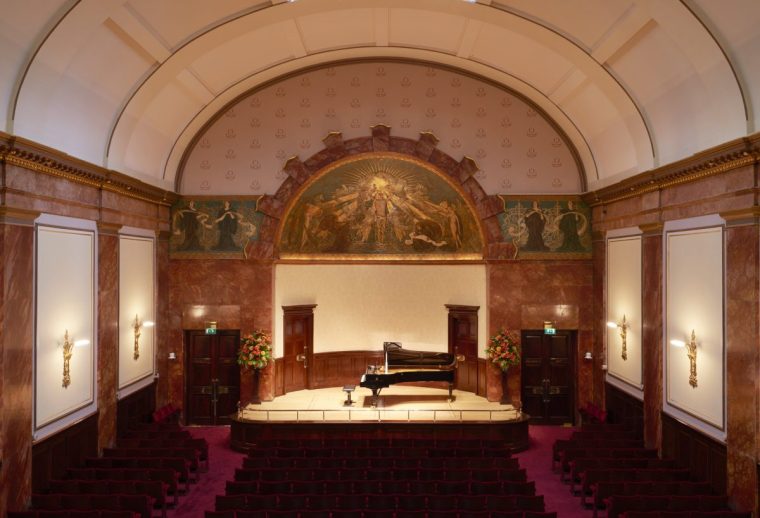
The music at the London Transport Museum is part of a broader cultural shift. Classical music, once the reserve of ticket concert venues and churches, is finding new spaces in which to be heard. The turning point was the Covid lockdown, when “music went outside, and a lot of it stayed there”, as Kerry Priest, programme producer at Oxford Contemporary Music, puts it. But it was propelled by Arts Council England’s (ACE) new funding strategy in 2022 – which included the controversial decision to defund the English National Opera, forcing it to move from London.
ACE’s chief executive, Darren Henley, wrote in The Guardian that “a new generation of audiences is embracing opera and music theatre presented in new ways: opera in car parks, opera in pubs, opera on your tablet”. This autumn, the future sort of arrived when Oliver Leith’s opera Garland was performed in a converted multi-storey car park in Peckham.
At the time, much of the classical music community was up in arms. They heard a stark ultimatum: decentralise your work and democratise your audience, or lose your support. Yet three years on, much of the scene has embraced the change. Has it created a vibrant new ecosystem, or forced a second-best experience on a reluctant public?
Three years on, ACE are sticking to their line. “It’s not about dumbing down, or giving people a lesser experience,” Henley tells me over video call. “It’s about saying there’s amazing repertoire with amazing performers. They can do it in one way [in the concert hall], and they can do it in this other way, and both are completely valid. There is no hierarchy. I’m excited that our investment takes that to different audiences.”
Priest thinks the ACE announcement got things going, but that there are “financial and other factors that push artists towards unusual spaces. There is plenty of perceived gatekeeping within the concert hall model. You have your traditionalists who don’t like people messing with the classics, so it can be an opportunity for artists to do exactly that.”
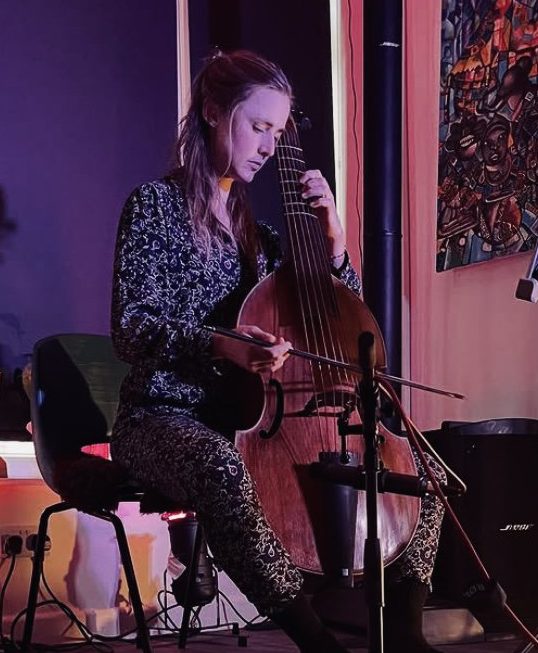
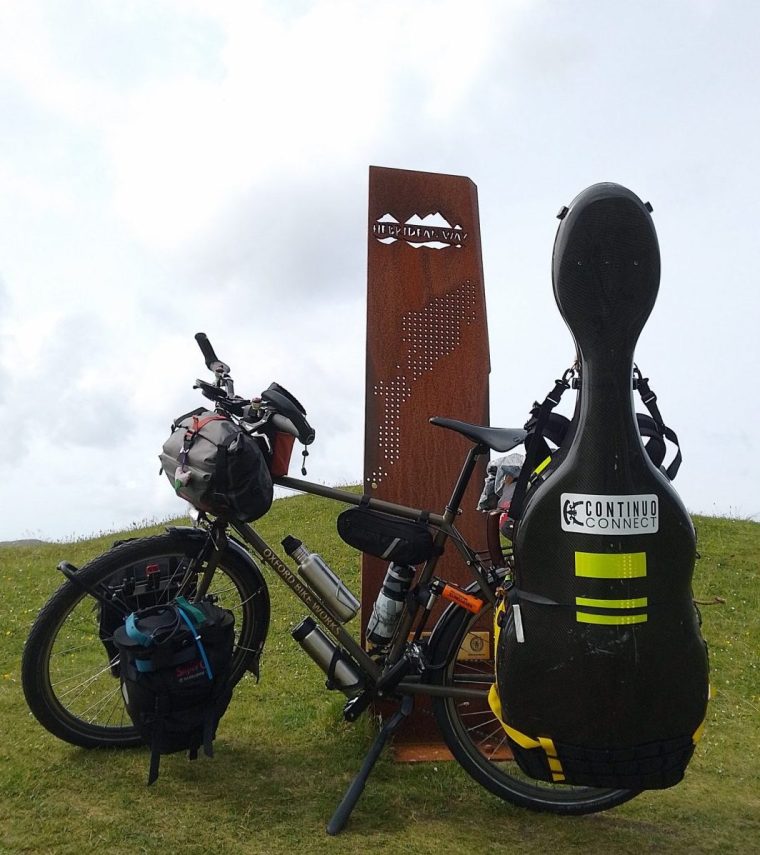
Sarah Small, a 31-year-old viola da gamba player who toured on a bicycle around the UK this summer, loves playing in unusual places. “It’s more interesting as a performer to play to an audience who have never seen my instrument before. They’re coming because something is happening close to them – the event is accessible, both location and ticket price.”
On a ferry stranded in fog outside Aberdeen, she put on a concert outside the ladies loos. “It was eerie because for eight hours the view never changed. The foghorn blasted every minute. Passengers were getting frustrated. It wasn’t the perfect setting, but people gathered round. Even groups of teenagers stopped to listen. One group of girls filmed me on their phones, and afterwards they said shyly how much they enjoyed it. I honestly don’t know if that demographic would have ever heard a viola da gamba before.”
Small’s tour was turned down for ACE funding. To make it work, she stitched together a variety of deals from splitting ticket revenue 70-30 with a pub to playing for a donation box that once yielded just £32 from a full house. For ticketed events, she used a “pay what you can” model with a £12 guide price, which most people paid. She kept her expenses low by wild camping, staying with people connected to her venues, and living off oats, dried fruit and bruised bananas.
“I’ve got friends who say, ‘I’d love to come to a gig’, but they add: ‘Are you doing anything shorter, or in a pub?’ Because they think they are not ‘cultured enough’ for a concert hall,” she explains.
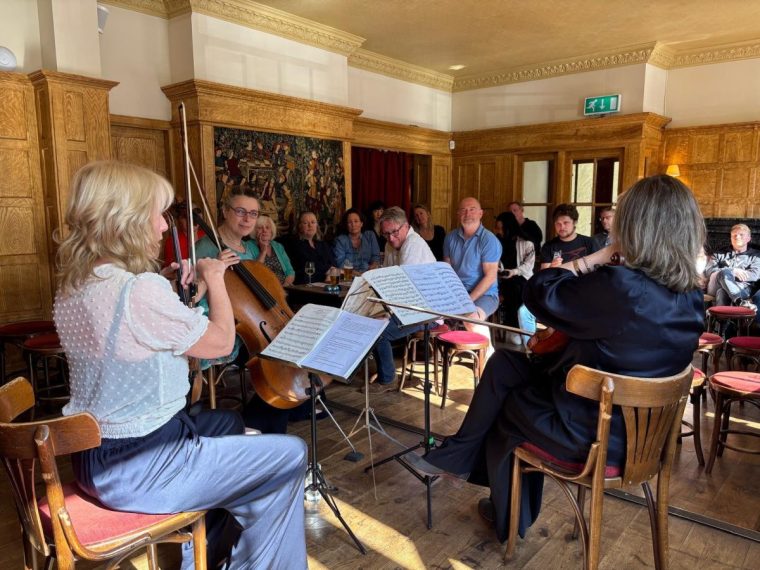
As it happens, there is plenty going on in the pub, too. At the Lamb and Flag in Oxford, Jackie Walduck on vibraphone and Catherine Morgan on violin, elite musicians from the Academy of Saint Martin in the Fields (ASMF), have been performing their Sunday afternoon Tinklings series monthly this year, using seed funding from the ASMF Marriner Project, and the support of a CIC that renovated the pub. Their funding is coming to an end, and Catherine hopes to move to a patronage style funding model to keep concerts free for everyone.
When I visited in October, the audience was pleasingly diverse: people filing in late with full pints; a man with a labradoodle; a row of Japanese tourists. A man carrying two pints passed inches away from Catherine while she played a tango by the Argentinian composer Astor Piazzolla; during Gnossienne No 1 by Satie (famous from the film Chocolat), the audience’s attention was rapt.
Afterwards, a man sitting with the dregs of a drink told me why he came. “It’s free. This half-pint costs less than a cup of tea. Classical music in Oxford is expensive.”
Catherine would be delighted with that. “Our experience is that we often catch people who don’t come to classical concerts, or haven’t in the past. It’s the same quality you get in a concert hall, but right up close.”
It’s not easy for musicians to play outside the concert hall. Ralph Kennedy, CEO of Without Walls, an organisation focused on upskilling performers, says artists must learn to contend with unpredictable sight lines, shorter audience attention spans, and, of course, the weather. Works have to be adapted to be punchy and resilient, for example condensing a 55-minute piece into a tight 15, or designing a performance that can hold its own against the distractions of a town centre or crowded pub.
Kennedy is committed to democratising arts in public spaces. “Our view is that if it’s public money, then everyone who is paying for the art should be able to see it. We welcomed this move from ACE, and felt strongly that if it’s being done, it should be done properly.
“We work to make sure artists are ready to adapt their work for public spaces. If they get these wrong, and the work fails, it’s a wasted opportunity.”
For Vusala Babayeva, the 28-year-old Azerbaijani pianist who has played three times at the London Transport Museum, this means making specific changes to her programme.
“Sometimes it’s noisy in here, especially when I play slow music. And in most cases, the audience is not here for the recital – they are just visiting the museum and see that someone is playing the piano.
Your next read
“For the museum, I play shorter pieces, more famous pieces. People love familiar music. Unfamiliar music can be a bit difficult for them to accept.”
So, has this move to unusual spaces developed into something genuinely positive? The evidence is mixed. It has created opportunities for artists, providing vital income for conservatoire students yet leaving solo performers like Small living off bruised bananas, and groups like ASMF hunting around for their next grant.
For audiences, it’s a trade-off. You may not get the pristine acoustics of the Wigmore Hall, but you gain access, and the distinctive “vibe” that Priest identifies, that magic created from a specific place and moment. Ultimately, it’s not a replacement for the concert hall, but a parallel ecosystem that has faults of its own.
