This is a war fought in people’s wallets, in their darkened and unheated apartments, and against their morale
Even while Ukrainian and Russian soldiers fight a close-quarters battle for the city of Pokrovsk, their countries are increasingly focusing their strategies elsewhere. This is a war fought in people’s wallets, in their darkened and unheated apartments, and against their morale.
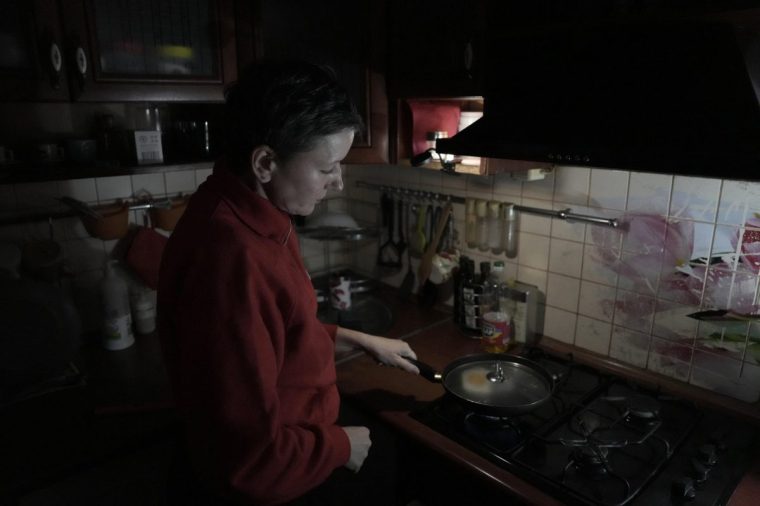
The Russians are nightly pounding Ukraine’s power stations, substations, gas pipelines and electricity grid. On Sunday, most parts of the country experienced up to 16 hours of power cuts following an especially large attack involving 45 missiles and 850 drones.
Not to be outdone, Kyiv has continued its own campaign of smaller but still effective strikes against Russian power infrastructure and, in particular, petrol facilities. This has also led to localised power cuts and contributed to a spike in fuel prices at the pump.
It is a clear sign that both sides fully appreciate that the war will ultimately be won or lost not simply on the battlefield, but in the will of respective leaderships and peoples.
By relying on volunteers rather than conscripts or mobilised reservists, Vladimir Putin has been trying to shelter most Russians from the realities of the war. But petrol shortages and price hikes affect everyone, and social media discussion makes it clear that despite the government’s efforts to explain them away as the result of market volatility and unplanned seasonal maintenance of refineries, no one really buys this.
As one taxi driver from the Siberian city of Irkutsk complained: “The Ukrainians can’t reach my city with their drones, but they’re certainly bombing my bank account.”
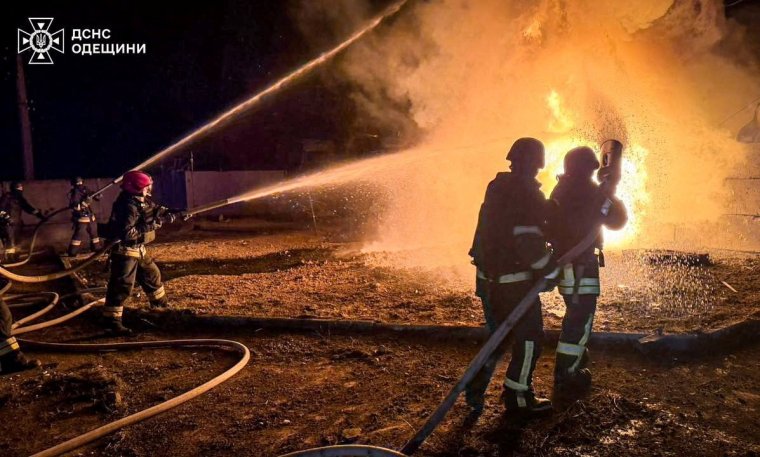
Russia’s size, and the need to defend Moscow and a handful of other politically significant centres, mean it is impossible to secure every potential target. It does have more resources, though. Petrol prices are stabilising, and Russia is now conducting a limited call-up of reservists to guard especially important or at-risk targets. While there is some scepticism that they can make much of a difference, it is presumably intended at least as a performative display that the Kremlin is taking action.
Ukraine’s position is rather trickier, and the plight of its people more directly threatening as winter nears (the first snowfall is forecast in the north this week). Moscow has tried a similar campaign of long-range strikes against energy supplies and networks in previous years, but the winters were relatively mild, and Russia had fewer and less accurate systems back then.
In and of itself, Russia’s campaign is unlikely to force Ukrainians to accede to Putin’s maximalist political demands. However, they are contributing to an emerging dissatisfaction with Ukrainian President Volodymyr Zelensky’s Government, which has until now enjoyed rock-solid support. In particular, the energy crisis is highlighting one of the government’s vulnerabilities: a sense that it has failed to address the problem of corruption or, in some cases, that it is directly involved.
The police have made a series of arrests of officials in the energy sector of late, alleging they failed to prepare for the Russian attacks or pocketed funds meant to be spent on defences for facilities.
Especially dangerous for the government is that Nabu, Ukraine’s independent anti-corruption agency, has claimed to have uncovered a $100m (£76m) scam involving Energoatom, the state nuclear power company. One of the figures charged on Tuesday is Timur Mindich, one of Zelensky’s closest associates and co-owner of his entertainment production company Kvartal 95.
On the one hand, the arrests can be interpreted as evidence of the government’s commitment to fighting the problem, but as a Western diplomat in Kyiv noted: “When people are sitting in the dark, in the cold, they’re not congratulating the government, they’re wondering why nothing had been done before.”
Kyiv can undoubtedly make Russians feel the pinch and force them to begin to realise that the war is not something being fought far away, with no direct costs to themselves. However, Ukrainians are likely to suffer more. Already, hard-hit cities are having to set up temporary public hubs offering heat, light and water powered by mobile generators.
Your next read
The Ukrainian campaign also risks giving Putin an unexpected political opportunity. When he tried mobilising reservists for the war in autumn 2022, it was hugely unpopular. More Russians fled the country than ended up being called to arms, and Putin seems to have decided it was not worth a repeat.
The limited use of reservists to guard power stations is a very different proposition, but it could begin to normalise mobilisation.
If Russians begin to regard extreme measures that could force an early end to the war as more acceptable, Putin might have the chance to do what the nationalist hawks have been urging him to do, and call up hundreds of thousands of extra troops to take on Kyiv’s exhausted defenders. That would make Kyiv’s attacks a massive self-inflicted blow.
The updated version of Mark Galeotti’s book We Need To Talk About Putin is out now
