Trump sparred with Fox News on Monday over the issue of inflation and the cost of groceries
NEW YORK – There was a telling moment in Donald Trump’s car-crash interview with Fox News’ Laura Ingraham on Monday, when they were discussing the issue of inflation and the impact on ordinary Americans.
Ingraham, a journalist and commentator who has long been a Trump ally, flattered the US President by saying he had been “all over the affordability issue” before asking him what more could be done.
Trump’s response was to tell her to “shhhhh” and that it was a “con job by the Democrats” because “costs are way down”. Ingraham shot back: “Are you saying voters are misperceiving how they feel?”
The answer, according to Trump, was a resounding yes.
When US consumers go to the grocery store and see that things are more expensive, they are not actually seeing things being more expensive, or so the US President said.
This kind of doublespeak is classic Trump: deny reality and present the version that you want. For the most part, it has worked for him – it propelled him into office in 2016 and helped win him re-election in 2024. But this may be one crisis that even Trump cannot talk his way out of.
Voters are simply not buying the idea that things are becoming cheaper – because they are not, and they are reminded of it every time they open their wallets.
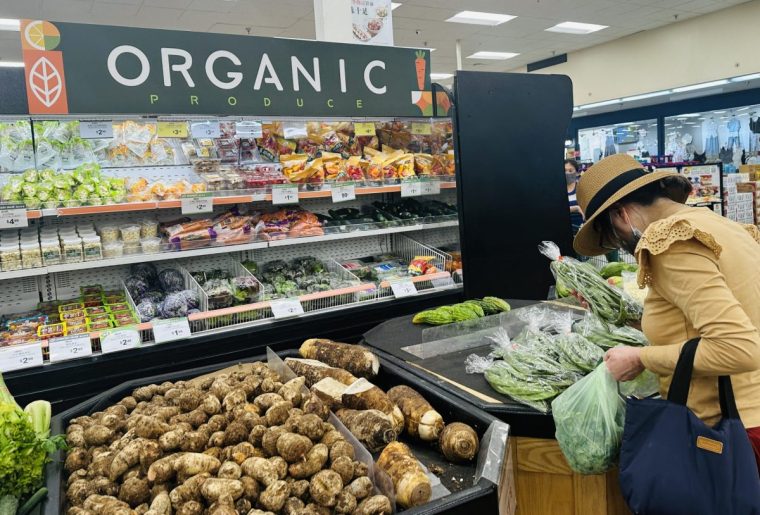
Every month of Trump’s second term has been marked by inflation, with meat, poultry, fish, and eggs up 4.5 per cent between January and September, according to the Government’s Consumer Price Index.
Consumer prices in the US were up 1.7 per cent in September, compared to January (when Trump was sworn in to office), and were three per cent higher than in September last year.
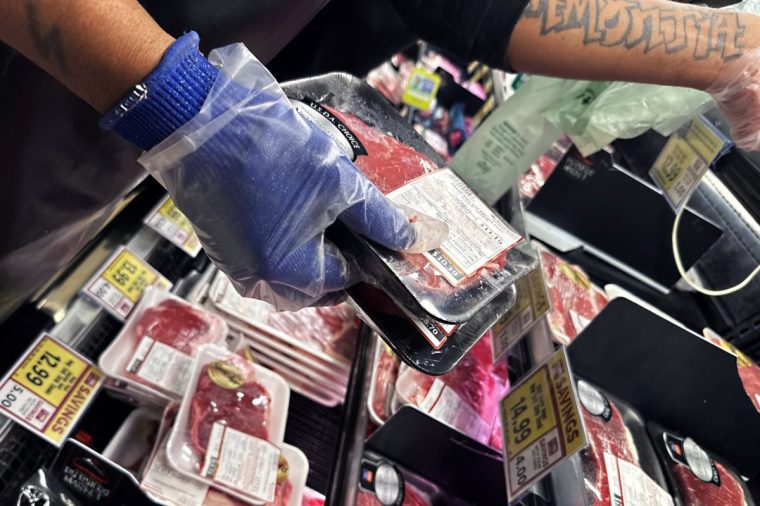
Some costs have risen even further, including ground beef, which was up 14.2 per cent since January, and coffee, up 15.3 per cent.
These figures have shredded the US President’s credibility on the economy. Polls show that only 30 per cent of voters believe Trump has lived up to his promises on tackling inflation and the cost of living.
This likely represents the gravest threat to Trump’s presidency, and it is baffling why he isn’t getting more of a grip on it.
It may be because he simply doesn’t get it: thanks to his father’s riches, Trump was a millionaire by the age of eight and he probably hasn’t ever done his own shopping.
Yet, like most other people, I find myself wincing whenever I do my weekly shop, or standing open-mouthed as I see how much prices have gone up by.
Last year, my wife and I joined a food co-op to bring down the cost of our grocery bill, and we’re not alone in worrying about grocery prices.
Poll after poll shows that voters put the cost of living as their No 1 concern, and yet the US President seems more focused on foreign matters and the lavish ballroom he is building at the White House, which at times seems like a grotesque middle finger to anyone struggling to make ends meet.
Trump’s political and media strategy is even more confounding when you look at lessons from history, both recent and from the past. “It’s the economy, stupid” has never seemed more apt.
Only last week, Democrats scored huge victories in off-year elections, including the first female governor of Virginia and Zohran Mamdani becoming the mayor of New York, much to Trump’s annoyance.

Mamdani is a self-described Democratic Socialist – Trump has branded him a “communist” – and campaigned relentlessly on affordability issues. Among other things, Mamdani has pledged to enact a rent freeze on one million rent-stabilised homes in New York, around 28 per cent of the total market.
Trump’s response to these losses was to make a vague promise to give everyone a cheque for $2,000 (around £1,500), using funds raised from his tariffs, which look likely to be thrown out by the Supreme Court anyway.
If he’s not worried, he should be. Time and time again, inflation has toppled US presidents (and their peers elsewhere in the world).
Let’s start with Joe Biden, who trotted out the same line that Trump has been trying. It didn’t end well for him. Jimmy Carter was a one-term US president, losing his re-election bid in 1980 thanks to rampant inflation, while George H.W. Bush lost to Bill Clinton in 1992 in part due to rising prices.
So, what should Trump be doing about it?
Abigail Spanberger, the incoming Democratic Virginia governor, has promised to declare a state of emergency on energy prices on the first day of her administration, in an effort to bring them down.
Your next read
Trump could take a leaf out of Spanberger’s book and do the same. But that would involve confronting some of the business leaders his administration enjoys cosy relationships with, who might balk at any government meddling.
It would also involve admitting that he was wrong – something Trump never does.
Still, more car-crash interviews with friendly media outlets like Fox News might change his mind.
