A new Disney+ documentary argues that innocent until proven guilty does not exist in the world of celebrity. It’s impossible to disagree
In the five years since Caroline Flack’s suicide, she has been immortalised as the poster victim of modern celebrity. Her death has become a tragic parable about cancel culture, responsible use of social media, the intrusion of the tabloid press, the sensation of reality TV and the misunderstandings and stigmas about mental ill health, from which we were all supposed to learn and in which each of us who watched on as voyeurs was complicit. It was shocking, incredibly sad, and uncomfortably novel: the death of a famous person about which members of the public felt guilt – and still do.
What I, at least, had forgotten, was just how quickly it all happened. On the 13 of December 2019, Flack was arrested and charged with assault by beating, after she and her boyfriend Lewis Burton had got into a drunken argument, she’d hit him round the head with his phone, and he had called the police.
On the 15 of February 2020, after misinformation spread that she had hit him with a lamp, after a restraining order between them was upheld despite him urging the police not to prosecute, after the scene at the house was described as like a “horror movie” in court, after photos of their trashed bedroom and blood-soaked sheets leaked to The Sun, and after she had lost her job on Love Island and learned that the case would go to trial, she killed herself. It was so frenzied, so much of it so unfair, and the conclusion so horrendous that it seems impossible that all that damage could be done in only two months.
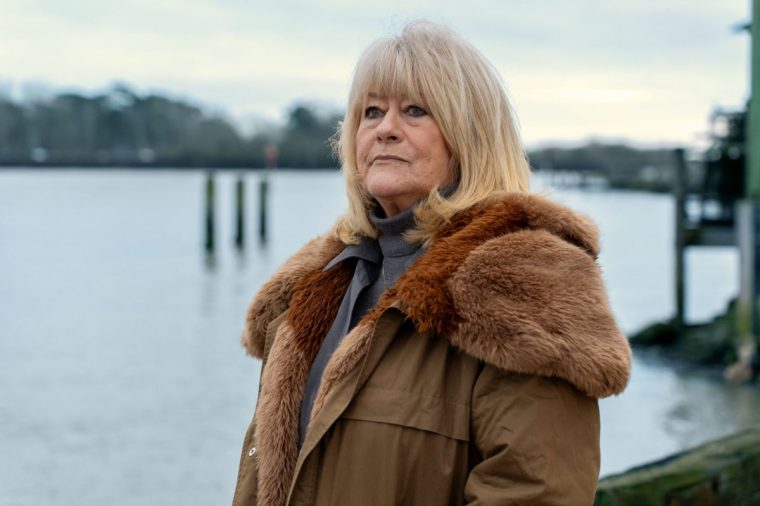
Those two ghastly months are the subject of the new two-part Disney+ documentary, Caroline Flack: Search for the Truth, which follows Flack’s mother Christine as she tells the story of what really happened, and doggedly pursues an admission from the Metropolitan Police and the tabloid press that her celebrity meant she was treated differently – and worse – than any other defendant.
The police initially decided to caution her. But after one CPS officer appealed, this was overturned in favour of an assault conviction, with no discernible reason and even though Burton’s injuries were minor and Flack posed no real risk to anyone but herself.
The press, meanwhile, presented her as a domestic abuser and tacitly encouraged trolls on social media to do the same. When The Sun published those photos at the scene, they allowed the world to believe she was extremely violent, even though the blood was Flack’s own.
In the argument, terrified of the police and of her reputation being destroyed, she had cut her arms down to the muscle and required more treatment than her boyfriend. But explaining that, and revealing how vulnerable she was, even when, as one journalist says in the film, part of the press’s fixation with the bubbly, romantic, eager-to-please Flack was that she had “an element of hot mess” about her, was not an option. She felt it would destroy her.
Flack never spoke about that period of her life; she was barely photographed except in those paparazzi shots of her, translucent and recoiled, outside Highbury Corner Magistrates’ Court – and yet her voice is everywhere in this documentary, through text and voice messages she sent to her loved ones at the time.
Flack’s emotional readiness, easy intimacy, and down-to-earth normal-ness was what made her such an endearing presenter. Here, though, we see those things in her reactions to news about the trial, to some fresh headline, to finding out her Love Island job had been given to someone else. “It’s 11am and I haven’t lost it yet – so I’m doing well!” she says on one rare good day. Most of them are along the lines of “no way out” “lowest of the low” “the end of my career”.
It is incredibly grim to watch. The documentary is neither impassioned eulogy, nor sermon about the ills of social media pile-ons, nor screed against what seems now like such obvious wrongdoing – there have been many of all those in the wake of Flack’s death. Instead, it is a focused investigation into how Flack’s case was handled, powered by regret from her mother that she could not prevent the unthinkable; that she didn’t take every text as a warning; that “I knew enough about Caroline that I should have seen this coming”.
Flack’s mother wants people to know the truth about her child, who was so fragile that “if I saw her smile I’d think, ‘thank God, she won’t die today’”. The most chilling thing is that so few of us were willing to see that and have compassion at the time.
Your next read
Because, as the film points out, innocent until proven guilty does not exist in the world of celebrity. And too many of us, lapping it up, were morbidly excited to see a famous person toppled. To believe there was some dark truth, some madness, some monster hiding in plain sight. To imagine a woman capable of the kinds of violence usually exacted by villainous men.
Since watching these films I have read back old text messages when “news” leaked about the lamp, the bloody sheets, the “horror scene” and felt shame that I was so willing to be misled by a campaign of hatred that in hindsight clearly relished the ruin of a 40-year-old woman whose real dark truth was, as her mother says simply and so sadly, that “she didn’t like herself very much”.
‘Caroline Flack: Search for the Truth’ is streaming on Disney+
