When Jared Kushner turned up at the heart of Gaza ceasefire negotiations last month, it seemed like a high-stakes plot twist in Trump-land: weird, confusing and yet entirely on brand.
Because, who needs years of experience in diplomacy, deep knowledge of the region or, come to that, an actual government position, when you have a bulging Rolodex and the unshakeable confidence of a privileged wheeler-dealer?
Thus the narrative was spun, with Donald Trump’s trusted 44-year-old son-in-law rushing to help Middle East envoy Steve Witkoff secure a multi-party agreement to end Israel’s assault on Gaza and agree an exchange of Israeli hostages and Palestinian prisoners.
Kushner credited his success to being a “deal guy”, and media outlets swiftly adopted the line, with headlines praising the “real estate moguls” and “bare-knuckle brawlers” that brought about the Gaza ceasefire.
Kushner also has helped us grasp his sensitive and nuanced view of the Israeli-Palestinian issue by describing it as “nothing more than a real estate dispute” and by proclaiming, in the year 2019, that Palestinians were not yet capable of governing themselves.
While politicians and pundits have piled on the praise for the deal that at least temporarily reduced the bloodshed in Gaza, the general sketchiness of Trump’s peace plan means that it might fall apart at any moment.
Born into a wealthy, Orthodox Jewish, New Jersey family, Jared Kushner’s marriage to Ivanka Trump in 2009 secured his place in the Trump inner circle. He also has a good relationship with the Israeli prime minister, Benjamin Netanyahu.
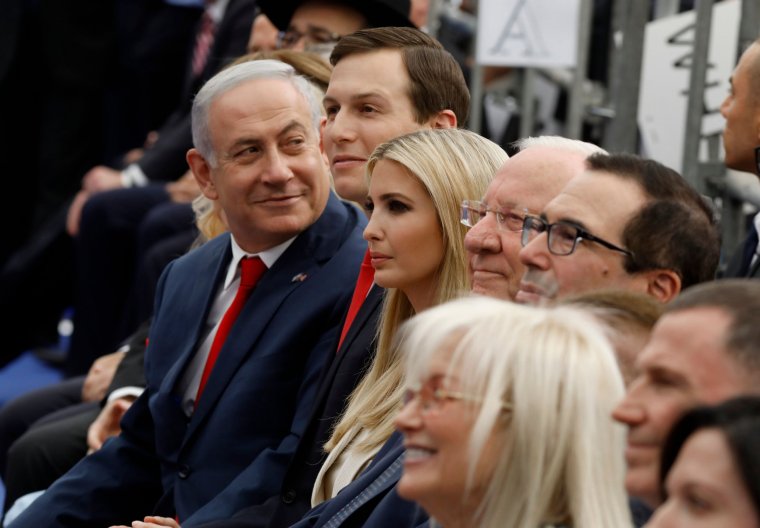
During Trump’s first term, Kushner was a senior advisor and played a key role in securing the 2020 Abraham Accords, normalising relations between Israel and the United Arab Emirates, Bahrain and later Sudan.
Between Trump’s two presidential terms, Kushner set up a private equity firm powered by the seemingly limitless cash machines of Gulf sovereign wealth funds. By coincidence, those very same Gulf countries – Saudi Arabia, Qatar and the United Arab Emirates – are crucial players in his ceasefire wheeler-dealing.
You might describe this as corruption and a glaring conflict of interest, but White House spokesperson Karoline Leavitt dismissed such concerns last month.
“I think it is frankly despicable,” she said during a press briefing, “that you’re trying to suggest that it’s inappropriate for Jared Kushner who is widely respected around the world and has great trust and relationships with these critical partners… to strike a 20-point comprehensive, detailed plan that no other administration would ever be able to achieve.”
Aside from anything else, any other US administration could have ended Israel’s war on Gaza at any point in the past two years. After all, Israel is a client state of America, and not the other way around.
Kushner was also reportedly behind Trump’s earlier idea of moving out the Palestinian population of the Gaza Strip to build “the Riviera of the Middle East”.
“Gaza’s waterfront property — it could be very valuable, if people would focus on building up livelihoods,” he said last year.
Over the last month, Kushner hasn’t publicly commented on Gaza’s future, but he and Witkoff are reportedly visiting Israel on Monday to discuss what comes next.
The Trump administration’s plan seems propelled not entirely by the usual geopolitics informing America’s endless support for Israel, but also by self-interest. And as Matt Duss, the executive vice-president at the Centre for International Policy, told me: “Corruption could move us in the right direction, because Trump is just interested in feathering his nest and that means movement on the Palestinian issue is necessary, because the Saudis want it.”
By this analysis, Saudi Arabia and other Gulf states have leverage in insisting that Palestinian needs and rights are part of the picture. Duss said that as long as Trump has his eyes on the Nobel Peace Prize, the US administration could keep pushing forward on the Gaza peace plan.
The trouble is that nobody knows what comes next.
The 20-point-plan mentions a Trump-led international transitional body, the “Board of Peace”, but no one knows who is going to be on it, aside, potentially, from former British Prime Minister Tony Blair, whose involvement is being met with a mix of distrust and disgust by many across the Middle East, given his role in the disastrous Iraq war.
Then there’s the International Stabilisation Force, expected to establish “control and stability” in Gaza, though exactly how it will do so – and which countries will participate – remains in flux.
Crucially, Israel has already repeatedly violated the ceasefire, killing over 200 Palestinians in Gaza since it came into effect last month.
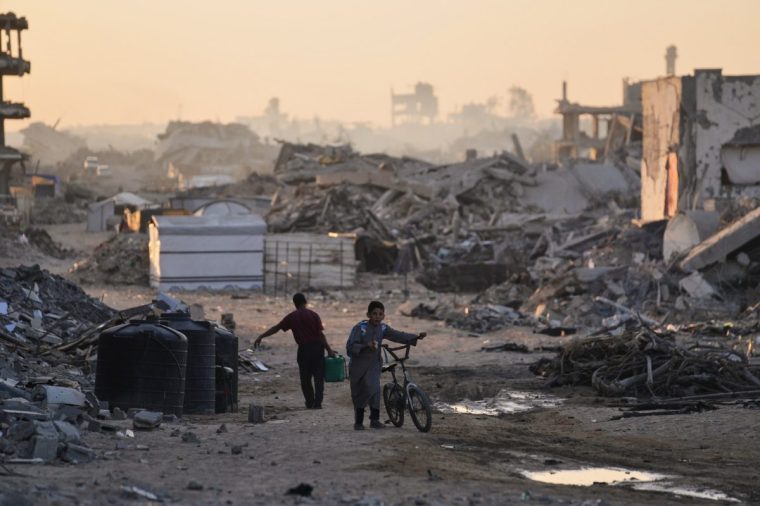
With vagueness from the “deal guys” dragging on, vital questions remain: notably, where are Palestinians supposed to live right now? Gazans are in temporary shelters and tents – and winter is coming. Israel’s bombardments of the Strip have left most buildings destroyed and an estimated 50 million tonnes of rubble, which could take years to clear.
Your next read
Also, when will enough aid enter Gaza, since Israel is still blocking it? And when will Gaza be governed by Palestinians, when will reconstruction begin, and who pays for it?
Gazans are still enduring the hell of trying to stay alive and safe every single day. As Khalil Sayegh, the Washington-based president of the Agora Institute, who is from Gaza, told me: “Palestinians are left with nothing.”
A deal is only as good as its key details and fine print. Perhaps this is something that someone should have told Kushner.
