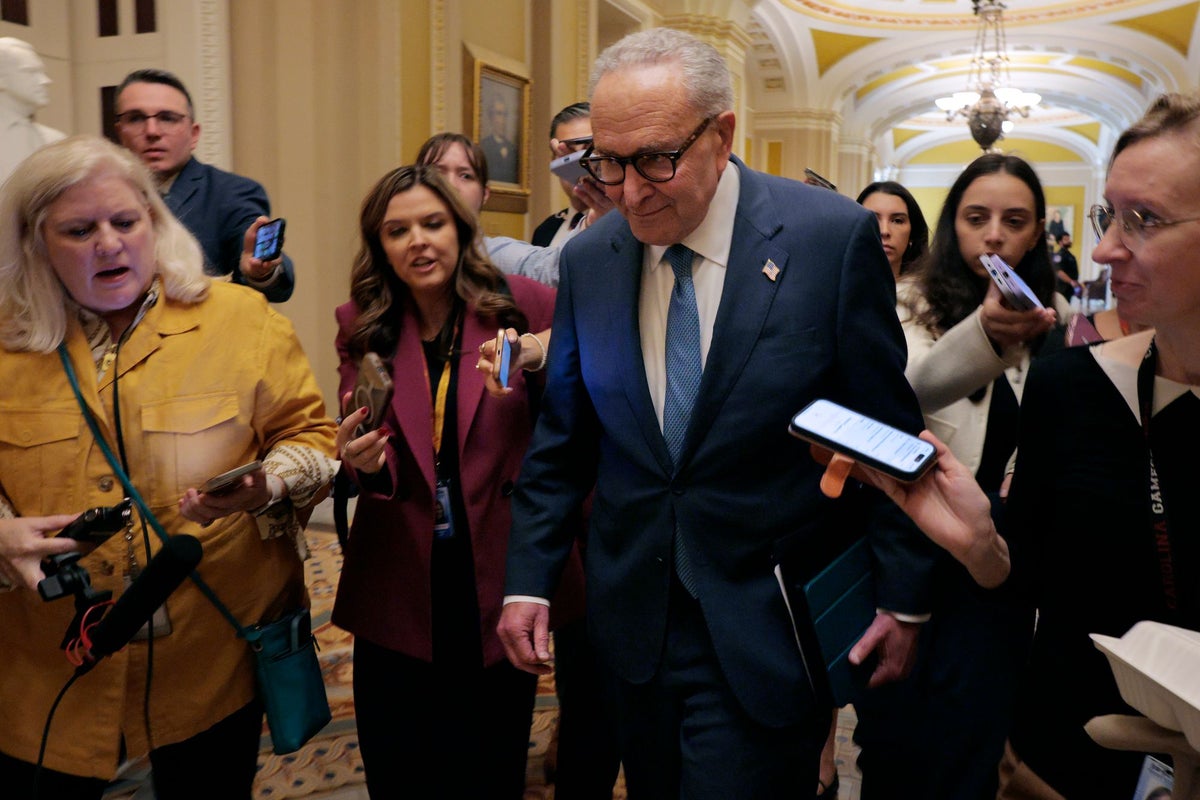
Lawmakers in the Senate appear close to reaching a deal to end a federal government shutdown, but the path ahead still remained unclear given the lack of involvement of either the White House or Republican leadership in the House of Representatives.
Axios reported Sunday that at least ten Democrats were tentatively on board with an agreement that would extend government funding through the end of January while further negotiations take place on a range of issues including the subsidies for Affordable Care Act health plans.
The tentative deal would put a vote on the calendar next month to extend those subsidies for one year, while also handing Democrats a clear win by reversing a series of layoffs the White House directed in October as a means of heaping pressure on the president’s political enemies.
But whether Republicans were on board with these concessions was unclear as of Sunday afternoon. Administration officials have flatly refused to negotiate with Democrats while the government is shut down, and there wasn’t even a clear sign that the deal had the backing of Senate Majority Leader John Thune — to say nothing of Speaker Mike Johnson in the House, or the president.
Trump, earlier Sunday, was trashing the Affordable Care Act on Truth Social and insisting that Republicans would come up with a better plan. But his Treasury secretary, Scott Bessent, made clear that wasn’t really on the table and there was no “formal” proposal from the administration. Republicans in Congress such as Marjorie Taylor Greene have been plainspoken about the failure of their party to come up with one after the 2017 Obamacare repeal effort went down in flames.
Axios separately reported that other issues including efforts by Democrats to block future layoffs directed by the White House were also being discussed.
If the deal passed with any of the reported provisions, it would represent a massive victory for Democrats. Republicans in the Senate would be under a significant amount of pressure to vote for the Democratic proposal to extend Obamacare subsidies in December, or risk a second shutdown in January — the beginning of the election year.
Polling has shown that Americans blame Republicans and President Donald Trump more than Democrats for the shutdown, while a clean sweep by Democrats in several highly-watched statewide elections last week gave the opposition party the headwinds to continue putting pressure on the GOP.
Speaker Mike Johnson continues to hold the House of Representatives in recess while he avoids negotiating with Democrats to end the shutdown or convening the chamber and swearing in a newly-elected Democratic congresswoman. By doing so, Johnson has also kept an embarrassing vote on releasing the Epstein files (which would be successful, with Democratic and a few Republican votes already locked in) from passing in the lower chamber.
Senate Democrats were set to meet as a caucus late Sunday afternoon, with the chamber in a rare weekend session, to discuss the proposal.
Trump, who has come under fire for not meeting with Democrats despite his own past insistence of the president’s responsibility to do so in such situations, continues to largely refrain from direct involvement — making it potentially more likely that he would sign on to any deal Republican congressional leaders felt was appropriate.
Axios reported that administration officials were on board with the deal but resistant to giving Congress the power to block future layoffs.
At the same time, Trump has added fuel to the fire with a number of proposals that don’t seem to have gone through the consultation process with his own allies on the Hill, including his call for a new Obamacare replacement effort as well as his demand that the Senate scrrap the 60-vote filibuster threshold to end the shutdown. Republican leaders are fearful of the latter suggestion, which would allow Democrats to pass legislation with the same simple-majority threshold if the chamber changed hands in 2027.
Politico reported that House Democrats are unhappy with the emerging framework of the deal, given that it doesn’t guarantee passage of Obamacare subsidies. House Minority Leader Hakeem Jeffries seemed to confirm that on NBC’s Meet the Press.
“I don’t think that the House Democratic Caucus is prepared to support a promise, a wing and a prayer from folks who have been devastating the health care of the American people for years,” he said.
Many in the lower chamber worry that giving the appearance of backing down, in the wake of Tuesday’s elections, will infuriate many Democratic voters and supercharge primary campaigns against their members next year.
One of those winning Democrats, Gov.-elect Abigail Spanberger of Virginia, told CBS’s Face the Nation on Sunday: “Our victory was based on a campaign addressing concerns related to costs and chaos. Virginians need to — and Virginians want to — see the government reopen.”
Republican Maine Sen. Susan Collins told the outlet that the vote was going to be “close”, but added that she was hopeful this breakthrough would finally end a federal government shutdown that has now lasted nearly 40 days.
