Vince Gilligan made lightning strike twice with Breaking Bad and Better Call Saul. For his third act, he’s flipped the script
Apple TV has never been afraid to take big swings. It took a chance on comedic actor Ben Stiller as a serious director and in doing so introduced the world to the phenomenon of Severance. With Ted Lasso, it created an unlikely hit about a happy-clappy, over-enthusiastic football coach that was watched by millions around the world. It was the first streamer to win Best Picture at the Oscars with CODA.
You know who else likes to take bold risks? Vince Gilligan, the creator of one of the greatest TV dramas in history, Breaking Bad. Not only did Gilligan dare us to root for the ultimate anti-hero in science teacher Walter White and his deplorable transformation into the murderous drug dealer Heisenberg, but he then asked us to do the same for a Breaking Bad side character, dodgy lawyer Saul Goodman. And we did – Better Call Saul wasn’t just a money grabbing spin-off; it was a triumph in its own right and, at times, surpassed the brilliance of its precursor.
It was only a matter of time before Apple TV came calling. And what do you get when the most experimental streaming service works with one of the most masterful storytellers of his generation? An experimental, masterful series, of course.

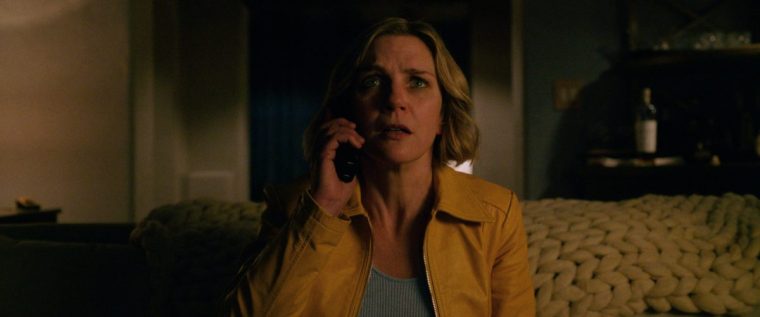
Pluribus is the first of Gilligan’s creations set outside the Breaking Bad universe, though there are some connecting threads. Rhea Seehorn – who played lawyer and Saul’s wife Kim Wexler in Better Call Saul – reunites with the showrunner to play Carol, the author of very popular romance novels who takes every opportunity she can to complain. While she is far from the criminal masterminds of White and Goodman, she isn’t exactly likeable. And just like those series, Pluribus is set, for the most part, in Albuquerque, New Mexico. But that’s where the comparisons come to a very stark end.
Because Gilligan has stepped into sci-fi territory, and instead of the very real horrors of drug kingpins and dodgy criminal lawyers, Pluribus deals with something even scarier: a virus that changes the entire human race forever.
Don’t roll your eyes; this is no grand allegory for the Covid-19 pandemic. This particular bug has no dodgy side effects and simply makes everyone in the world… happy. Except, that is, for Carol. Literally every other person’s mind is bound together with a sort of “psychic glue” spreading peace and joy throughout the world, while she remains her miserable self, made even more gloomy by the so-called “joining”.

While the rest of the world – now sharing consciousness and knowledge with one another – works to uncover why Carol is immune to the virus, she becomes increasingly agitated with their incessant niceness. Rather than luxuriate in their need to make her happy (they will quite literally do everything she asks of them), Carol cannot stand their pleasantries – she might have been a misery, but, to her, it’s better than being that happy. Her quest to find out what is happening and whether she can fix it soon becomes erratic – and dangerous.
That’s another difference between Gilligan’s previous work and Pluribus: his central character – whom we are once again supposed to back against the odds – is a woman. Rhea Seehorn delivers a perfectly chaotic performance as a woman who is gaslit at every turn, yet (unlike White and Goodman, who felt sorry for themselves every step of the way) never allows Carol to become a victim. She is, like them, a force to be reckoned with, a tornado of anger – but not, ultimately, weak.
Gilligan isn’t new to sci-fi – he kicked off his writing career on The X-Files – and he’s hardly new to high-concept TV. But Pluribus is the first time he’s attempted such far-reaching storytelling on this massive scale. While we spend most of our time in Albuquerque with Carol, Gilligan also takes us to Morocco, Spain and Paraguay. While Breaking Bad took years to broaden its horizons (in a fantastic, brooding way), the scope of Pluribus is massive to begin with – the story even stretches to outer space.
But it’s not just a good story well told, it also – as all good TV must do these days – confronts us with important questions about our own lives. The humans affected by the virus aren’t only happier, but they’re obsessed with preserving the happiness of others – all works of art become equal, all interactions become about agreeing with each other, all requests (even for hand grenades, heroin and the use of Air Force One) are granted. It’s a clever, well-disguised critique of our tendency to people please, of our growing incapacity to be uncomfortable, of our unwillingness to have our opinions challenged, to be wrong and, well, unhappy.
Following Breaking Bad and Better Call Saul was always going to be tough for Gilligan, who says he came up with Pluribus because he was “tired of writing bad guys”. But this is one of those rare occasions when a highly anticipated series not only meets expectations, but exceeds them. By flipping the script (literally) and writing the ultimate good guys, he’s created yet another knockout. It’s not Breaking Bad – and that’s a very, very good thing.
‘Pluribus’ is streaming on Apple TV. New episodes stream on Fridays
