The former First Lady’s new book reveals the stories behind some of her most famous outfits.
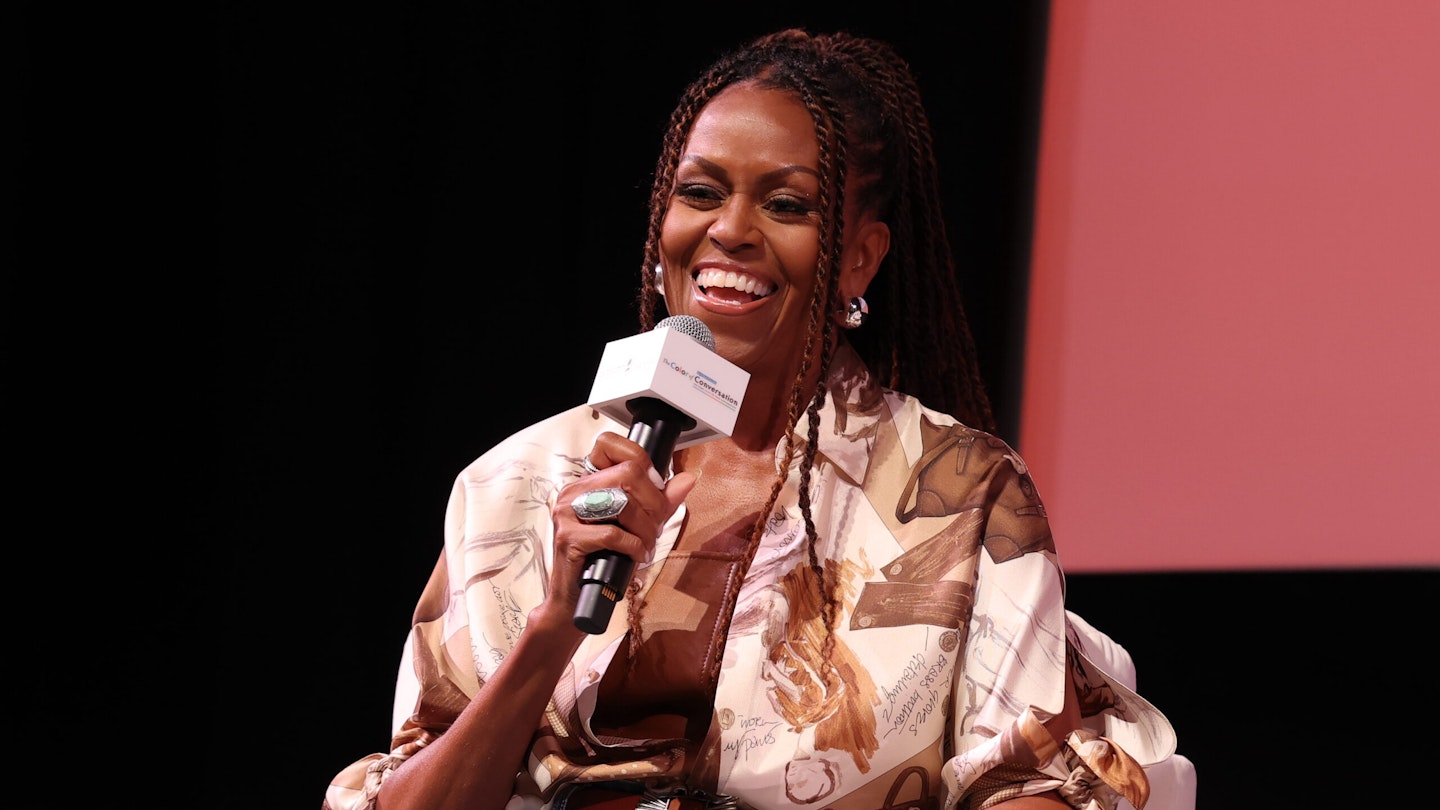
@Arturo Holmes/Getty Images)
Throughout her eight years as First Lady, Michelle Obama inspired a feverish obsession over every outfit she wore. There were the sleeveless shift dresses that launched workout videos on how to get her toned arms; serious positing on why a cardigan is the new cover-up; castigation over bearing her knees in shorts for a trip to the Grand Canyon.
Yet, there was also insightful consideration of her diplomacy-tilted looks; wearing Christopher Kane and Preen by Thornton Bregazzi for a British tour, and glowing in a Tadashi Shoji gown for a White House state dinner with Japan’s Prime Minister. Then there was admiration for the catapulting of lesser known designers into the spotlight, wearing then-fledgling talent Jason Wu to the inauguration ball.
This, though, was all sport for onlookers. While her clothes were chosen with an acute strategy, until now she has never precisely articulated her thoughts on the insanely high stakes of dressing not just for the public eye, but for history. If you think getting it right for a wedding is hard, imagine choosing a dress that you know will end up in the Smithsonian Museum.
In her new book, The Look, Obama finally confronts her style legacy. In what is perhaps indicative of the way that women who show an interest in fashion are seen as frivolous, Obama writes, ‘I tried to avoid talking publicly about fashion, since opening those floodgates risked my appearance consuming the media conversation even more than it already did… Now that I’ve spent two decades in the public gaze and published several books, I think people know who I am and what I care about… I can finally talk about beauty and style with- out the risk of it limiting my message.’
The documentation of her rise through the political classes as spouse of first a senatorial candidate, then a senator, then to the apex of the White House through the lens of fashion is riveting. For her early public appearances her outfits were picked up on the fly, darting from work to school pick- ups and dashing into a local department store to hope something would fit at the last minute.
The first designer clothes she ever wore were sent by Oprah (a thank you for a family photo shoot and interview for her magazine) – Ralph Lauren suits that opened Obama’s eyes to the elevated construction of luxury clothing. Equally, she was seen as much in J Crew as luxury items. Her way of dressing reflected how many of us pull together our clothes, a mix and match of high and low, practical and glamorous.
In Washington, her wardrobe had to become a veritable machine, helmed by Meredith Koop, under the White House staff role of ‘valet’. The process of outfitting Obama for every television appearance, diplomatic tea, running around the South Lawn with schoolchildren and evening state dinner was extreme and painstaking. Often those events would be on the same day, necessitating multiple outfit changes, each absorbing any political and cultural nuances related to the moment.
‘I was communicating heavily with the East Wing, analysing every logistical variable that might affect wardrobe,’ says Koop, who we hear from in the book. ‘I’d regularly receive a “block schedule” from Michelle’s scheduler, which mapped out her commitments in the short and long term. Nonetheless, things could and did change all the time up until the last minute. I thoroughly educated myself on the details of each event, absorbing information as though I was studying for a test… What was the event generally, and had it hap- pened before? What is the historical significance? Has a First Lady attended in the past? If so, what did she wear?’
Of course, what she wore didn’t just influence how she was seen and portrayed. As with the Princess of Wales, there was an extraordinary ‘Michelle effect’ on the for- tunes of the labels and designers she wore. In a 2010 study, the Harvard Business Review found that over the course of 189 public appearances, she created $2.7bn in value for the 29 brands worn over that period. Fashion isn’t merely a soft power political tool, it is an economic lever; many of the designers whose star she helped to rise feature in the book.
If you live for the details behind the polish, it is fascinating. Koop would liaise with fashion houses, asking for collection looks to be merged, sleeves to be added or subtracted, skirts lengthened, colours swapped. A key feature? ‘Every look had to meet my baseline criteria: could I give anyone a hug at any moment?’ writes Obama.
What’s impressive is how meticulously her underlying message was woven into every make-up, hairstyle and shoe option. As the first Black First Lady she knew that her appearances carried more weight both by what she represented and by how she would be judged. Which makes those fashion looks even more important.
‘The Look’ by Michelle Obama is out now
