Vladimir Putin has lavished money on modern ships and submarines. He has also promised to spend billions more over the next decade
A week after Norway’s defence minister warned about the burgeoning capabilities of Russia’s Northern Fleet, based in Murmansk, Russia proved his point.
On Monday, it launched its newest submarine, the Khabarovsk, designed to carry the nuclear-powered, nuclear-tipped torpedo Poseidon. Vladimir Putin claims this doomsday weapon was successfully tested last month. Russia’s defence minister, Andrei Belousov, said Khabarovsk can also deploy other robotic underwater weapons. It can probably fire long-range cruise missiles, too.
Nato Secretary General Mark Rutte unwisely mocked Russia’s naval capabilities last month, but its fleet poses a significant threat to the UK.
The Russian Navy’s abject performance in the constrained Black Sea theatre at the hands of Ukraine should not be used to downplay its threat in the vast North Atlantic. Confronting it will be a formidable challenge for the Royal Navy. Rebuilding the ability to do so is going to take many years.
Putin likes his navy, which has come a long way since its post-Soviet collapse. At a naval review in 2017, he said that “Russia’s history is inseparable from the victories of its courageous and fearless Navy”.
Increasingly identifying himself with Peter the Great, who founded the Russian navy, Putin has lavished money on modern ships and submarines. He has also promised to spend billions more over the next decade.
In 2022, Putin identified several areas adjacent to Russia – including the Arctic and Barents Sea – as “vital and strategic” waters for Russian national security. This is shaping the navy as a force designed to defend Russia’s maritime approaches, deny access to them to Russia’s adversaries, and deliver nuclear and conventional deterrence.
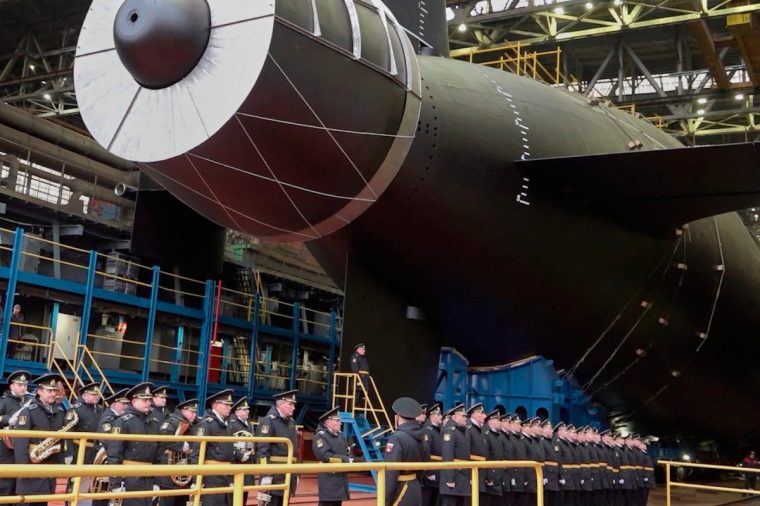
To these ends, Russia’s Northern Fleet, which is much smaller than during the Cold War era, deploys around 10 large surface ships, 22 submarines, and many smaller vessels. These threaten the UK in various ways.
Russian submarines can launch intercontinental ballistic nuclear missiles as part of the country’s strategic nuclear deterrent. The Russian navy also has an arsenal of long-range, precision-strike missiles, carried on almost all large surface and sub-surface vessels, which could strike land targets in Britain with conventional as well as nuclear warheads.
One particular concern for the West is a fleet of modern, multi-purpose, nuclear-powered attack submarines used to defend Russia, gather intelligence, and intercept or disrupt shipping. In August, one submarine tracked a US carrier strike group off Norway, prompting an intensive anti-submarine hunt by Nato ships and aircraft.
Russia also operates specialised ships and submarines that can survey and – in wartime – sabotage the UK’s underwater infrastructure. Here, Britain is acutely vulnerable: 99 per cent of the UK’s digital communications are carried via subsea fibre optic cables. All of our gas comes by sea, and undersea cables also bring offshore wind and electricity from the continent.
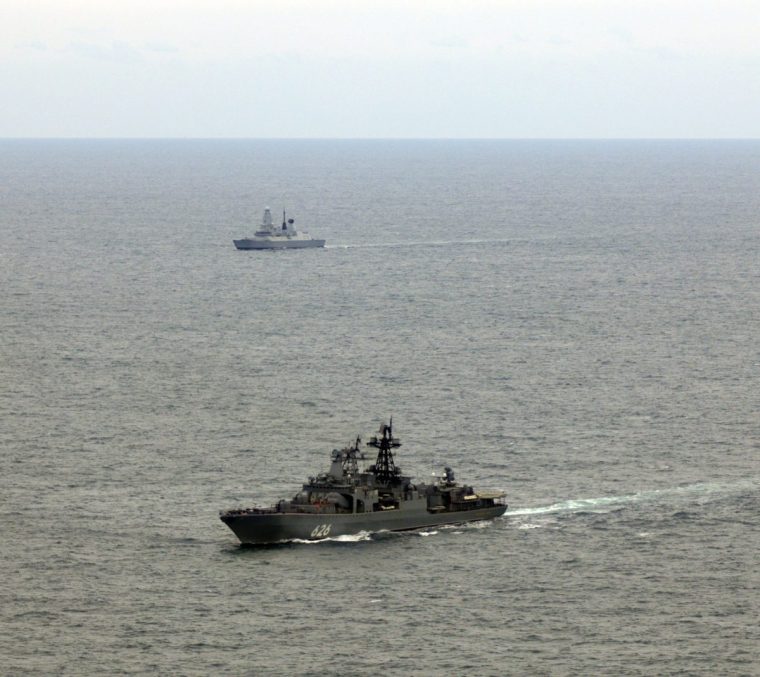
In the UK’s latest Strategic Defence Review, the Royal Navy was tasked with protecting critical undersea infrastructure and securing the North Atlantic against Russia’s submarines. An “Atlantic Bastion” is planned, using warships, submarines and aircraft, as well as uncrewed surface and underwater drones, fixed sensors and artificial intelligence to form a single anti-submarine surveillance network.
But the Royal Navy has its work cut out. Years of defence cuts and procurement delays have led to a much-diminished anti-submarine force. Older frigates are currently leaving service without immediate replacements, while the RAF operates a tiny force of anti-submarine aircraft.
Although the Strategic Defence Review recommended its expansion, most of the UK’s nuclear attack submarines are currently tied up in port.
Nato allies can help, and the Royal Navy hopes that technology can plug the gaps. Money is being poured into various research projects to deliver a range of “lean crewed, remote operated, uncrewed/autonomous airborne, surface, and sub-surface vehicles, sensors, and nodes”.
But this tech-heavy approach is itself not without risk. The new research projects are far from ready to be deployed operationally, and challenging acoustic conditions in the North Atlantic make finding submarines difficult.
Anyone who has served on an anti-submarine patrol in the North Atlantic knows that huge seas risk swamping any uncrewed vehicle that is not large or robust enough. Uncrewed platforms need to be refuelled, repaired, and recovered when they break down. If the tech doesn’t work, responsibility will fall back on the men and women in scarce-manned naval platforms.
Perhaps the most daunting challenge, however, will be the handling of data at scale. The expansion of capabilities under Atlantic Bastion will only exacerbate this. There is no point in collecting data if it can’t be fused together and exploited.
These issues aren’t insurmountable. The Royal Navy has a long and proud history of anti-submarine warfare over the last century, and also of leading technical innovation at sea.
The UK has a vital role in securing Nato’s Atlantic flank. Like against France in the 19th century, or Germany in the 20th, “far distant ships” are again set to form a distant blockade, this time standing between us and Russia, and any attempts it makes to dominate Europe’s maritime approaches.
John Foreman CBE is a retired Royal Navy officer and served as a UK defence attaché in both Moscow and Kyiv.
