Like Britain, Germany is battling a far-right movement weaponising a perceived migration emergency
BERLIN – In September 2015, as civil war raged in Syria, Angela Merkel, the then-leader of Germany, ordered state police to open the country’s borders to refugees and asylum seekers.
“We can manage this,” she said. Merkel’s words became a symbol of pride as optimism buzzed up and down the country.
Merkel had cast Germany in a new role: no longer just the European Union’s economic powerhouse, but a humanitarian hero. But since then, the country’s attitude to foreigners has soured.
With an ailing economy, strained public services and a refugee situation weaponised by Alternative for Germany (AfD) – the hard-right, anti-immigration political party – Germany is swinging sharply to the right and increasingly casting immigrants as the enemy.
The UK is facing a similarly fraught debate over migration, with Nigel Farage’s Reform UK party pulling public discourse to the right, violent far-right protests led by Tommy Robinson inflaming tensions, and Labour introducing a divisive “one-in, one-out” system for migrants arriving in small boats across the Channel.
Despite being classified as extremist by intelligence agencies, the AfD has efficiently siphoned supporters from the beleaguered ruling coalition, which won a general election in February.
That election also saw the party record its best-ever results, becoming the main opposition for the first time in its history. Recent polls show the AfD, which has been publicly backed by the likes of JD Vance and Elon Musk, is now the country’s most popular parliamentary party.
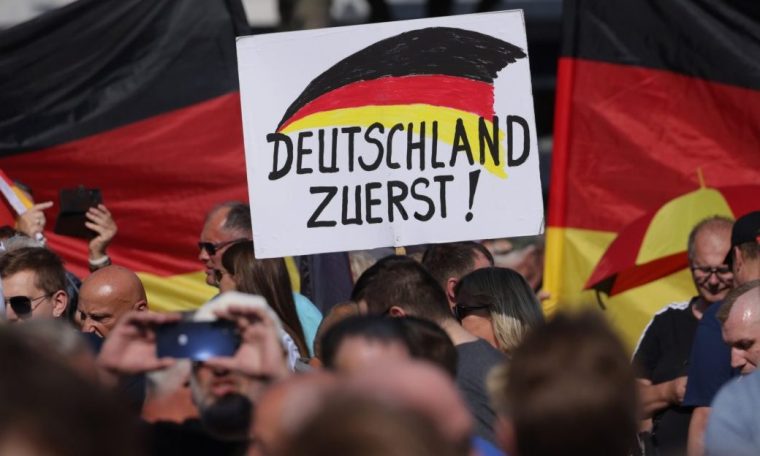
As pressure from the far right mounts, Chancellor Friedrich Merz has faltered. In the past month, he has been accused of racism and dangerous xenophobic language, as well as cosying up to the hard right after publicly identifying a “problem in the cityscape” that would be solved by deporting migrants from Germany.
In May, Sir Keir Starmer also faced a furore over his language on immigration, after saying the UK risked becoming “an island of strangers” in a speech, a phrase he later said he regretted using.
Merz has said that Germany needs to accept fewer than 100,000 asylum seekers a year, with its public services “overwhelmed” by immigrants.
In the UK, 39,616 people were granted asylum or other leave to remain at the initial decision stage in 2024.
Merz’s comments came after Germany’s interior minister said that a controversial deal with the Taliban to repatriate refugees to Afghanistan would be signed “very soon”.
At the same time, refugees in Germany are reporting a surge in xenophobia and feelings of insecurity, according to a long-term study published in August by the German Institute for Economic Research.
Germany’s refugee population
Since 2015, no other EU country has accepted more refugees than Germany.
At the end of 2024, data showed 3.48 million refugees living in Germany – there were 515,700 living in the UK at the same time, according to the UN Refugee Agency.
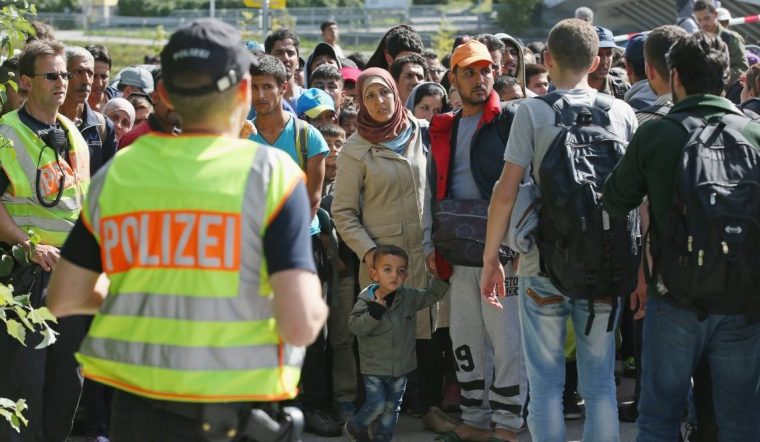
When Merkel opened the doors, her decision was mocked by the likes of Farage and Donald Trump, who in 2017 called it “the worst decision a European leader has made in modern times”.
In the years that followed, extremist groups violently attacked refugees and torched temporary shelters, and despite signs of successful integration – including the fact that more than half of refugees found work and paid taxes within five years of arriving – leading far-right figures intensified their witch-hunts.
In 2019, Germany’s interior ministry said that right-wing extremist crimes accounted for more than half of all politically motivated offences in the country.
Then Russia launched its full-scale invasion of Ukraine and triggered the largest movement of European refugees since the Second World War. Almost 1.3 million Ukrainian refugees now live in Germany.
Largest refugee centre shutting down
The Ankunftszentrum TXL, housed at terminal C of the former Tegel airport in Berlin, reportedly costs over €1m a day to run. Like asylum centres in the UK, Germany’s largest shelter has been repeatedly criticised for its huge cost and overcrowded conditions since opening in 2022.
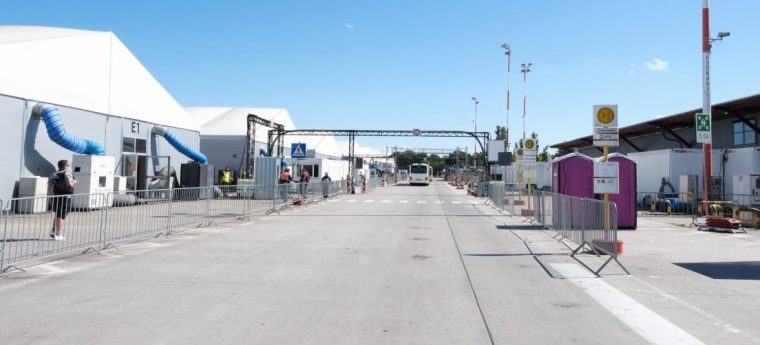
The government now plans to close it and move all residents out by the end of this year.
During a visit in August, there were still more than 1,800 residents, many of whom were waiting for suitable accommodation in Berlin. Almost 400 of the residents were over 60. Some, including a Ukrainian pensioner called Anatoly, had been living at the site for almost two years.
A senior source working for the State Office for Refugee Affairs told The i Paper that they were “desperately trying to find accommodation, which is both accessible and suitable for wheelchair users and the elderly”.
As Berlin aims to decrease its spending on refugee and migrant facilities, and rapidly ramp up its deportation programme, there is fear that today’s Germany will be built on division and the alienation of migrants and refugees, who are increasingly being painted as problems for German society and the economy.
Dirk Stettner, a member of parliament from the centre-right Christian Democratic Union party, said last month that Germany’s sweeping immigration reforms include “dismantling refugee shelters instead of building new ones”.
A recent study published in the European Journal of Political Research described how mainstream political parties in Germany have helped to “disseminate far-right ideas and legitimise their ideologies”.
Speaking on a talk show last month, Tim Klüssendorf, the general secretary of the centre-left Social Democratic Party, said Merz “continually reduces everything to one issue, the issue of migration”.
“I have to say, my expectations of the head of a state are considerably higher,” he added.
Critics see Merz’s recent attacks on migrants as a bid to reclaim the supporters his party has been haemorrhaging to the AfD. Whatever the cause, his words have left many refugees feeling far less secure in their homes and some Germans mourning the country they thought they were.
It is not hard to see this being the reality in the UK for the coming years.
