His collection of short stories concerned with looming endings is a reminder of the writer’s best and worst tendencies
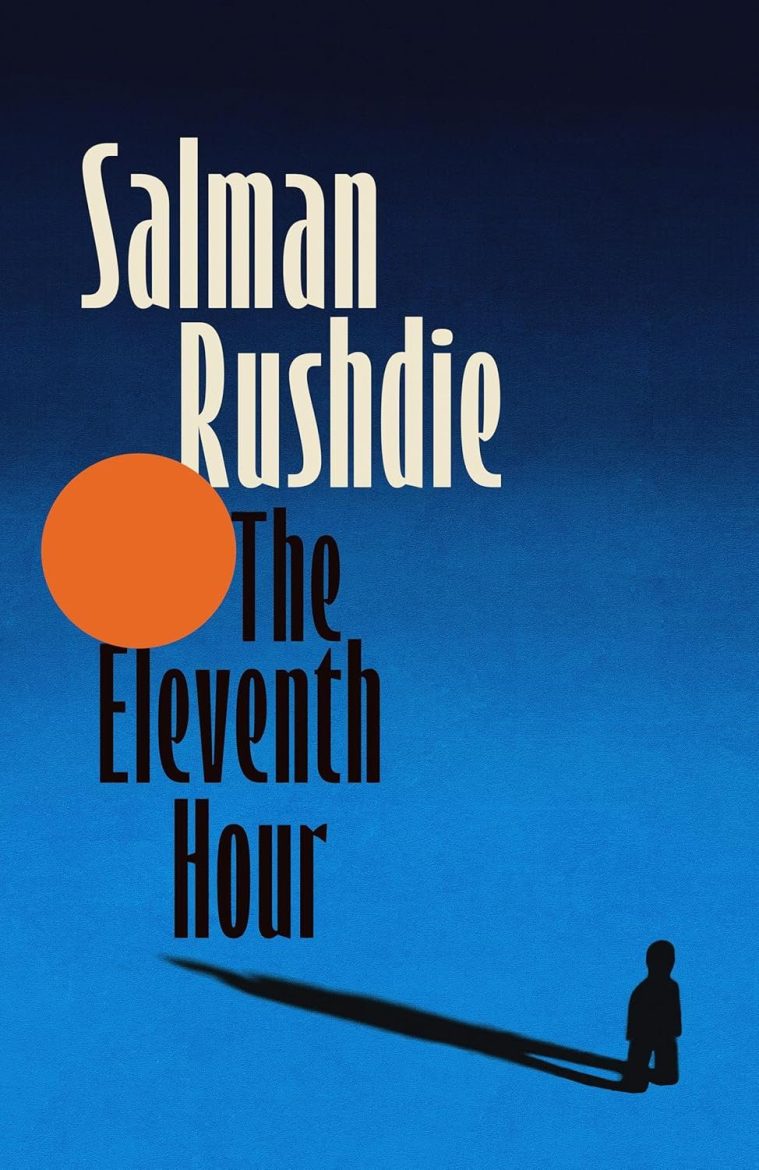
Salman Rushdie’s new book is concerned with looming endings. In the very first in this collection of short stories, “In the South”, he writes, of two 81-year-old friends, “If old age was thought of as an evening, ending in midnight oblivion, they were well into the eleventh hour.”
It makes sense that The Eleventh Hour should see the now 78-year-old Rushdie considering his own mortality – he has been forced to do so for some time. In 1989, Iran’s then supreme leader Ayatollah Ruhollah Khomeini issued a fatwa calling for his death because his novel The Satanic Verses was deemed blasphemous. In 2022, he was stabbed repeatedly while giving a lecture in New York state and left blind in his right eye, an experience he examined in his last book, Knife: Meditations After an Attempted Murder (2024).
Rushdie’s first thought about the fatwa, he revealed in his 2012 memoir Joseph Anton, was: “I’m a dead man.” He turned out to be a survivor, and so does one of the octogenarians in “In the South” – a buzzy paean to friendship in late life, first published in The New Yorker in 2009 – who observes: “The old move through the world of the young like shades, unseen, of no concern. But the shadows see each other and know who they are.”
“Late” goes further in its concern with death and has as its protagonist the ghost of a writer who haunts the unnamed English university where he spent most of his adult life until his sudden death. Rushdie studied at Cambridge in the late 60s and 70s, when the story takes place, and introduces an Indian undergraduate, Rosa, who can see the ghost. It is a promising scenario, but the story becomes disjointed, in part because the ghost is an amalgam of real figures; as an English novelist with a passion for India, he resembles EM Forster, but he also appears to be modelled on Alan Turing, as he works as a code-breaker in the Second World War before being ostracised for his homosexuality. At over 70 pages, it is a long story and yet it feels overstuffed.
Longer but more assured is “The Musician of Kahani”, which may look like an outlier here, as it does not share the other stories’ obvious concern with old age and death, but reads like something of a Rushdie greatest hits package, showcasing the wit and inventiveness that have propelled his best fiction.
Like his Booker Prize-winning Midnight’s Children (1981), this exuberant yarn features a protagonist born at midnight (“the approved hour for miraculous births in our part of the world,” he adds, with a wink to readers), at the start of the new millennium.
It is the longest story in the collection and unspools across 80 pages, satirising contemporary India’s religious charlatans, billionaires, cricketing heroes, corrupt politicians and has the reader rooting for its titular musician.
“There is fashion in literature as in all things,” says a character in “Oklahoma”, and Rushdie, whose work has been both praised and panned over the past four decades, would know. The story features an unreliable novelist narrator recalling his friendship with an older writer who was obsessed with Franz Kafka’s unfinished novels and went on to disappear, leaving behind his own incomplete stories.
The narrator muses on the meaning of these stories, searches for their author and ponders what he calls “the ordinary disappearances of everyday life… Parents, grandparents, aunties, uncles, parents’ friends, aunties’ friends, until the day came, as it had come for me, when the entire generations of those who went before had taken their leave and there was nobody standing between my own generation and the yawning, patient grave.” The story is a compressed labyrinth of mysteries and philosophical questions about writing as Rushdie channels some of the strangeness of Kafka’s work into a contemporary American setting.
The collection is rounded off by “The Old Man in the Piazza”, a didactic allegory in which the narrator’s critique of a society of “bar-room moralists” is a thin veil for Rushdie complaining about what he sees as “cancel culture”. It is the shortest piece here, which is a blessing, because it is too small to undermine the elegiac mood of the collection as a whole.
The Eleventh Hour is a moving reminder of the best and worst tendencies of one of the most significant writers of the past half-century. Its most consistent quality is the energy of Rushdie’s prose and imagination, which are as unflagging here as they were in his last novel, Victory City (2023), and which indicate that, even when he is using fiction to make sense of his own approaching ending, he may yet have more tales to tell.
‘The Eleventh Hour’ by Salman Rushdie is published by Jonathan Cape, £18.99
