The battle in Pokrovsk is part of the odd negotiating courtship between Donald Trump and Vladimir Putin
The current focus of the Ukraine war is the rubbled city of Pokrovsk. Despite Friday’s unexpected helicopter raid by Ukrainian commandos, the question seems to be when, not if, it will fall, with Kyiv admitting on Monday that “thousands” of Russian troops were in or approaching the city.
Assuming Pokrovsk falls, it will be the most significant Russian gain since they took Avdiivka last year, and open the way to further advances in the contested Donetsk region. Yet this battle is also part of the odd negotiating courtship between Donald Trump and Vladimir Putin.
Trump’s approach to Kyiv could charitably be described as changeable. Last month, he was suggesting a willingness to let Kyiv have accurate and long-range Tomahawk cruise missiles in the lead up to a White House visit by Volodymyr Zelensky. Then Putin initiated a phone call, Tomahawks were off the agenda, and a summit in Budapest was on.
After an unproductive call between Russian foreign minister Sergei Lavrov and his US counterpart Marco Rubio, in which it became clear that Putin was not willing to moderate his maximalist demands, the pendulum swung again. Budapest was off, Tomahawks back in play, and Trump imposed the first sanctions of his presidency on Russia, hitting the oil giants Lukoil and Rosneft.
So was Trump warming to Ukraine’s cause? Almost certainly not – the sad truth for Kyiv is that there is no evidence that he really cares about Ukraine. Rather, he simply wants this war over, to burnish his claims to be a peacemaker and allow him to focus on the issues which interest him more, which may include seeing if he can win special economic access to a post-war Russia for US companies.
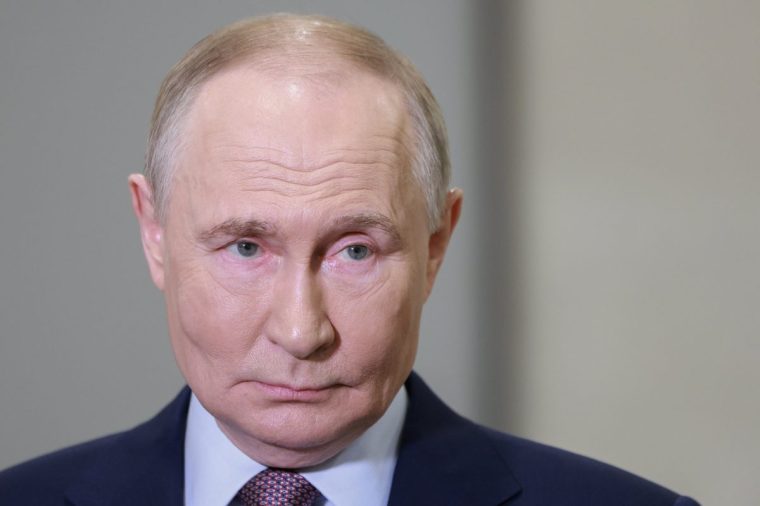
To this end, he takes the line of least resistance, which he has tended to assume is trying to bully Zelensky into accepting an ugly peace. However, he also knows that he needs to be able to demonstrate that he, the self-proclaimed master negotiator, can secure some kind of concessions, however token, from Putin. His ego and credibility demand it.
He also seems to believe that such concessions might also sweeten the bitter pill for Zelensky, even though at least two of Putin’s demands – the surrender of the remaining fifth of Donetsk region and limits to the size of the Ukrainian military – would be impossible for him to accept. As a well-informed Ukrainian analyst put it to me, “if Zelensky tried to order the military to accept this, I don’t think he’d survive it – and I don’t just mean politically”.
Rubio, who is one of the most prominent Russia hawks in the administration, used his conversation with Lavrov to persuade Trump that meeting Putin at this stage would be fruitless and embarrassing. Nonetheless, the President still wants a deal, and his sanctions and the talk of Tomahawks should be seen less as signals of support for Kyiv, and more as a bid to persuade Putin to give a little.
Yet Putin is also signalling. The recent media hype of two new Russian strategic weapons, the Burevestnik nuclear-powered cruise missile and Poseidon nuclear drone-submarine, was calibrated to remind Trump that Russia remains a formidable power and cannot be strong-armed into concessions. The actual utility and status of these apocalyptic second-strike weapons can be questioned, but as one European diplomat put it, “the Kremlin knows how Trump is often entranced by the gaudy and the over the top” and is counting on him concluding that the Russians are the side to back.
The backtracking has already started. On Sunday, Trump said that he was “not really” contemplating sending Tomahawks to Ukraine, even though he added that he could still change his mind. This is despite recent well-leaked reports that the Pentagon had concluded that existing US stocks were adequate to spare some for Kyiv.
For Moscow, this was an encouraging sign, and troops are being thrown into Pokrovsk in the hope that its fall can be used to try to again recruit Trump. After all, while Putin does appear to believe that he can eventually win a war on the battlefield, however expensively, he would be happy to secure something he could claim is a triumph more quickly through striking a deal with Washington.
This is nowhere near a done deal. It is not just that Pokrovsk may hold longer than Putin believes, but he and Trump are still far from agreement. The American President knows that, whatever happens there, he still needs some kind of concessions to maintain his own credibility, while Putin still seems unwilling to offer them. Nonetheless, it is a mark of the bizarre nature of modern geopolitics, that the tough choices facing Zelensky in the future may depend on the vanity of one man, the inflexibility of another.
The updated version of Mark Galeotti’s ‘We Need To Talk About Putin’ will be published by Ebury on Thursday.
