Relations between Russia and the US have taken a major downward turn with a cancelled summit, nuclear sabre rattling, and new sanctions on Russian oil
Donald Trump seems to have belatedly concluded that Russian President Vladimir Putin – and not Ukrainian President Volodymyr Zelensky – is the main obstacle to peace in Ukraine.
The abrupt postponement of a Trump-Putin summit in Budapest last week, agreed between the two leaders in mid-October, coming days after the imposition of new sanctions on Russian oil giants Rosneft and Lukoil, marked a notable shift in relations.
Last week also saw signs of a major ratcheting up of military tensions between the US and Russia, with Trump ordering his “Department of War” to restart nuclear testing, and Russia announcing progress on advanced new weaponry such as its Poseidon nuclear-powered torpedo.
Was it the week that the Trump-Putin bromance finally died? Time will tell.
Trump is well known for his admiration of strongmen. But even if he thinks Putin is to be admired for his grip on power for over 25 years, Trump cannot ignore Russia’s obvious weaknesses. His recent description of Russia as a paper tiger clearly angered the Kremlin.
Trump has now openly mocked Putin for being unable to finish the war in Ukraine quickly after his full-scale invasion in 2022. That is like calling Putin a loser.
Even so, efforts to ramp up pressure on the Russian economy by squeezing its oil revenues is unlikely to have any real effect. The global oil market has barely reacted, since traders know from previous experience that Chinese and Indian importers will find ways to make themselves sanctions-proof.
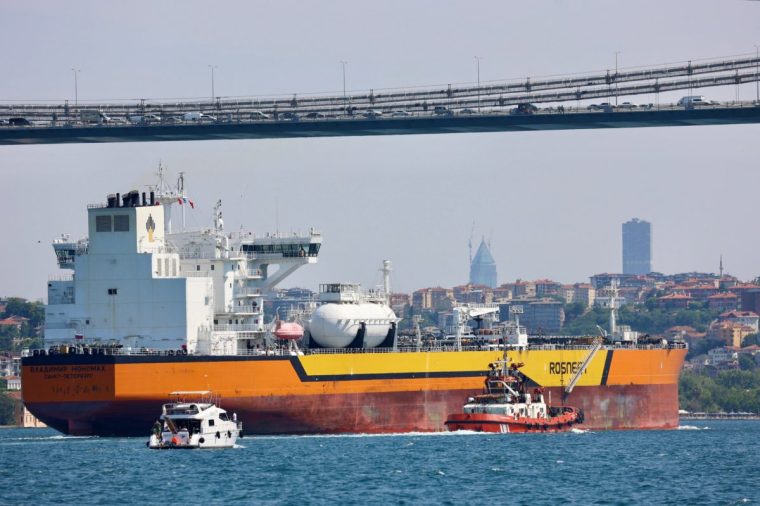
The US and its allies do not have the same determination to dent Russia’s oil revenues as they did with Iran in 2012, when they quickly succeeded in removing around 40 per cent of Tehran’s oil exports from the market. That pressured Iran into accepting limitations on its nuclear programme.
Trump also appears to have finally understood that when Putin talks about peace in Ukraine, the Russian President means a peace settlement dictated by Moscow that is tantamount to Ukraine’s defeat.
Even if Trump’s instincts might encourage him to see that as an acceptable outcome, he cannot agree to it for three reasons. First, he would personally appear weak before the Chinese when he needs to look strong. Second, US public opinion is on the side of Ukraine, and sentiment among Republican voters is shifting in Zelensky’s favour. And third, giving in to Putin would damage relations with Europe beyond repair and destroy Nato just at the moment when the US needs to draw on all its resources to project strength towards China.
Yet the bitter reality for the White House is that it has no means available to force Putin to negotiate seriously.
The Russian economy is largely sanctions-proof because Russian companies have adapted. The US is not willing to put a real stranglehold on Russian oil exports due to the impact it would have on energy prices in the US and also does not want to provide large-scale military assistance to Ukraine. Finally, it does not have the capacity to persuade China that it should limit its support for the Russian war machine. US-China trade relations are too tense and too delicately balanced.
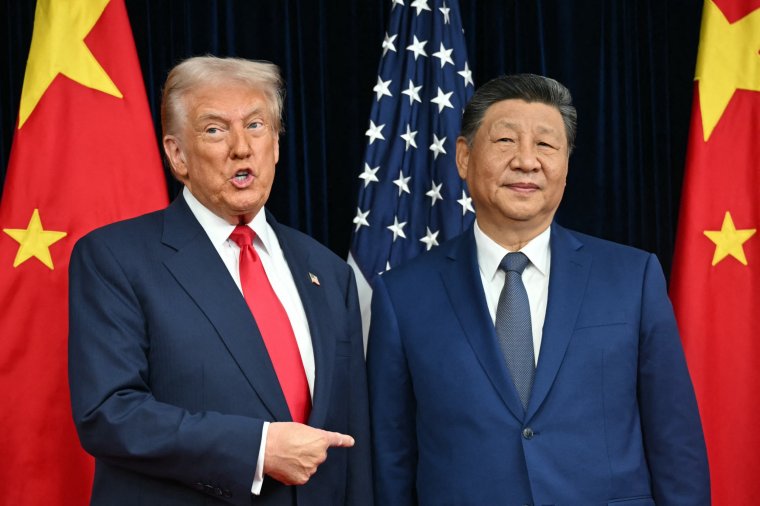
Trump pledged to raise the issue of Ukraine when he met with Chinese President Xi Jinping last week. But their meeting did not last for as long as expected, and the issue was never going to be near the top of the agenda.
If China had not backed Russia over the years by buying its oil and supplying it with goods and technologies – from bulldozers to semiconductors and engines for drones – the Russian army would no longer be in the fight in Ukraine.
Yet, in the case of Ukraine, Chinese leadership has much to ponder. Until this year, it was happy for the war to be a distraction for the US that would limit its transfer of resources to the Indo-Pacific. But this is no longer the case under Trump.
While Beijing has clearly stated that it will not accept a Russian defeat in Ukraine, it has strong reasons to want to avoid a Ukrainian one. A Russian victory would lead to a highly unstable situation in Ukraine and destroy Chinese hopes of being a major player in the country’s reconstruction.
Destabilisation would also not stop at Ukraine’s borders, and could inflict serious damage on Europe more broadly. China has no interest in an economically and politically dislocated Europe, given the importance of the European market for its goods.
China may yet play a role in constraining Putin’s ambitions in Ukraine and creating the conditions for an eventual peace settlement. Xi almost certainly shares Trump’s assessment that Putin blundered in Ukraine in not being able to achieve a quick victory.
Beijing is in a stronger position than Washington to influence Moscow, so why is it waiting? The likely answer is that it believes that Putin cannot win and that it serves Chinese interests for now to watch Trump fail to deliver on his promise to end the war.
It can also profit from a weakening of Nato, as US and European security interests diverge, and might be confident that the war is weakening Russia in the long-term, meaning it will become an increasingly biddable partner for China.
This will be little comfort to Ukraine. It also means that Trump has his work cut out trying to force Putin to give him the diplomatic success he so desperately wants.
John Lough is the head of foreign policy at the New Eurasian Strategies Centre
