How do you follow being a Beatle? John Lennon decamped to New York, Ringo Starr embarked upon a slender solo career and George Harrison tended to his spiritual needs. Paul McCartney’s answer was Wings.
Had there been no Beatles baggage, Wings would have been regarded as one of the most successful British musical exports: five consecutive American chart-topping albums in five heady years; over 50 million album sales; “Mull of Kintyre” outselling any Beatles single in Britain. Irrespective of McCartney’s past life, Wings were very big news indeed.
Wings: The Story of a Band on the Run, a gripping 500,000-word oral history, is their vindication, a kicking against the pricks of under-appreciation and often wilful misunderstanding.
Including assorted timelines, a discography and a gigography, the book is credited to McCartney himself, but as he coyly implies in his foreword, it’s really the work of editor and former Bill Clinton speechwriter Ted Widmer, who was given access to archive material and interview footage from the similarly titled upcoming documentary Man on the Run (although, bizarrely, Widmer was barred from seeing it).
McCartney’s imprimatur ensures an exhaustive cast list, forensic thoroughness and little-known nuggets such as him singing backing vocals on the Sex Pistols’ “Pretty Vacant”. It also a means a certain airbrushing. McCartney triteness (“I’ve come to realise more than anything that people across the world are very similar”) passes unscathed, any friction between the McCartneys and the Lennons is downplayed, and criticism of Linda McCartney is taboo.
It begins with the end of The Beatles and traces McCartney’s post-Beatles, pre-Wings paralysis. “What do we do now? In truth I didn’t have any idea.”
There had never been a band as popular as The Beatles, so when they broke up there was no recognised safe passage for its members. Like a musical Martin Frobisher, McCartney had to find his own route.
Initially, as Mary McCartney notes of her parents, “they ran away” and went back to musical and personal basics, via a hibernation at High Park Farm, their bath-free dwelling in the Scottish wilderness.
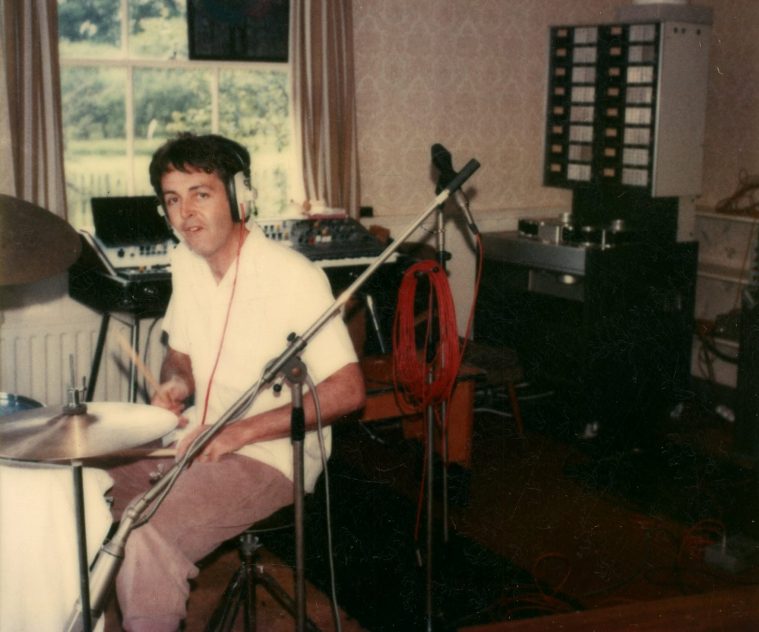
Paul could recuperate, escape the nuclear fall-out from The Beatles’ collapse, shear sheep and write songs again. Before Wings, there would be two albums, which reminded nobody more than McCartney himself that he had not been forgotten. Hibernation or not, 1970’s wholly solo McCartney was a US Number 1 and UK Number 2. The following year’s RAM, formally credited to Paul and Linda McCartney, reversed the McCartney album’s US and UK chart positions.
The reviews were savage. “I did get depressed,” admits McCartney. “I seriously considered packing it all in.” The notion of another band began to take shape as the McCartneys plotted their musical and personal future. They decided the only way to stay together was to be together on and off stage.
In the summer of 1971, the McCartneys watched one of his heroes, Johnny Cash, perform on television. Alongside Cash was his musician wife, June Carter. “I remember thinking, ‘wow, he’s put some people around him’,” remembers Paul. “I turned to Linda and said ‘we could do that. Do you fancy being in a band?’”
“I just said ‘yeah’,” Linda recalled. “I must have been out of my mind.”
The McCartneys knowingly copied the Carter-Cashes. Linda was no musician and Paul would always be in full musical control, but this would be a marital enterprise.
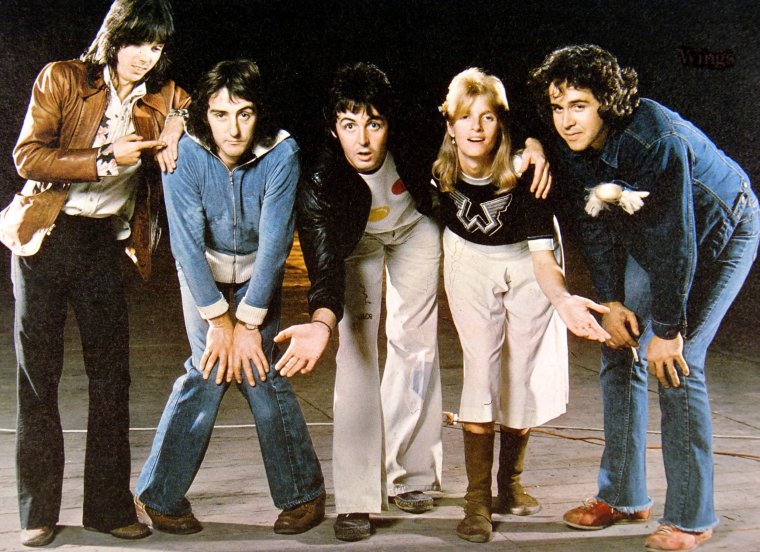
The band had neither non-McCartney personnel nor a name. The two McCartneys recruited two Dennys (Denny Laine and Denny Seiwell) and considered such names as Turpentine, Paul McCartney Blues Band and The Dazzlers until 13 September 1971, the evening of their daughter Stella’s traumatic birth at London’s King’s College Hospital.
“Because of the emergency, the vision of an angel with big wings came into my mind,” he explains. “I thought ‘Wings: that’d be good’, with no ‘The’, to avoid The Beatles.”
Wings would be like no other band, trailblazers because they had to be, but as Linda astutely predicted, “we’ll always be compared to The Beatles and measured accordingly”. With nothing to lose and everything to build, Wings became pirates.
During The Beatles’ death throes McCartney had desperately suggested they return to the smaller venues of their inchoate days, “until John looked me in the eye and said, ‘you’re daft’.”
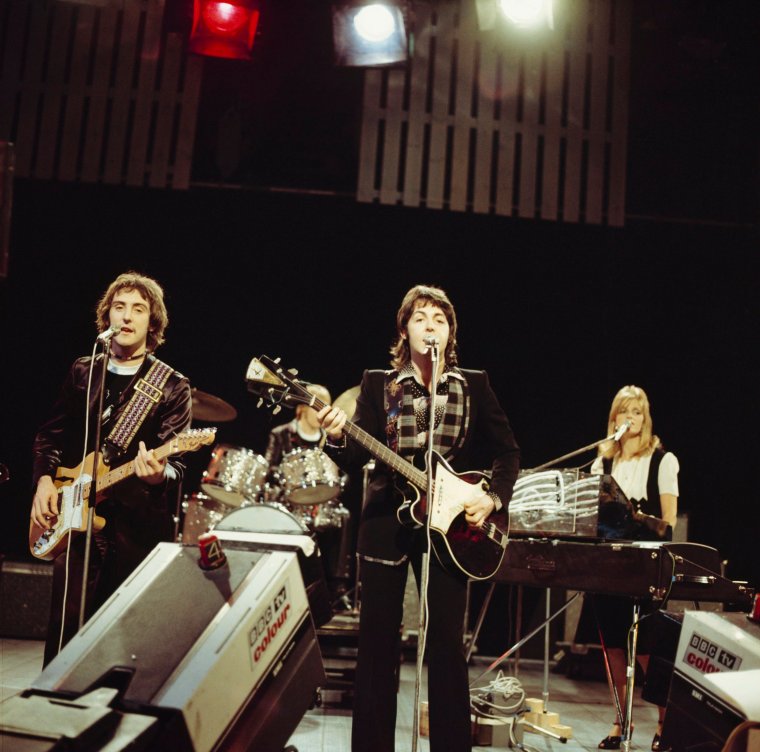
Now, McCartney floated the notion once more and there were no dissenting voices. Wings hired two vans, invited their families and set off on their first tour. No dates were booked, there was no itinerary and no publicity beyond world of mouth. Instead, one of the world’s most famous men turned up at Nottingham University Students’ Union and politely asked the social secretary if his new band could play there. Luckily there was a slot available the following lunchtime and Wings made their unlikely live debut on 9 February, 1972.
The swashbuckling band on the run would play nine more spontaneous dates, but when they reached York the following day, the queue was a quarter of a mile long. The following month, against the wishes of their label, pirate Paul went political for Wings’ first single, “Give Ireland Back to the Irish”, written in the wake of Bloody Sunday, a day after McCartney and Lennon met in New York. It would be banned by the BBC.
When summer came, Wings toured Europe in a 1953 open-top bus with mattresses on the top deck. The charabanc’s top speed was 38mph, so in an awkward marriage of hippy sensibility and commercial necessity, anxiety-ridden promoters deployed limousines to ensure the performers reached the venue on time, but as Paul notes, “the kids loved it.”
Never overly proficient, Linda settled in: “when you hear her voice, it’s really distinctive, you know it’s Wings,” gushes engineer John Leckie. Wings grew a remarkably eclectic catalogue, including the musical fireworks of “Live and Let Die” and the bagpipes-drenched “Mull of Kintyre”. The row was unbelievable,” winces McCartney of the rehearsals. They recorded in such exotic locations as Lagos, a boat on the Virgin Islands and a castle in Kent and by the time the erstwhile Beatle embraced his legacy by playing a smattering of their songs in 1975, the buccaneers had become a stadium band, no longer pirates, no longer on the run.
The Band on the Run and Venus and Mars albums cemented Wings’ status as a stadium act, but by 1979’s Back to the Egg, McCartney was becoming restless and Wings stuttered to a halt in 1981. McCartney partly blames their demise on his bust for 219 grams of marijuana at Tokyo’s Narita Airport, the subsequent jailing which cancelled Wings’ Japanese tour of January 1980, and Lennon’s murder the following December. Mostly, though, “I got bored with the whole idea… Wings didn’t actually fold, we sort of dissolved, like sugar in tea”.
It’s left to the sainted Linda to add grit: “Paul felt very frustrated. We just picked the wrong people. He needed the best to work with, but he had to carry almost all the weight”.
To a man – and other than Linda they were all men – Wings members are sanguine and deferential (“Not letting Paul down was the worry,” says drummer Steve Holley), beyond vague suggestions of Paul’s parsimony. “I was bitter and resentful. I worked so hard for the Japanese tour,” laments Denny Laine, “and I didn’t get paid.”
For McCartney, though, Wings were mission accomplished. “I tried to prove we could do something successful after The Beatles and we pulled it off… we achieved the impossible”.
As Linda had predicted, Wings were overshadowed by The Beatles and as everyone in Band on the Run readily accepts, that will never change. Yet this history reminds us that Wings were much more than something to do for a lost Beatle. Like The Beatles, Wings weren’t wondrous from first to last, but they were both a decade of McCartney’s life without which this towering cultural figure would not have come to terms with his past and, more generally, a roadmap for success second time around.
The Beatles couldn’t have been anyone else, but nor could Wings. McCartney doesn’t apologise for them here. Maybe because he has nothing to apologise for.
‘Wings: The Story of a Band on the Run’ by Paul McCartney is published by Allen Lane, £35

