Donald Trump is part of a long line of American leaders who bulldozed through established norms when it suited them
I sometimes wonder what headline writers today would make of the news out of Washington from yesteryear.
It was John Adams, the country’s second president, who sought to criminalise the opposition and left behind draconian legislation like the 1798 Alien Enemies Act, which the Trump administration has used to sidestep immigration law.
Abraham Lincoln shut down hostile newspapers during the Civil War, trampling all over the First Amendment right of free speech. “Honest Abe” even suspended habeas corpus, a legal protection which Donald Trump the other week seemed to mistake for a person.
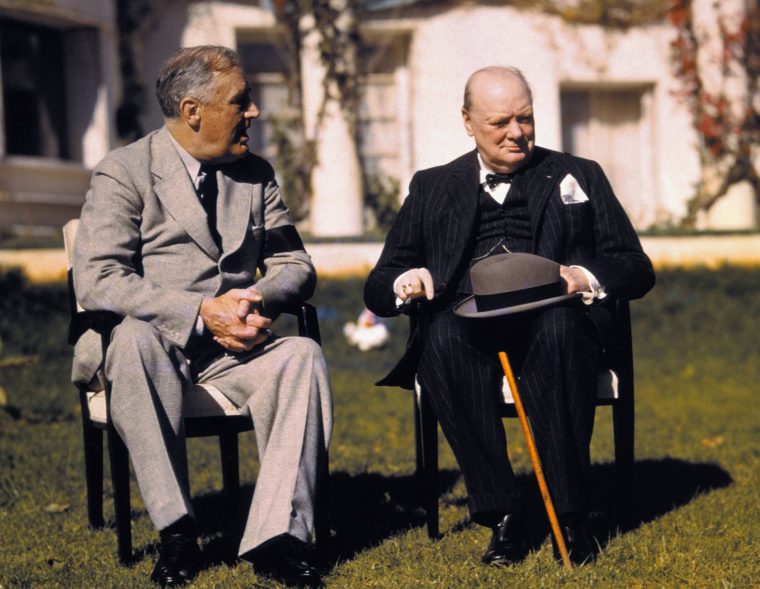
Franklin Delano Roosevelt won four elections, which violated the norms set by George Washington that presidents should only serve two terms, a breach of convention, if not of law. It led to the ratification of the 22nd Amendment that established strict presidential term limits which should bar Trump from running again in 2028.
As for the commander-in-chief who personally led his troops to quash a domestic rebellion, that was George Washington confronting the Whiskey Rebellion in the 1790s. Washington feared the insurrectionist spirit of his compatriots outlived the War of Independence.
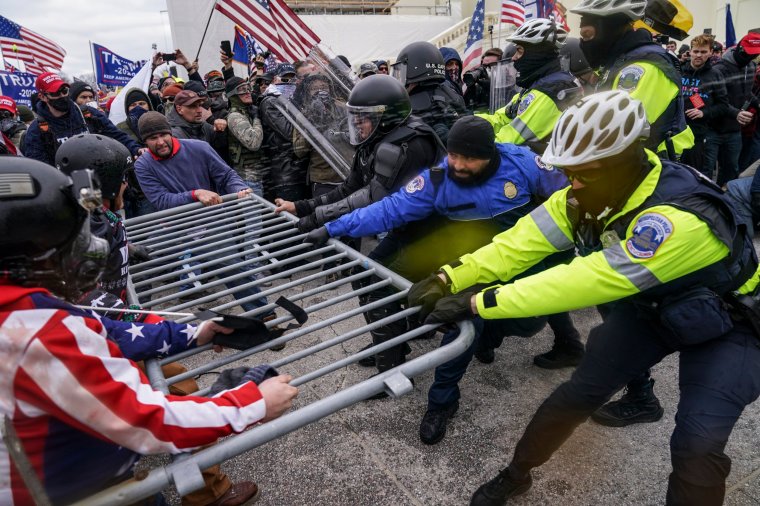
When Trump’s Maga supporters stormed the US Capitol on 6 January, 2021, many hollered “1776” in reference to the Revolutionary War.
Whether it is demolishing the East Wing of the White House, or demanding his political enemies face prosecution, Trump’s behaviour is so shocking partly because it challenges our historical belief system about America.
The age of Trump contradicts the grand narrative of US history, a supposedly uplifting story of progress, enlightenment and exceptionalism. Slavery was abolished. Segregation was dismantled. A Black man was elected president.
That was surely proof the United States was becoming “a more perfect union”, a phrase from the preamble to the US constitution that Barack Obama frequently referenced.
Trump’s shock win in 2016, and his more emphatic victory last year, reminds us that history rarely comports with grand narratives. Were that the case, America’s first Black president would likely have been followed by the country’s first female president, Hillary Clinton.
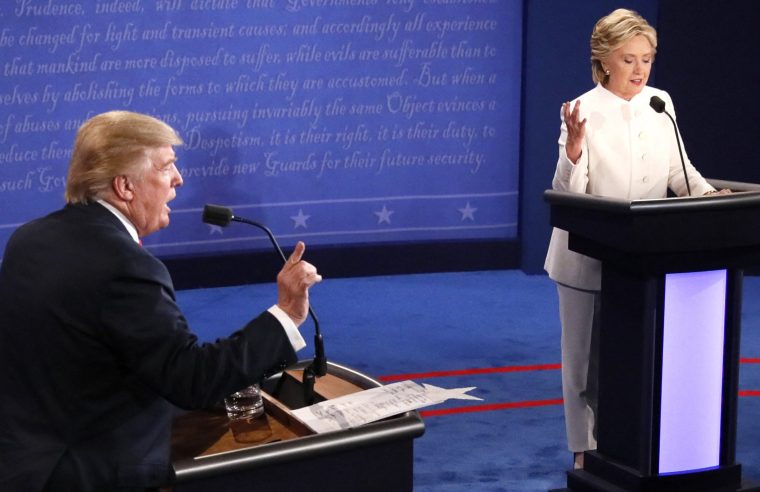
Instead, America elected a misogynistic racist who rose to political prominence as the untitled leader of the birther movement, which denied the very legitimacy of Obama’s breakthrough presidency.
Even so, Trump is not an aberration, a glitch in America’s operating system. Nor is he a historical accident. Quite the opposite. Trump is as much a product of US history as Obama, Ronald Reagan or John F Kennedy.
It is just the history that we have forgotten, misremembered, ignored or deliberately concealed.
To excavate that buried past – as I have tried to do in my book The Forever War: America’s Unending Conflict with Itself – is to discover Trump is not such a historical outlier after all. Almost everything he does has an echo.
Ever since Trump descended that golden escalator in 2015, and launched his insurgent campaign by railing against Mexican immigrants, he has tapped into a long tradition of nativism that in the 19th century was directed against the Irish and Italians.
Similarly, American authoritarianism is deeply embedded. Trump’s presidential soulmate, Andrew Jackson, the former general who in the 1820s became the country’s first populist president, rode roughshod over Congress and openly defied the Supreme Court.
In a foreshadowing of the “No Kings” protests that have taken aim at Trump’s monarchical tendencies, critics of the time labelled Jackson “King Andrew I.”
Even grand heroes of the American story, such as Lincoln and FDR, were assailed for being despotic.
To save the union, Lincoln was prepared during the Civil War to subvert the constitution. Roosevelt was labeled an American dictator for trying to pack an obstructionist Supreme Court with judges sympathetic to his New Deal reforms.
Crucially, Roosevelt kept on getting re-elected. Voters were prepared to countenance his attempted power grabs, largely because they believed he was acting in the national rather than self-interest – something many aren’t so sure about with Trump.
Tellingly, Roosevelt’s wife, Eleanor, noticed the loudest applause during his 1933 inaugural address came after signalling he might have to alter the balance of the constitution and seek war-time presidential powers.
American democracy is frail partly because it was never intended to be strong. Most of the founding fathers did not believe in mass democracy, and preferred voting rights to be limited to white men of property.
To this day, the US Constitution includes no positive assertion of the right to vote. Not until 1965, with the long overdue passage of the Voting Rights Act, did the country achieve genuine universal suffrage. But no sooner had the ink dried on that landmark legislation than efforts aimed at restricting voting rights, especially for people of colour, began in earnest.
Were US democracy stronger, it would be harder for Trump to subvert it.
For all our shock at Trump’s antics, he is more representative of America’s past and present than many would like to admit. And for those still trying to make sense of him after all these years, I’d offer up a bastardised version of a 1990s quote often repeated during US elections: “It’s the history, stupid.”
