Ukraine has condemned Russia’s attacks on key energy infrastructure, saying the strikes bear the “hallmarks of nuclear terrorism”.
The Ukrainian foreign ministry said Putin’s forces are carrying out “targeted strikes” on power substations supplying energy to nuclear power plants across Ukraine.
The International Atomic Energy Agency (IAEA) also condemned the attacks, confirming after a field visit that the strikes affected Ukraine’s “nuclear safety and security”.
“Attacks on Ukraine’s power grid represent an ever-present danger to nuclear safety and security to all nuclear facilities in Ukraine,” the IAEA director general Rafael Mariano Grossi said.
Energy ministers from the G7 group of nations also issued a joint statement, calling the strikes “nuclear terrorism” that weakens the energy security of the Ukrainian people.
With winter approaching, Moscow appears to carry out such strikes with a goal to “plunge Ukraine into darkness”, Ukrainian prime minister Yulia Svyrydenko said.
“Russia continues its systematic energy terror – striking at the lives, dignity, and warmth of Ukrainians on the eve of winter,” Svyrydenko said.
Russia deliberately attacking substations critical to nuclear power plants, Ukraine says
Ukraine’s foreign ministry denounced Russia’s attacks on substations key to safe operation of Kyiv’s nuclear power plants, calling the attacks “hallmarks of nuclear terrorism” and a “grave violation of international humanitarian law”.
Russia is carrying out “targeted strikes on such substations”, a statement issued late by the foreign ministry said.
The ministry was responding to an earlier report by the UN nuclear watchdog, the International Atomic Energy Agency, which said Russia’s military activity “has led to damage to substations critical to nuclear safety and security in Ukraine”.
Ukrainian spies infiltrated Russia to destroy nuclear-capable missile, Zelensky says
Ukraine’s agents destroyed a Russian Oreshnik ballistic missile inside Russia last summer, Volodymyr Zelensky said yesterday.
Kyiv’s spies destroyed the nuclear-capable missile at the Kapustin Yar missile range in Russia’s Astrakhan Oblast, one of the key sites where Moscow tests its secret weapons, the Ukrainian president said.
Russia is capable of producing up to six such missiles per year, which Moscow is seeking to deploy in Belarus, Zelensky said.
Russian president Vladimir Putin has claimed Western air defence systems are not able to intercept the nuclear-capable Oreshnik missile, estimated to have a range of up to 5,000km.
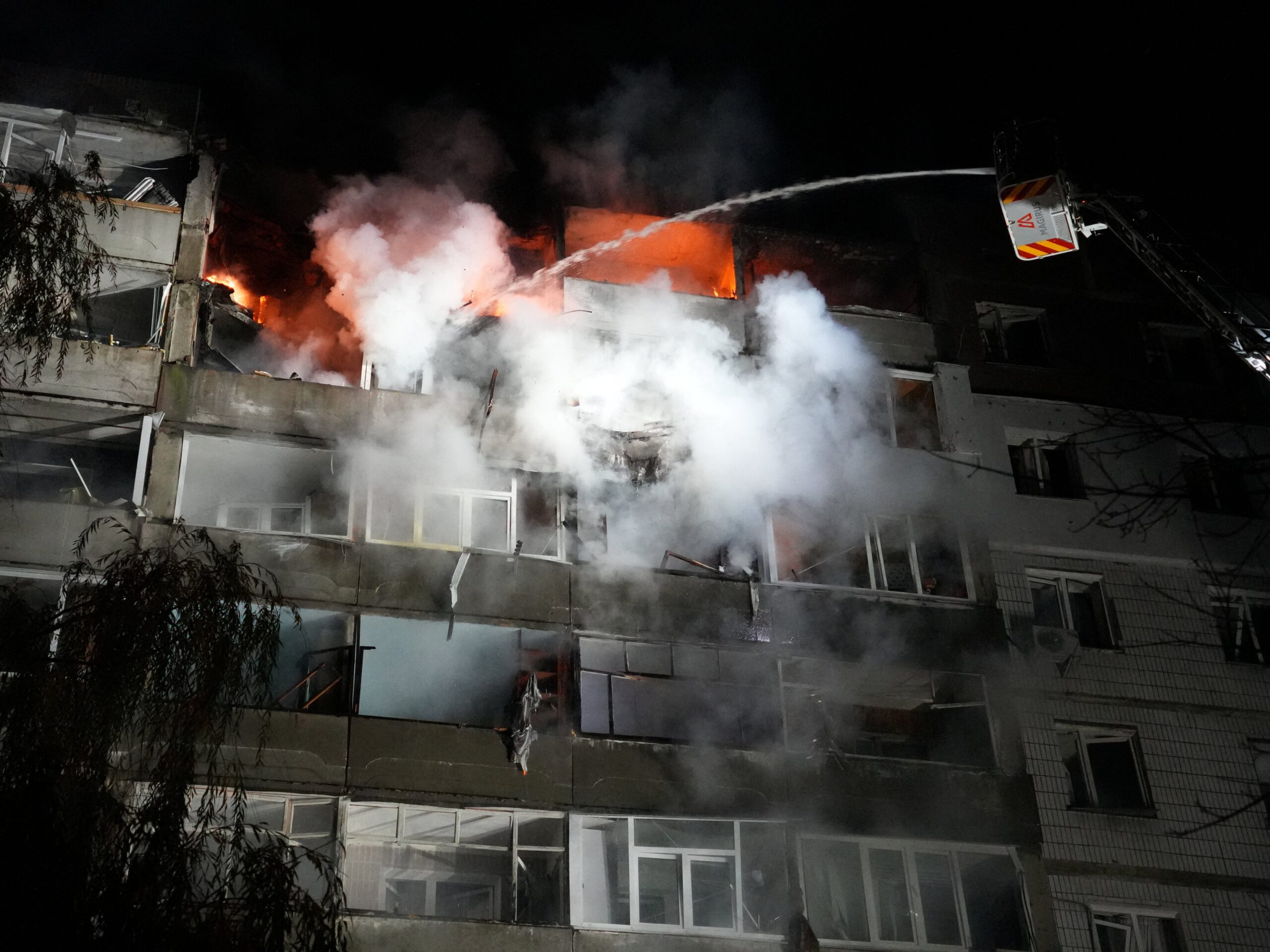
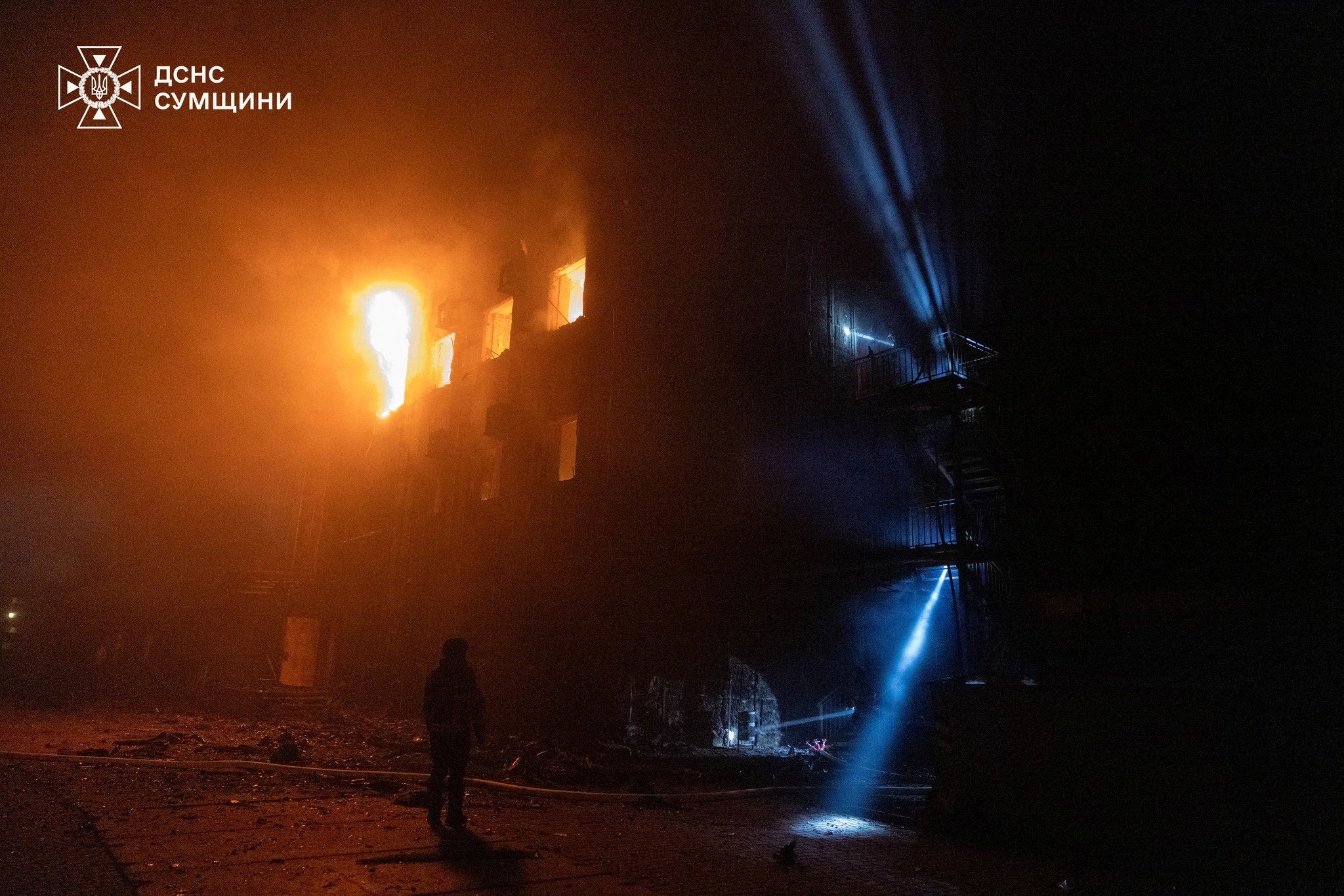
In Pictures: Russian drone strikes in Ukraine’s Sumy oblast

Video: Russia deployed 170,000 troops to surround Ukrainian town, Zelensky says
G7 condemns Russian attacks on Ukrainian energy grid
Energy ministers of the Group of Seven nations (G7) issued a joint statement today condemning Russia’s attacks on Ukraine’s energy infrastructure, calling the strikes “nuclear terrorism”.
Ministers representing the UK, Canada, France, Germany, Italy, Japan, and the US said Russia’s attacks on substations powering Ukraine’s nuclear plants “continue to inflict devastating social, environmental, and economic consequences on the Ukrainian people”.
“Russia’s recent attacks on Ukraine’s natural gas infrastructure have created risks to communities and human lives, weakening civilian infrastructure and the energy security of the Ukrainian people,” the G7 statement said.
With winter approaching, Moscow’s “goal is to plunge Ukraine into darkness”, Ukrainian prime minister Yulia Svyrydenko said.
“Russia continues its systematic energy terror – striking at the lives, dignity, and warmth of Ukrainians on the eve of winter,” Svyrydenko said.
Ukrainian nuclear power plant ‘safety and security’ affected, IAEA confirms
The International Atomic Energy Agency (IAEA) said Russia’s attacks on substations had affected Ukraine’s “nuclear safety and security”.
The IAEA said it had conducted a “thorough walkthrough” of one of the targeted substations supplying power to a Ukrainian nuclear power plant (NPP).
It confirmed damage to the substation’s equipment today and determined that there was a “negative impact to the reliability of the off-site power supply to Ukrainian NPPs”.
“Attacks on Ukraine’s power grid represent an ever-present danger to nuclear safety and security to all nuclear facilities in Ukraine,” IAEA director general Rafael Mariano Grossi said.
Kyiv’s counterattacks make small gains as Russian troops surround Ukrainian town
Ukrainian forces marginally advanced north of Pokrovsk even after Russia deployed an estimated 170,000 troops to surround and capture the town, geolocated footage suggests.
“There are Russians in Pokrovsk. Our guys are destroying them, destroying them little by little – because we also have to protect our personnel,” Ukrainian president Volodymyr Zelensky said.
“All their forces are there,” he said.
Ukrainian forces have made some advances with their counterattacks in eastern Rodynske to the north of Pokrovsk, according to the Institute for the Study of War.
Ukrainian troops are also carrying out counterattacks against Russian infiltration in northern Pokrovsk and in eastern Rih, which is immediately to the east of Pokrovsk.
Russian oil giant forced to sell international assets amid new sanctions
Lukoil, Russia’s second largest oil company, announced it is selling its international assets in wake of new American sanctions targeting it.
The oil giant said has accepted an offer from global commodity trader Gunvor to buy its foreign assets, making it one of the biggest sales by a Russian company due to Western sanctions since the beginning of the war in Ukraine.
“The key terms of the transaction have been earlier agreed by the parties. On its side, (Lukoil) accepted the offer, having undertaken not to negotiate with other potential buyers,” Lukoil said about Gunvor’s offer.
What are ‘secret’ nuclear-capable missiles used repeatedly by Russia since August
A new investigation has revealed Russia has been repeatedly using nuclear-capable 9M729 Novator ground-launched cruise missiles against Ukraine, in an apparent violation of an international treaty.
The Intermediate-Range Nuclear Forces (INF) treaty bans ground-launched missiles with a range between 500 and 5,500 kilometres.
However, an investigation revealed Russian forces launched Novator missiles against an unspecified target in Ukraine at a range of over 1,200 kilometres on 5 October, Reuters reported.
Russia has reportedly used the missile multiple times against Ukraine, twice in 2022, and nearly two dozen times since August 2025.
The use of these long-range nuclear-capable missiles comes amid Russian President Vladimir Putin’s announcements of Russia resuming tests of its nuclear weapons Burevestnik and Poseidon.
Pentagon approves providing Ukraine long-range Tomahawk missiles
The Pentagon has greenlit the White House to provide US-made Tomahawk missiles to Ukraine, concluding it would not affect American stockpiles of the long-range weapon.
The final decision rests with president Donald Trump, however, CNN reported, citing US and European officials familiar with the matter.
Ukrainian president Volodymyr Zelensky had been pushing his allies for long-range missiles to effectively target oil and energy facilities deep inside Russia.
Earlier, Trump hinted he may not provide the missiles to Ukraine, stating, “we don’t want to be giving away things that we need to protect our country”.
Now the US has fewer reasons to not provide the missiles, European officials argue.
