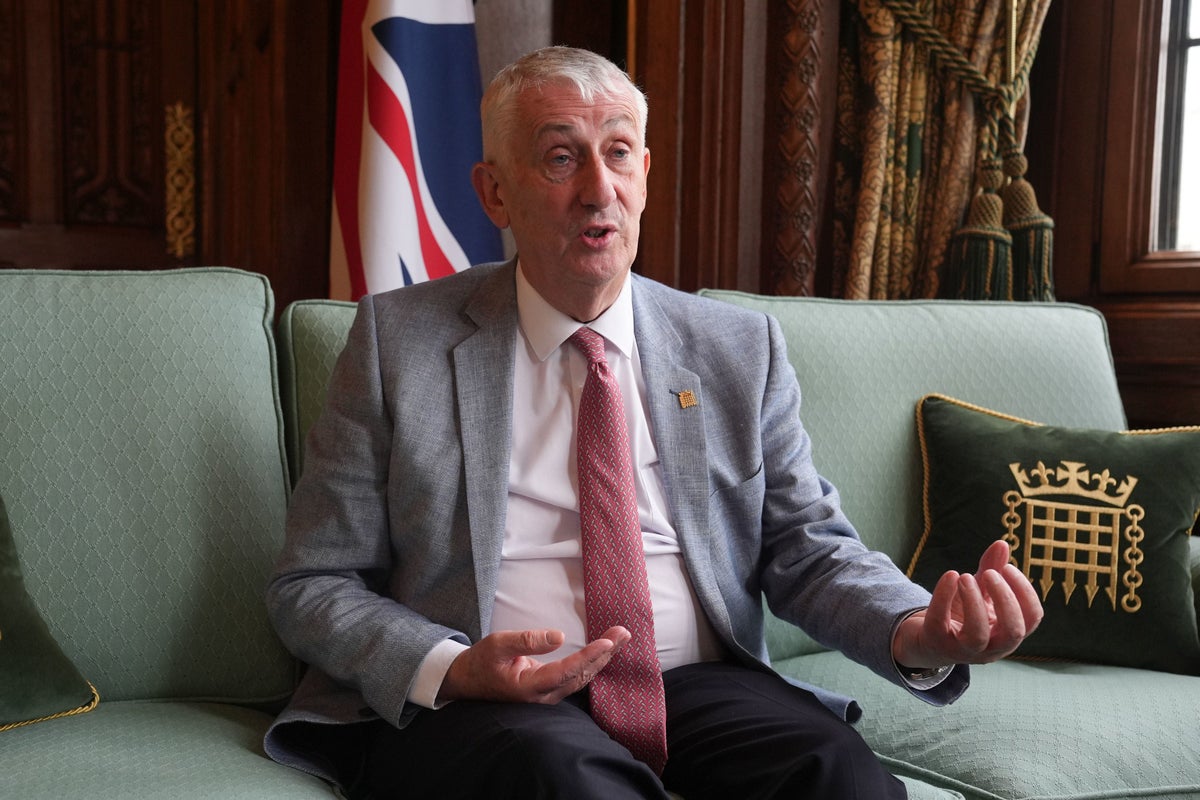
Sir Lindsay Hoyle has said he is unable to bring a private prosecution against two men accused of spying for China after he received legal advice.
The Commons Speaker said he was “still very angry” that charges had been dropped and suggested he would “support” others if they pursued private action against Christopher Cash and Christopher Berry.
Mr Cash and Mr Berry – who both deny wrongdoing – were facing trial for allegedly passing information to Beijing between 2021 and 2023, but the prosecution was discontinued in September.
Speaking on BBC Radio 4’s Week In Westminster programme, Sir Lindsay said he did not “accept” the outcome and was still “very frustrated” after the case collapsed.
“I don’t like it. I don’t accept it. So much so, I wanted to know if I could do a private prosecution. We’ve taken top legal advice.
“My problem is there is no locus for me because everything I’ve tried, we just can’t get it there.
“But it doesn’t stop us asking others who may be able to take a private prosecution and what support can we give them.
“It is a frustration, yes I’m angry, it must not happen again.”
Sir Lindsay had previously said he was considering private action following the decision to drop the charges, which he warned could leave Parliament vulnerable to espionage.
The Crown Prosecution Service has said the case could not progress because the Government’s deputy national security adviser Matt Collins was unwilling to classify China as an active threat to national security.
Mr Collins has said he had provided evidence of a “range of threats” posed by China but had not described the country as a “generic” threat because that was not the position of the then-Tory government.
Earlier this week, the Attorney General blamed the collapse of case on “out of date” UK espionage laws, which he said were no longer “fit for purpose”.
Lord Richard Hermer said the use of the term “enemy” in the Official Secrets Act, which dates back to 1911, threw up difficulties for prosecutors.
He said the National Security Act 2023 had addressed this problem by replacing the word with a requirement for prosecutors to prove merely that information had been “passed to a foreign power”.
He told Parliament’s Joint Committee on the National Security Strategy (JCNSS) on Wednesday: “Speaking frankly, I don’t understand why it took Parliament so long to pass that.
“Had that Act been in force at the relevant time for this case, between (2021-23), I have no doubt that the prosecution would have proceeded to trial.”
