The unapologetically eccentric singer is at her best in a celebration of 25 years of her album, Mama’s Gun, at the Royal Albert Hall
No one seems in a hurry to get seated at the Royal Albert Hall, even as the lights dim and the warm-up DJs begin. Rows of seats remain empty, and the main arena only has a scattering of people milling about. Yet it’s a sold-out performance to see Erykah Badu, the queen of neo-soul, for a tribute to her seminal sophomore album, Mama’s Gun.
“Let’s just hope she turns up,” one concert-goer says to her friend as they settle in at the bar. In 2024, Badu cancelled her headline performance at London festival Cross the Tracks, despite making it as far as a sound check. She cited illness, but fans speculated that she might have other reasons – this woman plays by her own rules. Tonight, time begins to creep, yet the mood of the crowd doesn’t dip – they know Badu well.
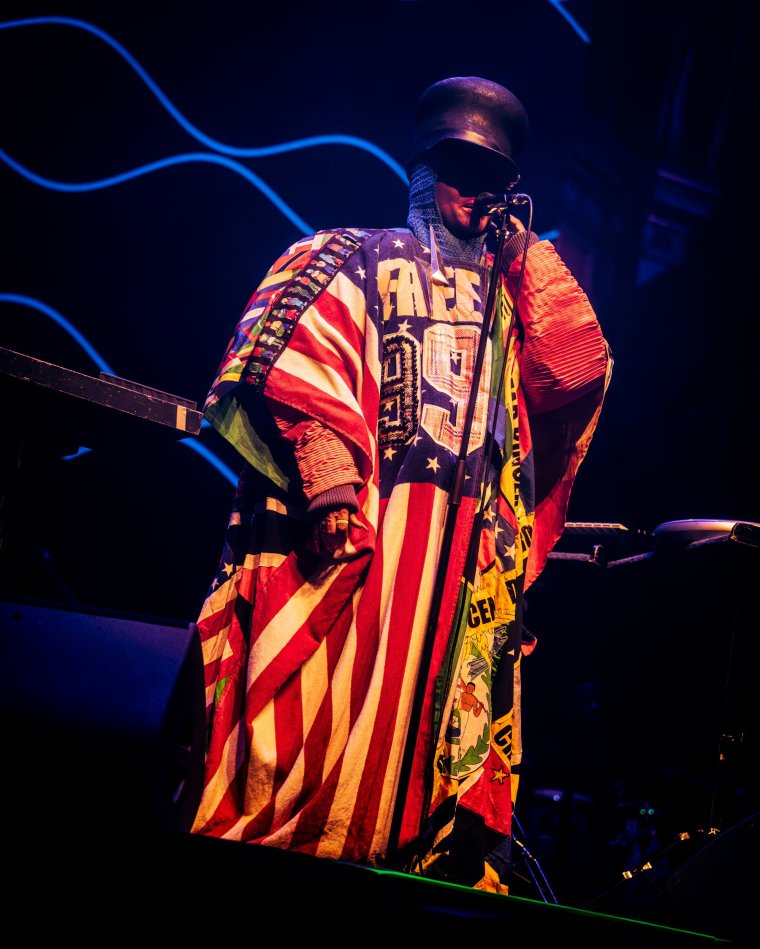
At 50 minutes past her scheduled stage time, she emerges – nonchalant, poised and resplendent in her now signature towering hat and oversized coat and trousers, more fitting to an Alpine ayahuasca ceremony than an Italianate concert hall – and all is forgiven. She launches straight into the upbeat funk of “Penitentiary Philosophy”, drawing the last stragglers back from the bar with urgency.
It seems a brave move to dedicate an entire performance to one album nowadays, when fans tend to demand a broad back catalogue. Badu’s debut, Baduizm, was the album that won her worldwide acclaim and cemented her position alongside Lauryn Hill and D’Angelo in the world of neo-soul in the late nineties. Yet it was her second album, Mama’s Gun, released 25 years ago, that die-hard fans return to again and again.
While initially considered a commercial flop, it is regarded as her masterpiece. Writing it after the birth of her son and split from Outkast star Andre 3000, Badu explored heartbreak, politics and womanhood. It was also around that time that she shed her signature towering headwrap, evolving from dreamy earth mother to a more eccentric, spikier high priestess. And tonight, the album is played out exactly as she intended, tracks in order, a purist to her opus.
Badu’s brand of neo-soul might be 25 years old, but its themes feel fresh today, and speaks to a younger generation, judging by the numbers in the audience earnestly singing every word back to her. As she sings “Alright, it’s gonna be alright,” the words flashing up on screen behind her, it felt like a message of solace in troubled times.
The audience is putty in her hands. “Cleva” and “Booty” are odes to modern womanhood, all sass and self-sufficiency. “Kiss Me On My Neck” is as sexy as ever – “Been such a long time, I forgot that I was fine”.
It may have been a long time, but Badu’s still got it – syrupy vocals note-perfect and clear, not one song phoned in, and any fears of her eccentricities affecting her performance quashed, though the show is definitely not mundane.
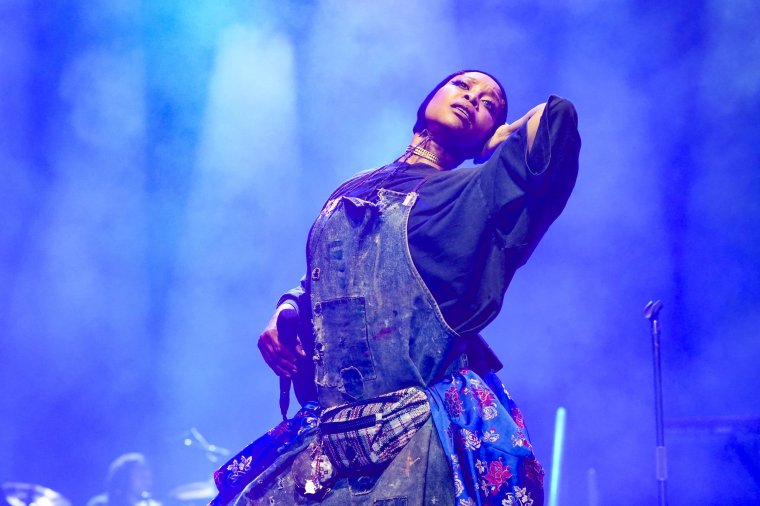
More sombre moments follow too. She pays tribute to D’Angelo, whom she opened for at the beginning of her career, and who recently died aged 51. “A.D. 2000”, a tribute to 22-year-old Guinean immigrant Amadou Diallo, who was shot dead in 1999 by police, is drenched in a poignancy that has significance still today. And it’s “Bag Lady”, a commentary on female emotional baggage, that gets one of the biggest reactions of the night, the crowd chorusing back to the lyrics “betcha love can make it better”.
“Green Eyes” may normally seem like a strange song to round out a concert, but this 10-minute three-part epic is how she ends her album and exactly how she wants to end the night. And it’s magnificent – moving from jaunty ragtime to heart-rending blues to smooth neo-soul as she weaves the tale of a breakup from denial to grief to acceptance. Then, in an abrupt change of tone, the crowd packs up as “Bloody Wankers” is emblazoned on the screen, perhaps a fond wink to her British audience?
Rarely does one album feel as complete and considered as Mama’s Gun, and rarely does it stand the test of time so well when performed live. Badu’s exploration of Afro-futurism and black feminism has paved the way for artists such as Janelle Monae, SZA and Doechii, but her crown, or sky-high domed hat, cannot be stolen.
