The Government is set to introduce digital ID cards to tackle illegal migration.
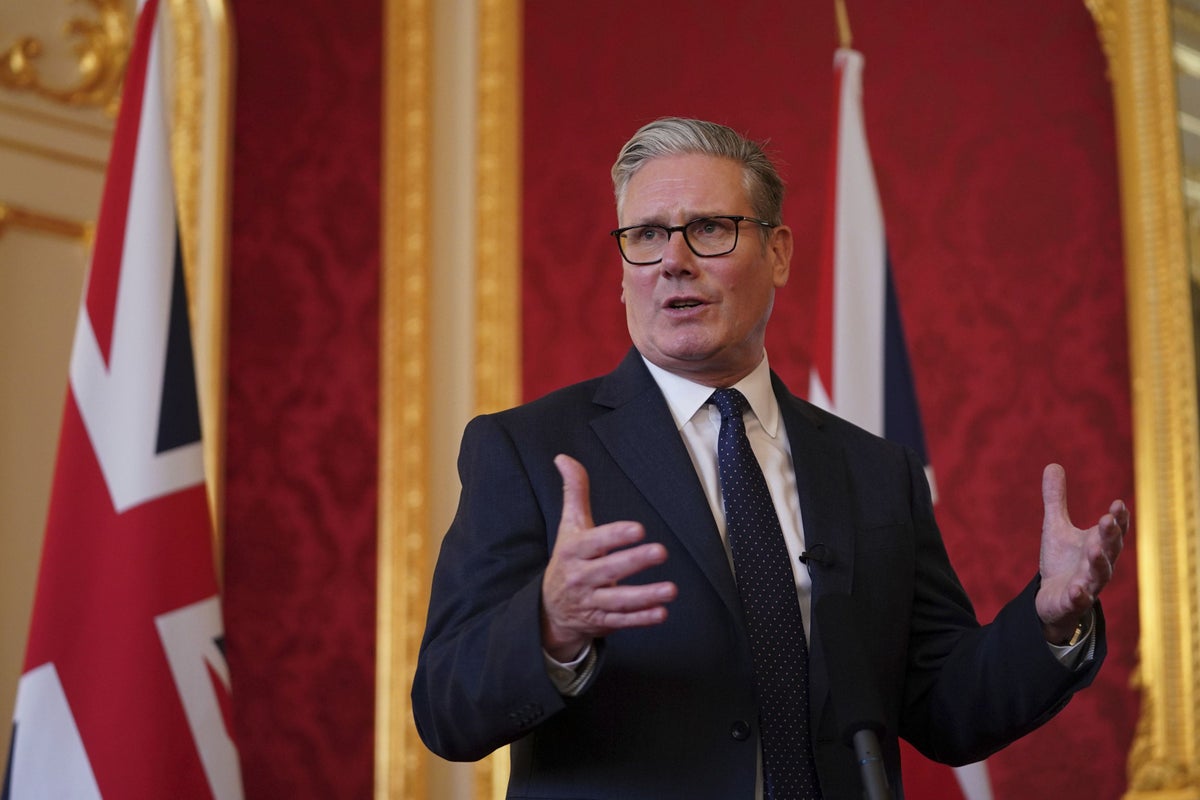
The announcement will be made by Sir Keir Starmer during a speech on Friday, it is understood
The so-called Brit-Card will be subject to consultation and thought to require legislation, as first reported by The i Paper.
The scheme will allow the verification of a citizen’s right to live and work in the UK.
Under the plans, anyone starting a new job or looking to rent a home would be required to show the card on a smartphone app.
It would then be checked against a central database of people entitled to live and work in the UK.
It is hoped this would reduce the attraction of working in the UK illegally, including for delivery companies.
This comes amid calls from French President Emmanuel Macron for the UK to reduce “pull factors” for migrants to cross to come to the UK.
A total of 1,157 people have arrived on small boats in the last week, according to Home Office statistics.
Sir Keir is due to speak at the Global Progress Action Summit in London alongside Australian prime minister Anthony Albanese and Canadian prime minister Mark Carney.
Earlier this month, the Prime Minister said an ID card system could play an “important part” in stopping illegal migration.
He said things had “moved on” since the debate over ID cards during the last Labour government in the 2000s.
He had told the BBC: “We all carry a lot more digital ID now than we did 20 years ago, and I think that, psychologically, it plays a different part.”
Home Secretary Shabana Mahmood has also previously been positive about the policy.
Conservative former minister Sir David Davis, who campaigned against their introduction during Sir Tony Blair’s Labour government, said: “While digital IDs and ID cards sound like modern and efficient solutions to problems like illegal immigration, such claims are misleading at best.
“The systems involved are profoundly dangerous to the privacy and fundamental freedoms of the British people.”
He added: “No system is immune to failure, and we have seen time and again governments and tech giants fail to protect people’s personal data.
“If world-leading companies cannot protect our data, I have little faith that Whitehall would be able to do better.”
The UK has only previously had mandatory ID cards during wartime.
The last tranche were scrapped in 1952.
Sir John Major’s government ran a consultation on reintroducing them in the 1995, but they were never brought in.
His successor, Sir Tony, then considered a voluntary ID card, but it was not fully rolled out amid objections from the Liberal Democrats and Conservatives.
He has since repeated his call for their introduction after leaving office.
He was backed up by Labour campaign group Labour Together, which has been closely linked to Sir Keir and the Government.
The thinktank published a 30-page document in June in favour of the Brit Card.
In the report, it said: “The Labour Government has the opportunity to build a new piece of civic infrastructure, something that would become a familiar feature of daily life for everyone in the country.
“It would support better enforcement of migration rules, and protect vulnerable British citizens from being wrongly denied their rights.”
The civil liberty group Big Brother Watch has again warned against their introduction.
A petition started by the group has reached more than 101,000 signatures.
In a letter to Sir Keir on Wednesday, the group said: “Mandatory digital ID is highly unlikely to achieve the Government’s objective of tackling unauthorised immigration.
“The proposed schemes fundamentally misunderstand the ‘pull factors’ that drive migration to the UK and would do very little to tackle criminal people-smuggling gangs or employers and landlords who operate ‘off the books’.
“Instead, it would push unauthorised migrants further into the shadows, into more precarious work and unsafe housing.”
Sir Ed Davey told the Liberal Democrat conference this week that his party would need to properly “scrutinise” any details, but said it was not necessarily against the policy.
Responding to the ad-hoc poll during an event in Bournemouth, Sir Ed replied: “Times have changed, and that is why I am saying ‘let’s look at it’.”
He added: “There are models that may answer our objections as liberals.”
Reform UK leader Nigel Farage said on X: “I am firmly opposed to @Keir_Starmer’s digital ID cards.
“It will make no difference to illegal immigration, but it will be used to control and penalise the rest of us.
“The state should never have this much power.”
Tory leader Kemi Badenoch dismissed the plans as a “gimmick that will do nothing to stop the boats”.
She said: “There are arguments for and against digital ID, but mandating its use would be a very serious step that requires a proper national debate.
“Instead, this is a throwaway conference announcement designed to distract attention from Andy Burnham’s leadership maneuverings and the crisis in Downing Street over the Prime Minister’s chief of staff.
“The Government has struggled to enforce its feeble one-in-one-out deal with France, which has turned into 100-in-1-out national embarrassment.
“Can we really trust it to implement an expensive national programme that will impact all of our lives and put additional burdens on law abiding people?
“I doubt it.”
The Liberal Democrats said they would not support mandatory digital ID where people are “forced to turn over their private data just to go about their daily lives.”
The party’s technology spokeswoman Victoria Collins said: “Liberal Democrats cannot support a mandatory digital ID where people are forced to turn over their private data just to go about their daily lives.
“People shouldn’t be turned into criminals just because they can’t have a digital ID, or choose not to.
“This will be especially worrying to millions of older people, people living in poverty and disabled people who are more likely to be digitally excluded.”
A spokesperson for the Tony Blair Institute (TBI) said: “Digital ID can and should be a gateway to government services, whether that’s reporting potholes or even voting.”
