US president Donald Trump has claimed he took a nuclear bomb “right out of Iran’s hands” after launching airstrikes on Tehran’s nuclear facilities.
Seven US stealth bombers dropped 14 30,000-pound bunker-busting bombs on Iran’s nuclear facilities early on Sunday morning in an operation called ‘Midnight Hammer’.
Tehran said the attack would have “everlasting consequences” and vowed to keep “reserve all options” open to defend Iran.
Hours after the attack, Mr Trump said: “We had a spectacular military success yesterday, taking the “bomb” right out of their hands.”
Iran said nuclear enrichment, which it claims is being developed for peaceful purposes, was not damaged in the attack.
Israel launched missile attacks at Iran on 13 June, after accusing Tehran of being just days away from developing a nuclear weapon.
US defence secretary Pete Hegseth described the bombing of the Fordow, Natanz and Esfahan sites as an “incredible and overwhelming success”, adding that they “devastated the Iranian nuclear programme”.
He also warned that any Iranian retaliation will be met with a force “far greater” than the latest strikes.
Watch: Starmer warns of ‘risk of escalation’ following US strikes against Iran
Iran must not take destabilising action, European leaders say
The leaders of Britain, France and Germany on Sunday urged Iran not to take any actions that would further destabilise the region following US strikes on Iranian nuclear facilities overnight.
“We have consistently been clear that Iran can never have a nuclear weapon and can no longer pose a threat to regional security,” the government heads of Germany, Britain, France, known as the E3, said in a joint statement.
“We call upon Iran to engage in negotiations leading to an agreement that addresses all concerns associated with its nuclear program. We stand ready to contribute to that goal in coordination with all parties.”
Trump claims ‘we took the bomb out of Iran’s hands’
US president Donald Trump has claimed he took a nuclear bomb “right out of Iran’s hands” after launching airstrikes on Tehran’s nuclear facilities.
Seven US stealth bombers dropped 14 30,000-pound bunker-busting bombs on Iran’s nuclear facilities early on Sunday morning in an operation called ‘Midnight Hammer’.
Tehran said the attack would have “everlasting consequences” and vowed to keep “reserve all options” open to defend Iran.
Hours after the attack, Mr Trump said: “We had a spectacular military success yesterday, taking the “bomb” right out of their hands.”
US airlines at greater risk as global carriers bypass Middle East after attacks on Iran
US strikes on Iran’s nuclear sites could heighten the threat to American operators in the region, an organisation that monitors flight risks warned on Sunday, as some airlines cancelled flights to and from Dubai and Doha.
Safe Airspace, a website run by OPSGROUP, said the US attacks on Iran may increase risks to US operators in the region.
“While there have been no specific threats made against civil aviation, Iran has previously warned it would retaliate by attacking US military interests in the Middle East – either directly or via proxies such as Hezbollah,” Safe Airspace said.
It said airspace risks could now extend to Bahrain, Kuwait, Oman, Qatar, Saudi Arabia and the United Arab Emirates. “We continue to advise a high degree of caution at this time,” it said.
JD Vance warns Iran retaliation to US strike would be ‘catastrophic mistake’
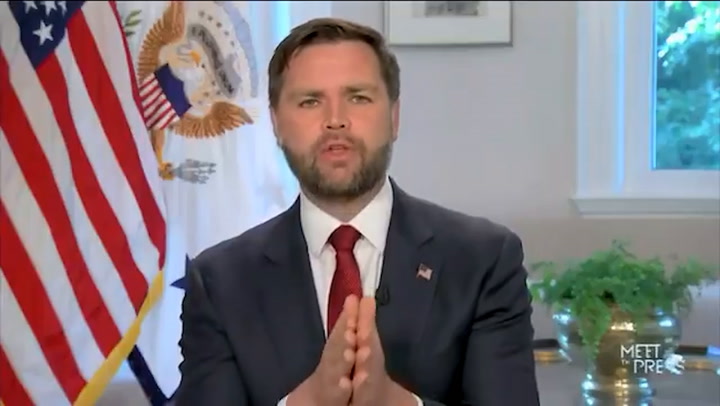
JD Vance warns Iran retaliation to US strike would be ‘catastrophic mistake’
Why is the Strait of Hormuz important?
Between the start of 2022 and last month, somewhere between 17.8 million and 20.8 million barrels of crude, condensate and fuels flowed through the strait every day.
OPEC members Saudi Arabia, Iran, the United Arab Emirates, Kuwait and Iraq export most of their crude via the strait, mainly to Asia.
The UAE and Saudi Arabia, which are opposed to Iran’s influence in the region, have sought to find other routes to bypass the strait.
Qatar, among the world’s biggest liquefied natural gas exporters, sends almost all of its LNG through the strait.
Iran approves closure of Strait of Hormuz – how could it affect global oil and gas?
Iran could deny access to the giant tankers that ferry oil and gas to China, Europe and other major energy consuming regions, according to Bloomberg.
If this happened, oil prices would surge and potentially destabilise the global economy, according to the publication.
Israel-Iran conflict: A timeline of how the attacks unfolded
Israel launched “Operation Rising Lion” earlier this month in response to intelligence it claimed showed that Iran was “approaching the point of no return” in the development of a nuclear weapon.
Read more:
UN security council to discuss US strikes on Iran
The UN Security Council will meet Sunday to discuss US strikes on Iran’s nuclear sites as Russia, China and Pakistan propose a resolution calling for an immediate and unconditional ceasefire in the Middle East.
It was not immediately clear when it could be put to a vote. The three countries circulated the draft text, said diplomats, and asked members to share their comments by Monday evening. A resolution needs at least nine votes in favour and no vetoes by the United States, France, Britain, Russia or China to pass.
The US is likely to oppose the draft resolution, seen by Reuters, which also condemns attacks on Iran’s nuclear sites and facilities. The text does not name the United States or Israel.
The world awaited Iran’s response on Sunday after President Donald Trump said the US had “obliterated” Tehran’s key nuclear sites, joining Israel in the biggest Western military action against the Islamic Republic since its 1979 revolution.
Iran requested the UN Security Council meeting, calling on the 15-member body “to address this blatant and unlawful act of aggression, to condemn it in the strongest possible terms.”
Starmer, Macron and Merz issue joint statement on Iranian crisis
Our political editor David Maddox reports:
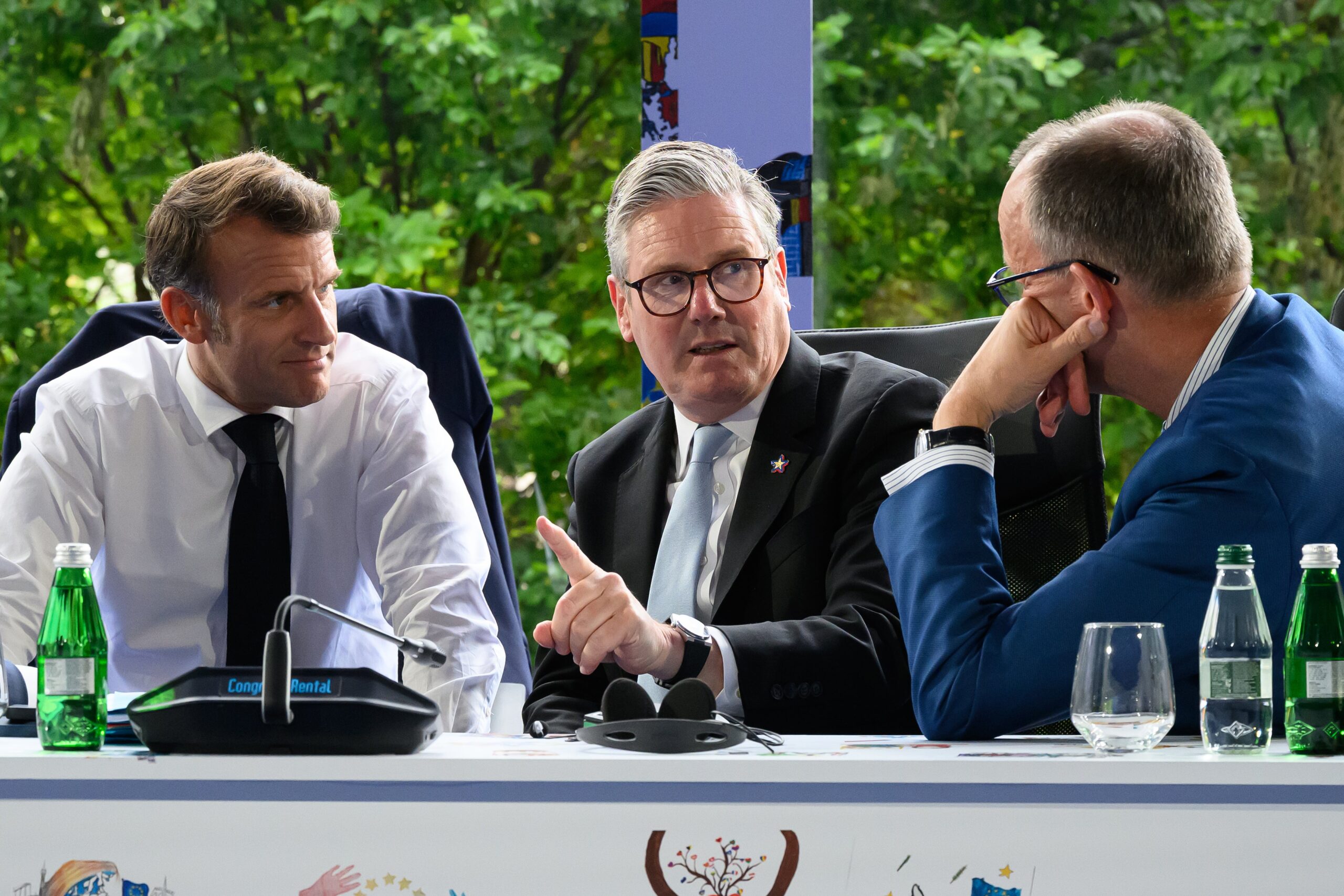
Following a meeting of the E3 heads of government – the UK, France and Germany, Sir Keir Starmer, President Emmanuel Macron and Chancellor Friedrich Merz issued a joint statement supporting President Trump’s action.
They said: “We have discussed the latest developments in the Middle East earlier today.“We reiterate our commitment to peace and stability for all countries in the region. We affirm our support for the security of Israel.
“We have consistently been clear that Iran can never have a nuclear weapon and can no longer pose a threat to regional security.
“Earlier today, the United States has conducted targeted military strikes against nuclear facilities in Fordow, Natanz and Isfahan. Our aim continues to be to prevent Iran from acquiring a nuclear weapon.
“We call upon Iran to engage in negotiations leading to an agreement that addresses all concerns associated with its nuclear program. We stand ready to contribute to that goal in coordination with all parties.
“We urge Iran not to take any further action that could destabilize the region.“We will continue our joint diplomatic efforts to defuse tensions and ensure the conflict does not intensify and spread further.”